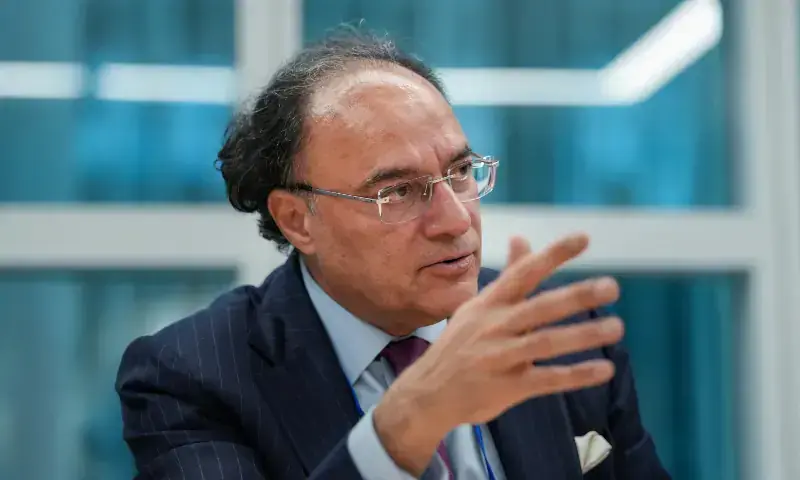
Pakistan Finance Minister Muhammad Aurangzeb stated that while regional stability following a US-Iran deal could provide an economic upside for the country, it is currently too early to revise national budget projections for 2027. Speaking to Reuters, Aurangzeb cautioned that damaged energy infrastructure and disrupted supply chains must be stabilized before the government can commit to more optimistic fiscal targets.
The minister’s comments follow recent geopolitical shifts in the Middle East, which officials suggest could eventually ease the inflationary pressures that have plagued the Pakistani economy. However, Aurangzeb emphasized that the “second and third-order impacts” of recent regional conflicts are still being assessed, particularly regarding how they affect the volatility of essential commodity prices and energy availability.
The government’s current fiscal roadmap, which was presented to Parliament on Friday, remains anchored to a set of cautious targets. These include a projected economic growth rate of 4 per cent and an inflation target of 8.2 per cent. While the Finance Minister acknowledged the potential for improved numbers, he maintained that revising the budget at this stage would be “way too premature.”
Why is Pakistan maintaining its current budget targets?
The decision to hold steady on current projections stems from the ongoing recovery of Pakistan’s domestic energy sector. Aurangzeb noted that the conflict in the Middle East has significantly impacted energy infrastructure, which in turn has created instability in global and regional supply chains. According to the Finance Minister, these disruptions contributed to inflation returning to double-digit figures in recent periods.

“The energy infrastructure has been hit,” Aurangzeb told Reuters. “And therefore, it will take time before we return to normalcy in terms of supply chains.”
The government is currently prioritizing the management of these supply chain shocks to prevent further inflationary spikes. Until the energy sector shows consistent stability, the Ministry of Finance is opting for a conservative fiscal stance to ensure the country remains compliant with its International Monetary Fund (IMF) requirements. The current budget is designed to support a $7 billion IMF programme, which relies heavily on increased tax revenue and disciplined spending to maintain macroeconomic stability.
One significant area of the budget is the allocation for national security. The upcoming financial year sees an 18 per cent increase in defense spending, bringing the total to Rs3 trillion. This increase comes as the government manages two “active” borders with Afghanistan and India, necessitating consistent resource allocation for border security and regional stability.
How does Islamabad plan to restructure its external debt?
A central pillar of Aurangzeb’s economic strategy for fiscal year 2027 involves a fundamental shift in Pakistan’s creditor profile. The government intends to move away from a heavy reliance on bilateral loans and toward commercial borrowing. This move is designed to change the nature of the country’s debt without increasing the total volume of its external liabilities.
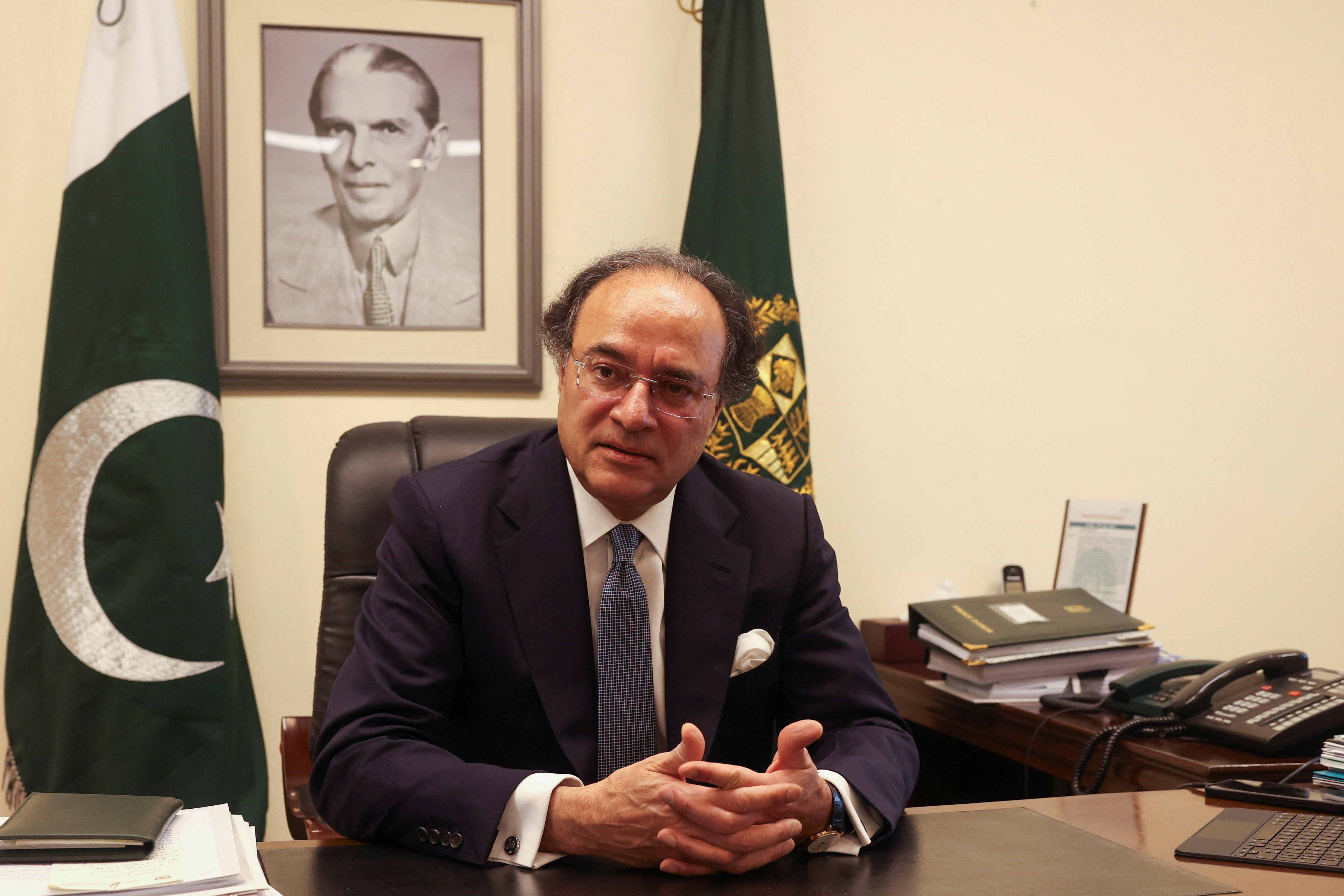
“Ideally, what we want to do is to see if we can replace some of the bilateral through commercial,” Aurangzeb explained. “We do not intend to increase the size of our external debt.”
This strategy is already visible in recent transactions with the United Arab Emirates. Last month, Pakistan completed the repayment of $3.4 billion in bilateral deposits to the UAE. Simultaneously, the government has begun tapping the commercial banking sectors within the Emirates to secure financing, signaling the start of the transition toward commercial credit markets.
To facilitate this shift, the government is preparing several diverse financing instruments for the FY27 period. These include:
- Eurobonds: Targeted to tap international capital markets.
- Panda Bonds: Utilizing China’s specialized bond market.
- US Dollar Issues: Standard international debt instruments.
- Rupee-linked, Dollar-settled Issues: A first-of-its-kind instrument for the country to manage currency risk.
The FY27 budget envisages $2.82 billion in commercial and Eurobond financing. Additionally, Pakistan has already received approval for $1 billion in Panda bonds. This follows a successful $250 million debut in the Panda bond market, which was 95 per cent backed by the Asian Development Bank and the Asian Infrastructure Investment Bank.
What is the impact of regional stability on Pakistan’s industries?
While the broader economy looks toward long-term stability, specific sectors like the defense industry are experiencing immediate shifts. There has been a noted surge in interest regarding Pakistan’s burgeoning defense manufacturing sector, following recent regional tensions. However, Aurangzeb has been careful not to overpromise immediate economic gains from these developments.
Despite the increased activity, the Finance Minister stated that it is currently too early to project any significant upside in terms of defense exports. The government’s primary focus remains on ensuring that existing allocations are sufficient to manage the security requirements of the country’s borders.
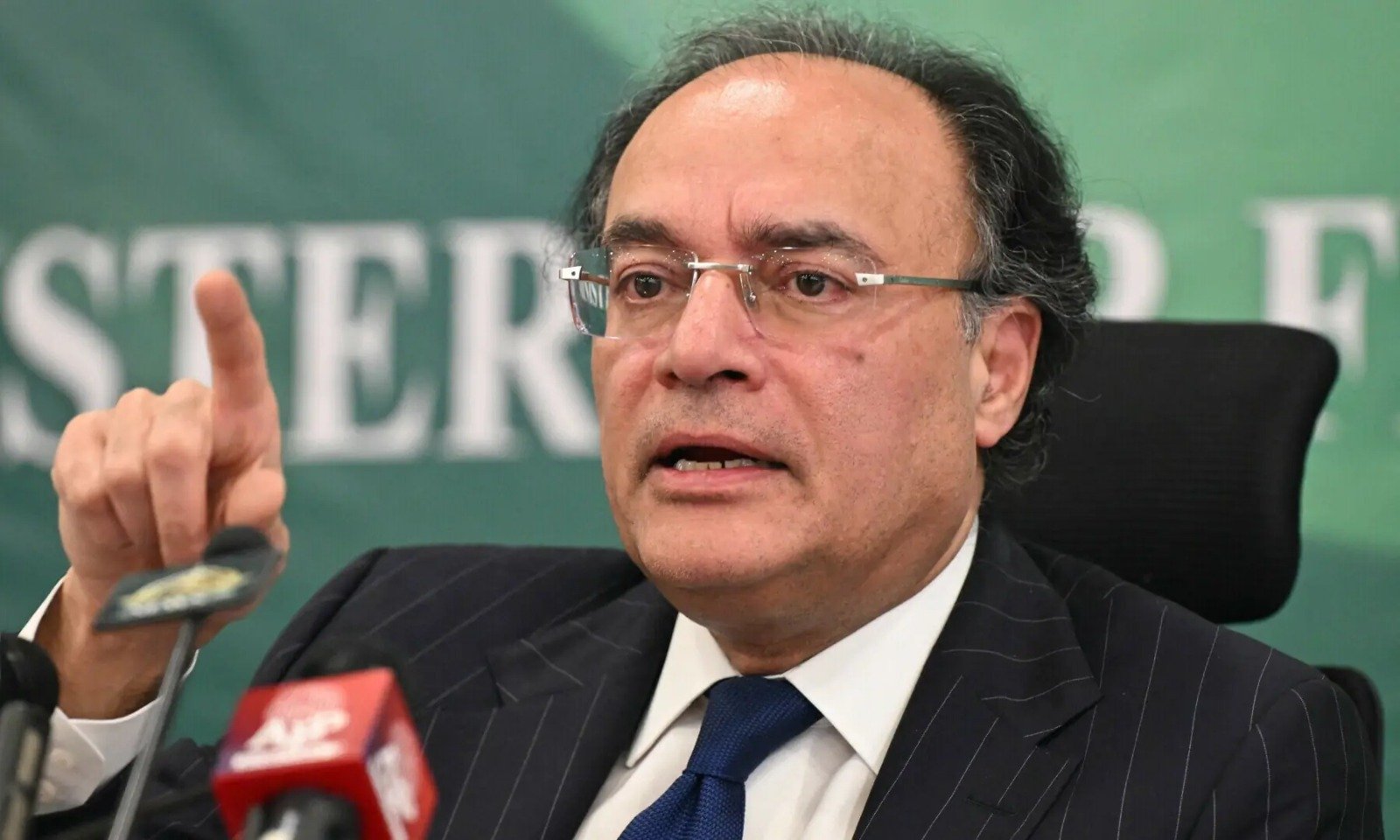
This cautious approach extends to the digital economy as well. Pakistan has taken steps this year to formalize its digital asset sector, entering into pacts with major global players such as Binance and World Liberty Financial. The government’s strategy is to establish a clear regulatory framework for cryptocurrency, tokenization, and digital-asset exchanges before implementing a taxation regime.
“Yes, at some point we have to bring it into the taxation timeframe,” Aurangzeb said, noting that the priority is regulation to ensure market integrity. “But this was not the time to do it.” The administration believes that once the sector is formalized and regulated, revenue gains through taxation will follow naturally.
Comparison of Pakistan’s Debt Financing Strategy
| Financing Type | Primary Objective | Status/Target |
|---|---|---|
| Bilateral Loans | Direct government-to-government support | Reducing reliance; $3.4bn UAE repayment completed |
| Commercial Borrowing | Diversify creditor profile and reduce bilateral dependence | Targeting $2.82bn in FY27 via Eurobonds and commercial banks |
| Panda Bonds | Access Chinese capital markets | $1bn approved following $250m debut |
The shift toward commercial debt is intended to provide Pakistan with more flexible repayment terms and a more diverse group of creditors, which can mitigate the political risks often associated with bilateral lending agreements.
The next major checkpoint for Pakistan’s economic outlook will be the upcoming periodic review of the $7 billion IMF programme, which will determine if the country’s fiscal performance aligns with the agreed-upon targets for inflation and tax revenue collection.
What are your thoughts on Pakistan’s shift toward commercial debt? Share this article and join the conversation in the comments below.
Related reading