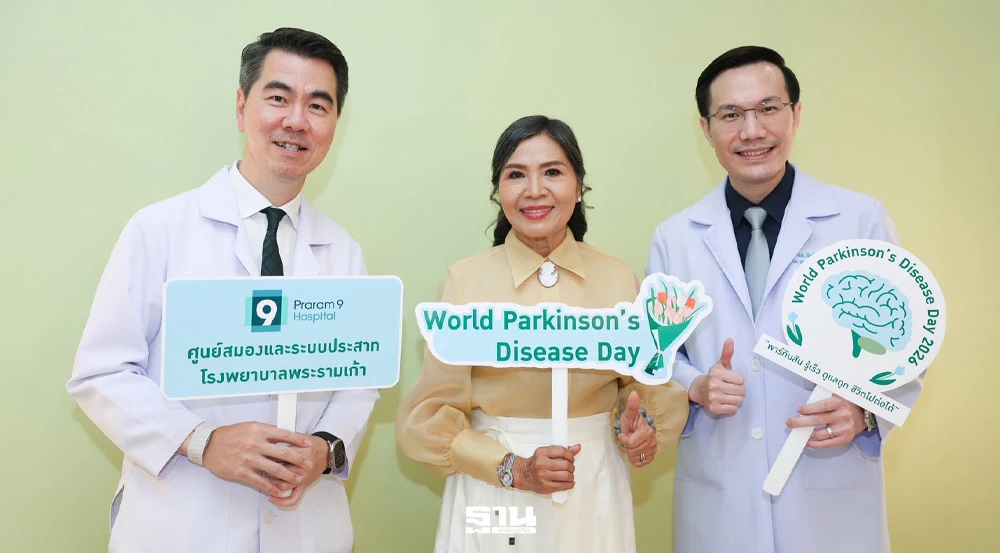
Thailand is facing a significant public health challenge as the prevalence of Parkinson’s disease has surged, making the country the leading nation for the condition in Asia. Recent data indicates a sharp rise in cases, shifting from a previous rate of approximately 1 in 1,000 people to 1 in 400 people within just a decade Bangkok BizNews.
This represents a 250% increase in the patient population over ten years, a phenomenon described as the “acceleration of the disease at a population level.” Medical experts emphasize that this trend cannot be attributed solely to the transition into an aging society, suggesting that other environmental or systemic factors may be contributing to the spike Siam Rath.
Of particular concern to health professionals is the emergence of early symptoms in the working-age population. Reports indicate that individuals as young as 30 to 40 years aged are beginning to exhibit signs of the neurodegenerative disorder, challenging the traditional perception of Parkinson’s as a disease exclusively affecting the elderly MSN Health.
As the Editor of Health for World Today Journal, I have seen how neurodegenerative trends can shift rapidly. The situation in Thailand serves as a critical warning for the broader Asian region, highlighting the necessity for early detection and a deeper understanding of non-motor symptoms that often precede the characteristic tremors associated with the disease.
Beyond the Tremor: Recognizing Early Warning Signs
Whereas Parkinson’s is most commonly recognized by physical tremors and rigidity, the early stages often manifest as non-motor symptoms. These “silent” warnings are frequently overlooked or misdiagnosed as separate psychological or sleep disorders. In Thailand, medical experts are urging the public to pay close attention to specific red flags that may appear years before the onset of motor impairment.
Among the most prominent early indicators are sleep disturbances and mood changes. Specifically, REM sleep behavior disorder—which manifests as talking or acting out dreams (sleepwalking or “sleep talking” in an aggressive manner)—and clinical depression have been identified as significant warning signs Bangkok BizNews. When these symptoms appear in working-age adults, they often go unnoticed or are attributed to perform-related stress.
The progression of the disease typically involves the loss of dopamine-producing neurons in the brain, which eventually leads to the hallmark symptoms of bradykinesia (slowness of movement), postural instability, and resting tremors. However, the “acceleration” seen in the Thai population suggests that the window for early intervention is narrowing, making the identification of these non-motor precursors vital for long-term patient outcomes.
The Impact of Early-Onset Parkinson’s on the Workforce
The shift in demographics, with patients appearing in the 30-40 age bracket, creates a complex socioeconomic challenge. For the working-age population, a diagnosis of Parkinson’s doesn’t just affect physical health; it impacts professional productivity and mental well-being. The psychological burden of managing a chronic, progressive disease during the peak of one’s career can lead to a cycle of depression and anxiety, which in turn can exacerbate the physical symptoms of the disease.
Medical professionals emphasize that “knowing early and treating correctly” allows patients to maintain a higher quality of life and continue their daily activities. Early diagnosis enables the implementation of pharmacological treatments and lifestyle adjustments that can leisurely the impact of the disease on the patient’s autonomy Siam Rath.
To combat the delay in diagnosis, new technological interventions are being introduced. This includes the development of specialized applications, such as ‘Check PD,’ which is reported to have an accuracy rate of up to 90% in screening for the disease, allowing users to identify risks and seek professional medical consultation more rapidly Bangkok BizNews.
Addressing the “Population Acceleration” Phenomenon
The fact that Thailand has the highest rate of increase in Parkinson’s cases in Asia is a cause for serious clinical scrutiny. The term “acceleration of the disease at a population level” suggests that the increase is outstripping the natural rate of aging. While the exact causes of this surge are still being monitored, it points to a need for comprehensive public health strategies that go beyond geriatric care.
Public health experts suggest that the combination of environmental factors, genetic predispositions, and perhaps the impact of modern lifestyles may be playing a role. By identifying the 250% increase in prevalence over the last decade, health authorities are now tasked with determining whether this is a result of better diagnostic capabilities or a genuine increase in the incidence of the disease Siam Rath.
Key Takeaways for Early Detection
- Prevalence Shift: Thailand’s Parkinson’s rate has moved from 1 in 1,000 to 1 in 400 people over 10 years Bangkok BizNews.
- Demographic Change: Symptoms are now being detected in working-age adults between 30 and 40 years old MSN Health.
- Non-Motor Warnings: Sleep disorders (acting out dreams) and depression are critical early indicators.
- Regional Status: Thailand currently has the highest rate of increase for Parkinson’s patients in Asia.
The current priority for the Thai healthcare system is to increase public awareness and integrate screening tools into general health check-ups for adults, not just the elderly. As the medical community continues to track this population-level acceleration, the focus remains on early intervention to ensure that those affected can lead active and productive lives.
Medical authorities continue to monitor the trend of “population acceleration” to identify the root causes of the surge. Further updates on public health guidelines and the integration of screening technologies like ‘Check PD’ are expected as the government addresses this growing health crisis.
Do you or a loved one have concerns about early signs of neurodegenerative health? We encourage you to share your experiences and thoughts in the comments below to foster a community of support and awareness.
Keep reading