
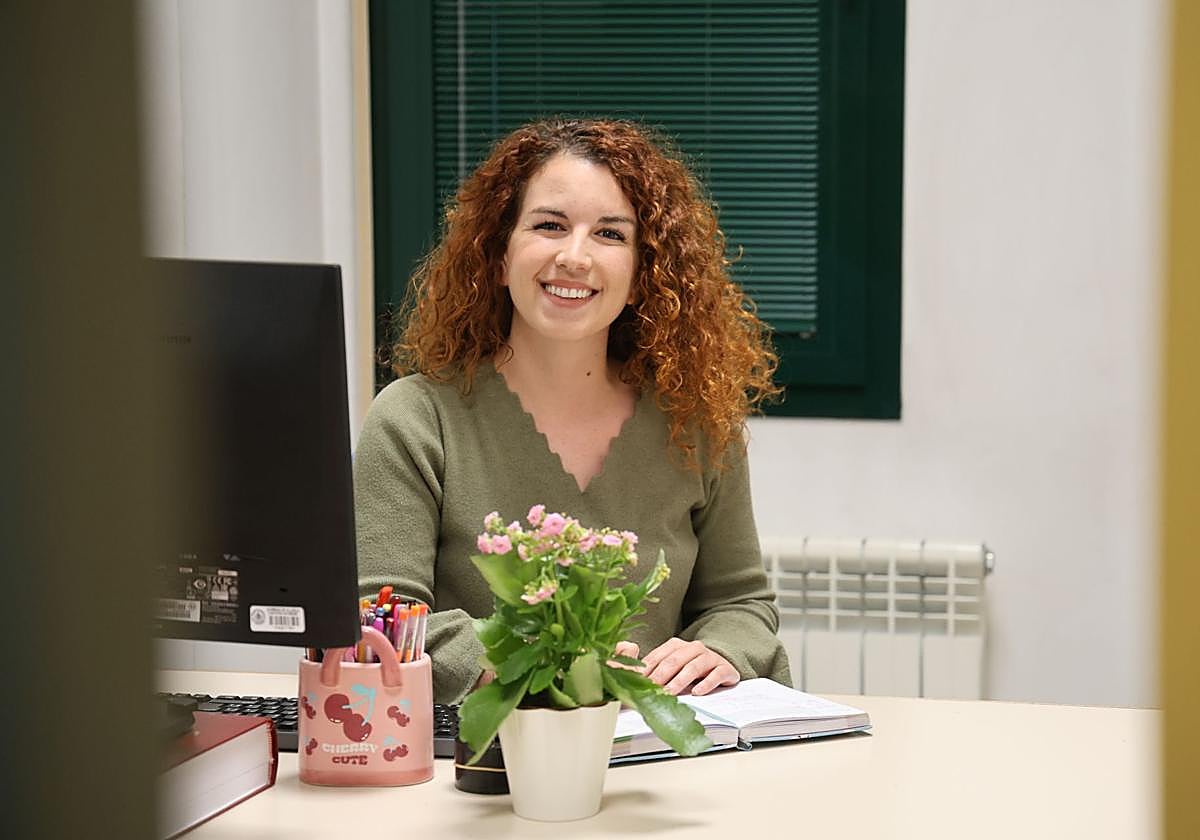
In a compact classroom in Valladolid, a quiet revolution is taking place—not with loud protests or policy debates, but with crayons, storybooks, and the unwavering belief that early childhood education deserves the same rigor and respect as any other academic discipline. At the heart of this shift is Paula Molinero, a doctor and psychologist whose academic record ranks among the best in Spain, yet whose choice to teach infants and toddlers continues to raise eyebrows.
“With the grades I had, many didn’t understand why I chose Early Childhood Education,” Molinero told El Norte de Castilla in a recent interview, a sentiment that echoes across educational systems worldwide where the foundational years of learning are often undervalued despite overwhelming evidence of their lifelong impact.
Molinero’s journey is exceptional not only for her credentials—she holds three extraordinary academic awards and a medical doctorate—but for how she channels them into a field frequently overlooked in discussions about educational excellence. Her story invites a deeper examination of societal perceptions about teaching, the hidden value of early learning, and why some of the most qualified minds are choosing to shape the youngest learners.
Research consistently shows that high-quality early childhood education correlates with improved cognitive development, better academic outcomes, and reduced socioeconomic disparities later in life. A 2023 longitudinal study by the Organisation for Economic Co-operation and Development (OECD) found that children who attended structured preschool programs were 20% more likely to pursue higher education and demonstrated stronger emotional regulation skills by age 15 (OECD, 2023). Yet, despite such data, early childhood educators often face lower pay, limited professional development opportunities, and persistent stereotypes that frame their work as mere caregiving rather than sophisticated pedagogy.
This disconnect between evidence and perception is precisely what motivates professionals like Molinero. After completing her medical training at a prestigious institution and working briefly in clinical psychology, she redirected her focus toward early education—a decision she describes not as a step down, but as a purposeful alignment with where she believes her expertise can create the most enduring change.
“Medicine taught me how the body and mind develop; psychology showed me how behavior and emotion take shape. But it was in the preschool classroom that I saw how these domains converge in real time—where a child’s first attempts at sharing, their struggle to tie a shoe, or their excitement over a caterpillar crawling on a leaf become the building blocks of lifelong learning,” she explained in a 2022 talk at the University of Valladolid’s Faculty of Education, a recording of which remains archived in the institution’s public lecture series (University of Valladolid, 2022).
Her approach blends developmental science with playful, child-led exploration. In her classroom, literacy emerges not through rote drills but through dictated stories where children narrate tales that teachers transcribe, reinforcing the connection between spoken and written language. Mathematical concepts arise during block play, as students experiment with balance, symmetry, and quantity. Even conflict resolution becomes a lesson in empathy and communication—skills Molinero argues are as vital as any academic benchmark.
This holistic model aligns with the principles of Spain’s Organic Law 3/2020, of December 29, which amends the Organic Law 2/2006 on Education (LOMLOE), emphasizing competency-based learning and the importance of early childhood as a foundational stage (BOE, 2020). Under LOMLOE, early childhood education (ages 0–6) is formally recognized as the first stage of the Spanish education system, with curricula designed to foster autonomy, creativity, and social coexistence—goals Molinero says she has long pursued intuitively, now validated by national policy.
Still, systemic challenges remain. According to data from Spain’s Ministry of Education and Vocational Training, while enrollment in early childhood education has risen steadily over the past decade, public investment per pupil in this stage lags behind both primary and secondary education (MEFP, 2023). In 2022, public spending on early childhood education amounted to approximately €4,800 per student annually, compared to €6,200 in primary and €7,500 in secondary education—a disparity that affects teacher salaries, classroom resources, and access to specialized support staff such as speech therapists and educational psychologists.
Molinero acknowledges these structural barriers but chooses to focus on what she can influence: the quality of interaction within her classroom and the advocacy she conducts beyond it. She regularly contributes to teacher training workshops organized by the Castilla y León Regional Education Authority, where she shares insights on integrating developmental psychology into early learning practices (Junta de Castilla y León, 2023). Her goal, she says, is not to convince everyone that early childhood education is important—though she believes the science is clear—but to demonstrate, through practice, what excellence in this field actually looks like.
Her work has not gone unnoticed. In 2021, she received the National Award for Innovation in Early Childhood Education from the Spanish Confederation of Education Centers (CECE), recognizing her classroom’s use of emotion-regulation circles and peer-mediated learning strategies (CECE, 2021). The following year, she was selected as a regional finalist for the Princess of Girona Foundation’s Social Award, which honors individuals under 30 driving meaningful change in education, sustainability, or social cohesion (Princess of Girona Foundation, 2022).
Yet, for Molinero, the truest validation comes not from accolades but from the small, daily moments: a previously nonverbal child using words to express frustration instead of tears; a shy student initiating a game with peers; a parent reporting that their child now talks about school at dinner with genuine enthusiasm. These, she says, are the metrics that matter most.
Her story reflects a broader global conversation about the professionalization of early childhood education. In countries like Finland and Sweden, where early educators are required to hold bachelor’s degrees and are compensated comparably to primary school teachers, outcomes in child well-being and equity consistently rank among the highest in the world (UNICEF Innocenti, 2021). In contrast, in many parts of the world—including regions of Spain—early childhood roles are often filled by workers with minimal formal training, contributing to variability in quality.
Molinero sees her path as both a personal calling and a quiet challenge to assumptions about prestige and purpose. “We don’t question why someone with top grades becomes a surgeon or a researcher,” she noted. “But when they choose to sit on the floor with four-year-olds, suddenly people wonder if they’ve ‘settled.’ I haven’t settled. I’ve chosen where I believe I can help build not just knowledgeable children, but kind, curious, resilient human beings.”
As debates continue over how to strengthen early education systems—investing in teacher training, improving wages, and expanding access—professionals like Molinero offer a living example of what is possible when expertise, passion, and purpose converge in the most formative years of life. Her classroom may not make headlines, but in the quiet rhythm of circle time, story corners, and small hands learning to cut paper with safety scissors, a different kind of legacy is being written—one crayon mark at a time.
The next step in advancing early childhood education in Spain lies in the full implementation of LOMLOE’s early childhood framework, with regional education authorities expected to publish updated curriculum guidelines and teacher competency standards by late 2024 (MEFP, 2023). Stakeholders, including educator unions and child development experts, are urging policymakers to pair these updates with concrete investments in workforce development and classroom resources.
For readers interested in supporting high-quality early childhood education, whether as parents, educators, or advocates, staying informed about national and regional policy developments is a meaningful first step. Official updates from the Spanish Ministry of Education and Vocational Training, as well as regional authorities like the Junta de Castilla y León, provide transparent access to funding allocations, curriculum changes, and professional opportunity announcements.
What does it mean to value the earliest stages of learning? Perhaps it begins with recognizing that the people who guide them—doctors, psychologists, artists, and thinkers who choose this path—are not descending from higher callings, but answering one of the most profound there is.
We invite you to share your thoughts: Have you encountered an educator whose background surprised you, only to reveal a deeper wisdom in their choice? How might societies better honor the work of those who teach our youngest children? Join the conversation in the comments below, and if this story resonated, please consider sharing it with others who believe in the power of beginnings.