
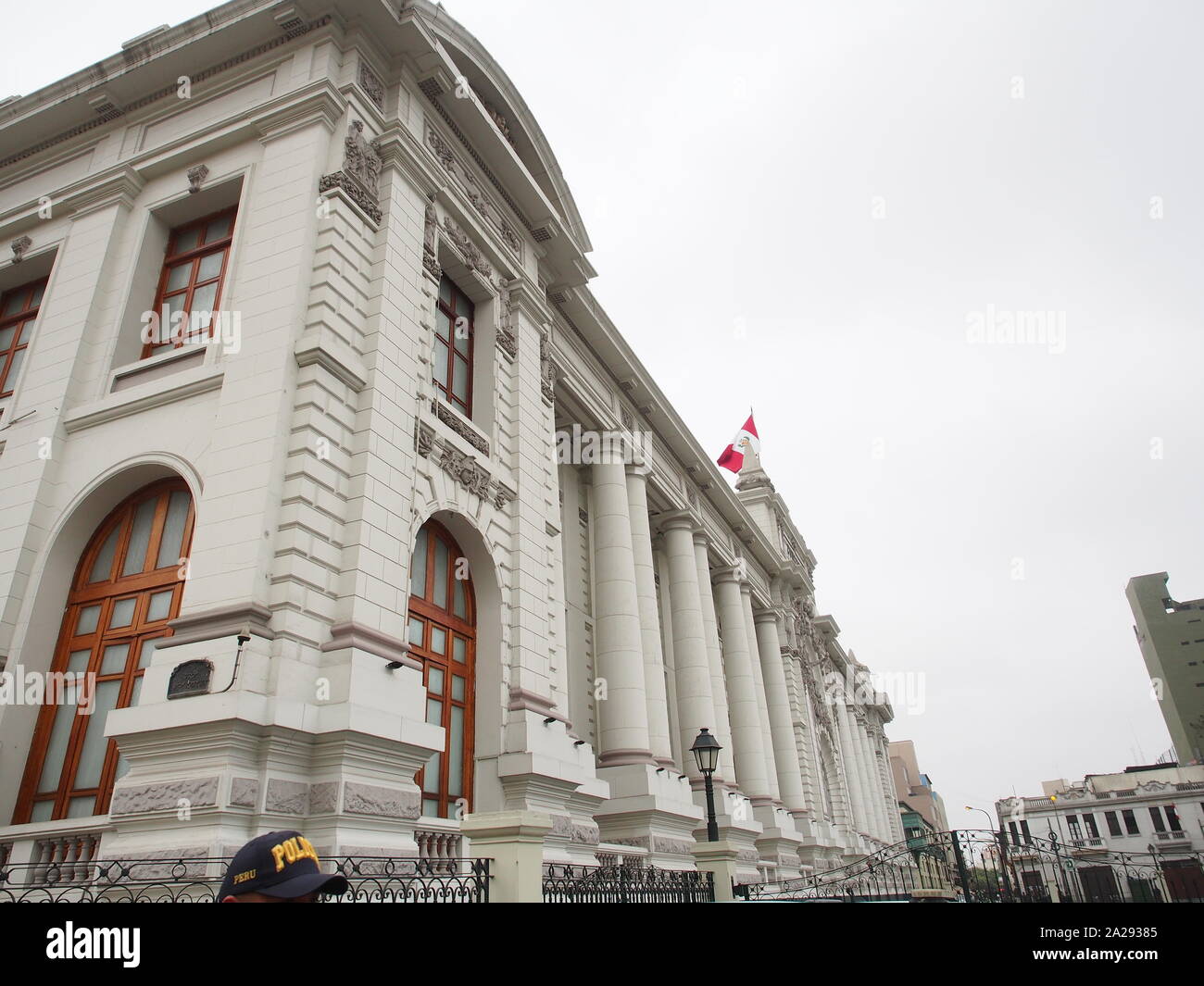
The administrative control of one of Lima’s most critical transit arteries, the Línea Amarilla expressway, has become the center of a jurisdictional tug-of-war between the Peruvian Congress and the Metropolitan Municipality of Lima (MML). Lawmakers are currently weighing a proposal to strip the city government of its oversight role and transfer the management of the concession to ProInversión, the national agency responsible for promoting private investment.
This legislative push comes amid growing concerns over the pace of infrastructure development in the capital. With Lima preparing to host the Pan American Games in 2027, members of Congress argue that the current municipal management is insufficient to meet the urgent logistical demands of a global sporting event. The proposal suggests that centralizing the concession under a national body would streamline decision-making and accelerate essential works.
The Línea Amarilla, a vital urban expressway that connects various districts of Lima, operates under a public-private partnership. Traditionally, the Metropolitan Municipality of Lima has served as the granting authority, overseeing the concessionaire, Lima Expresa. However, the proposed shift to ProInversión would effectively move the project from local city control to the national executive branch, fundamentally altering the governance of the city’s mobility strategy.
For international observers and investors, this move highlights a recurring tension in Peruvian governance: the struggle between municipal autonomy and national centralization. The outcome of this dispute will not only determine who manages the expressway but will also set a precedent for how large-scale infrastructure projects are handled leading up to major international events.
The Catalyst: Pan American Games Lima 2027
The primary driver behind the congressional urgency is the upcoming 2027 Pan American Games. The city of Lima previously hosted the event in 2019, a period remembered for a massive surge in infrastructure upgrades. However, lawmakers express concern that the current trajectory of preparation for the 2027 games is lagging, particularly regarding the integration of the Línea Amarilla into the broader transit plan for athletes and spectators.
At the heart of the dispute is a series of pending infrastructure improvements. Reports indicate that We find approximately 10 viable works totaling roughly US$ 100 million that require execution to optimize the expressway’s efficiency. While the concessionaire, Lima Expresa, possesses the resources to fund these projects, the execution remains stalled pending the official approval and “green light” from the Metropolitan Municipality of Lima.
Congress members argue that the MML’s bureaucratic delays are jeopardizing the city’s readiness. By transferring the granting authority to ProInversión, the national government believes it can bypass municipal bottlenecks and ensure that the US$ 100 million investment is deployed rapidly to avoid a logistical crisis during the 2027 games.
Municipal Autonomy vs. National Oversight
The Metropolitan Municipality of Lima has strongly resisted the proposal, viewing it as an encroachment on its administrative sovereignty. The MML maintains that it is the appropriate entity to manage the expressway, as the road directly impacts the daily commute and urban planning of the city’s residents.

The municipality has defended its record, arguing that its oversight is necessary to ensure that the concessionaire adheres to the original terms of the contract and does not prioritize profit over public service. The MML has frequently clashed with the concessionaire over toll pricing and maintenance standards, suggesting that removing municipal oversight could leave the city without a local advocate to hold the private operator accountable.
From a legal standpoint, the transfer of a concession from a local government to a national agency is a complex maneuver. It requires a legislative framework that can withstand challenges in the court system, as the original contract was signed with the city, not the state. Legal experts suggest that any transfer would likely require a tripartite agreement or a legislative mandate that explicitly overrides the existing contractual relationship between the MML and Lima Expresa.
Understanding ProInversión’s Role
To understand why Congress is targeting ProInversión as the new overseer, it is necessary to examine the agency’s mandate. ProInversión (the Agency for the Promotion of Private Investment) is designed to attract private capital to public projects across Peru. Unlike a municipal government, which must balance a wide array of local social services and political pressures, ProInversión is a technical body focused specifically on the efficiency, bankability, and execution of investments.
By moving the Línea Amarilla under ProInversión, the national government intends to apply a more “corporate” approach to the concession. This would likely involve:
- Standardized KPIs: Implementing national-level performance indicators for the concessionaire.
- Faster Approval Cycles: Reducing the time it takes to approve technical modifications to the road layout.
- National Budgetary Alignment: Ensuring the expressway’s upgrades align with the Ministry of Transport and Communications’ (MTC) broader national strategy.
However, critics of this approach argue that “technical efficiency” often ignores the nuanced needs of local communities. The MML argues that ProInversión, operating from a national level, may be less responsive to the immediate complaints of Lima’s commuters regarding toll hikes or localized traffic congestion.
Economic and Social Implications for Lima
The resolution of this conflict will have direct implications for the millions of people who rely on the Línea Amarilla daily. The most immediate concern is whether the transfer of power will actually result in the completion of the pending US$ 100 million in works or if it will lead to further legal delays that freeze development entirely.
If the project remains stalled, the city faces a high risk of severe traffic congestion during the 2027 Pan American Games, which could damage Peru’s international reputation for hosting major events. Conversely, if the transfer is executed haphazardly, it could trigger a legal battle with the concessionaire, potentially leading to arbitration under international investment treaties, which could cost the Peruvian state millions in damages.
the dispute reflects a broader trend in Peruvian politics where the executive and legislative branches frequently clash with regional and local governments. This instability often creates an environment of uncertainty for private investors, who prefer clear, stable regulatory frameworks over shifting jurisdictional boundaries.
What Happens Next?
The proposal is currently moving through the legislative process in the Peruvian Congress. The next critical checkpoint will be the debate and subsequent vote on the bill that would authorize the transfer of the granting authority from the MML to ProInversión.
Observers are watching closely to see if a compromise can be reached—perhaps a joint oversight committee involving both the MML and ProInversión—or if the Congress will push through a full transfer of power. The timeline is tight; with the 2027 games approaching, the window for completing major structural works is closing.
As the legal and political arguments continue to unfold, the residents of Lima remain caught in the middle, waiting for the infrastructure improvements that have been promised but not yet delivered.
World Today Journal will continue to monitor the legislative proceedings in Lima. We invite our readers to share their perspectives on the balance between national efficiency and local autonomy in the comments below.
Worth a look