
Jonathan Reed reports from London on the growing international concern surrounding the visit of American tech billionaire Peter Thiel to Argentina, where he met with President Javier Milei in early 2024. The encounter has drawn sharp criticism from prominent Argentine political figures, including Elisa Carrió, who warned of the ideological risks posed by Thiel’s influence on the country’s direction. As global observers scrutinize the intersection of technology, libertarian ideology, and state power, the meeting has become a flashpoint in debates over Argentina’s democratic trajectory.
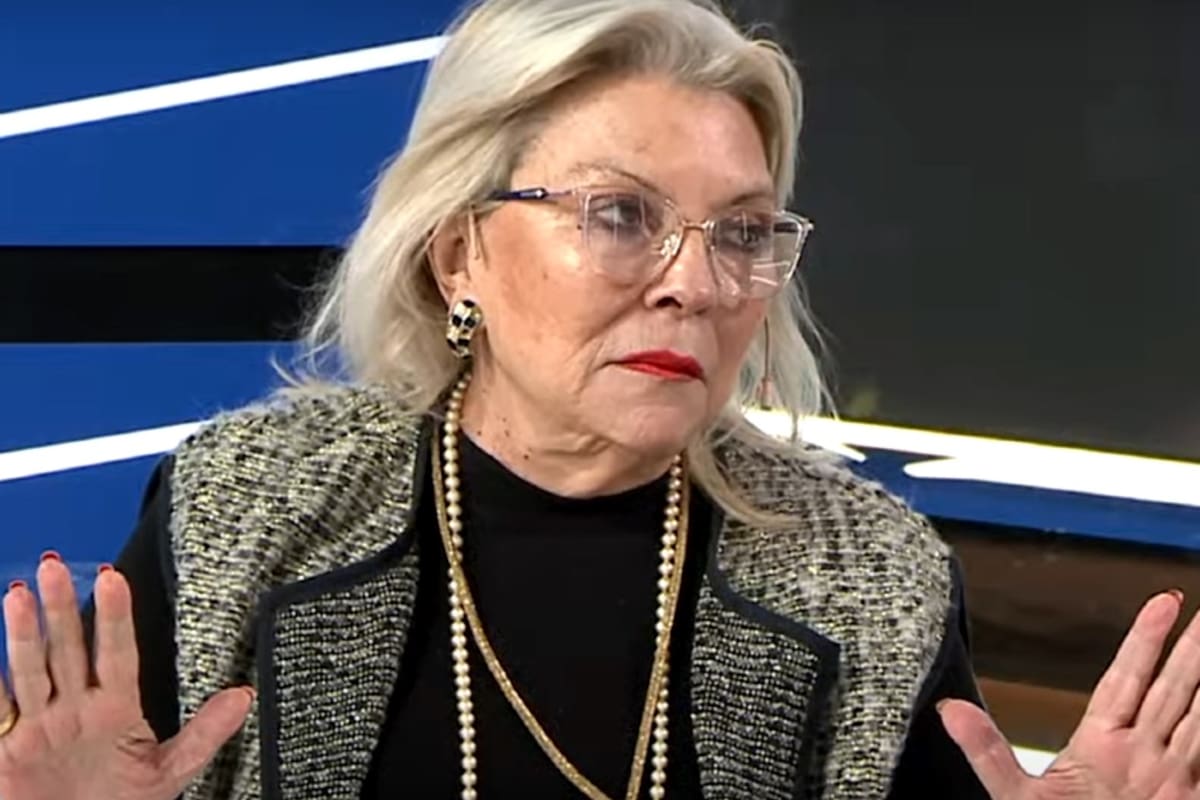
Carrió, a veteran politician and founder of the Civic Coalition, characterized Thiel as a proponent of “techno-fascism,” arguing that his vision seeks to replace democratic governance with algorithmic control driven by elite private interests. Her remarks, made during a televised interview in March 2024, emphasized that Thiel’s advocacy for radical decentralization and data-driven governance poses a direct threat to institutional accountability. She specifically cited his support for seasteading, cryptocurrency sovereignty, and the privatization of state functions as incompatible with Argentina’s constitutional framework.
The meeting between Thiel and Milei occurred amid a broader wave of libertarian reform in Argentina, where the president has pursued aggressive deregulation, public sector cuts, and austerity measures since taking office in December 2023. Thiel, a co-founder of PayPal and early investor in Facebook, has long advocated for minimal state intervention and has expressed skepticism toward liberal democracy, particularly in writings such as his 2009 essay “The Education of a Libertarian.” His visit to Buenos Aires was not officially announced by the Argentine government, fueling speculation about the nature and scope of their discussions.
According to verified reports from Argentine media outlets, including Radio UNRC, civil society groups and academic institutions have raised alarms about the potential implications of Thiel’s ideas for national sovereignty and human rights. The Faculty of Exact and Natural Sciences at the University of Buenos Aires (UBA) had been engaged in a five-week strike at the time of Thiel’s visit, later announcing a “March of Torches” to protest what they described as the encroachment of anti-democratic ideologies into public policy. These actions reflect broader unease among educators and scientists about the influence of foreign ideologues on domestic affairs.
Thiel’s presence in Argentina also coincided with reports of his real estate acquisition in Buenos Aires’ most exclusive neighborhood, Puerto Madero. While unconfirmed by official property registries, multiple Argentine news sources reported that he purchased a luxury mansion in the area, reportedly becoming a neighbor to high-profile figures such as footballer Lionel Messi. These claims, however, lack verifiable documentation from municipal or national land registries and should be treated as unverified until substantiated by authoritative sources.
The ideological underpinnings of Thiel’s worldview have been extensively analyzed by political theorists. He has described democracy as “incompatible with freedom” in certain contexts and has supported secessionist movements, including efforts to create autonomous zones free from governmental oversight. His funding of organizations such as the Seasteading Institute and his advocacy for “network states” — digital-first communities seeking to replace traditional nation-states — have drawn comparisons to anarcho-capitalist and neoreactionary thought. Critics argue that such visions, when applied to vulnerable democracies, risk eroding public institutions under the guise of innovation.
In Argentina, where memory of state terrorism during the 1976–1983 dictatorship remains deeply embedded in national consciousness, any alignment with ideologies perceived as anti-democratic triggers strong historical sensitivities. The mention of the SIDE (Secretaría de Inteligencia del Estado), Argentina’s intelligence agency, in relation to Thiel’s alleged proposals for data-driven governance has particularly alarmed human rights advocates. During the last dictatorship, intelligence agencies were central to surveillance, repression, and forced disappearances, making any discussion of their modernization a deeply charged topic.
Radio UNRC reported in April 2024 that legal experts and civil society organizations had filed collective amparo actions to safeguard disability benefits and warn against the influence of foreign ideologues on national policy. These legal moves underscore the gravity with which some sectors view the Thiel-Milei interaction — not as a mere diplomatic courtesy, but as a potential conduit for ideological transfer with tangible policy consequences.
While Milei’s administration has welcomed Thiel’s visit as a sign of international endorsement for its reform agenda, no official transcript or detailed agenda of their meeting has been released. The lack of transparency has fueled calls for greater accountability, particularly from opposition legislators and transparency watchdogs. As of April 2024, no formal investigation or parliamentary inquiry had been announced regarding the nature of the discussions between the Argentine president and the foreign billionaire.
The broader context includes Thiel’s long-standing engagement with Latin American libertarian circles. He has previously expressed interest in countries like Honduras and El Salvador as potential testing grounds for minimal governance models. His 2022 meeting with Salvadoran President Nayib Bukele, another leader known for unconventional governance tactics, was widely reported and similarly raised concerns about the exportation of radical political experiments.
For readers seeking to understand the implications of this encounter, it is essential to distinguish between legitimate economic collaboration and the importation of ideological frameworks that may undermine democratic norms. Argentina’s strong tradition of civic activism, academic independence, and judicial oversight remains a critical bulwark against external influence, though the durability of these institutions under sustained pressure remains an open question.
As Argentina continues its experiment with radical libertarian reform, the international community will watch closely to see whether the country can balance innovation with institutional integrity. The Thiel-Milei meeting serves as a case study in how global tech elites engage with emerging political movements — and whether such interactions strengthen or weaken the foundations of self-governance.
For ongoing updates on this story, readers are encouraged to consult official communications from the Argentine Presidency, the National Congress oversight committees, and reputable fact-checking organizations operating in the region. Stay informed, engage critically, and share this analysis to support thoughtful public discourse.