
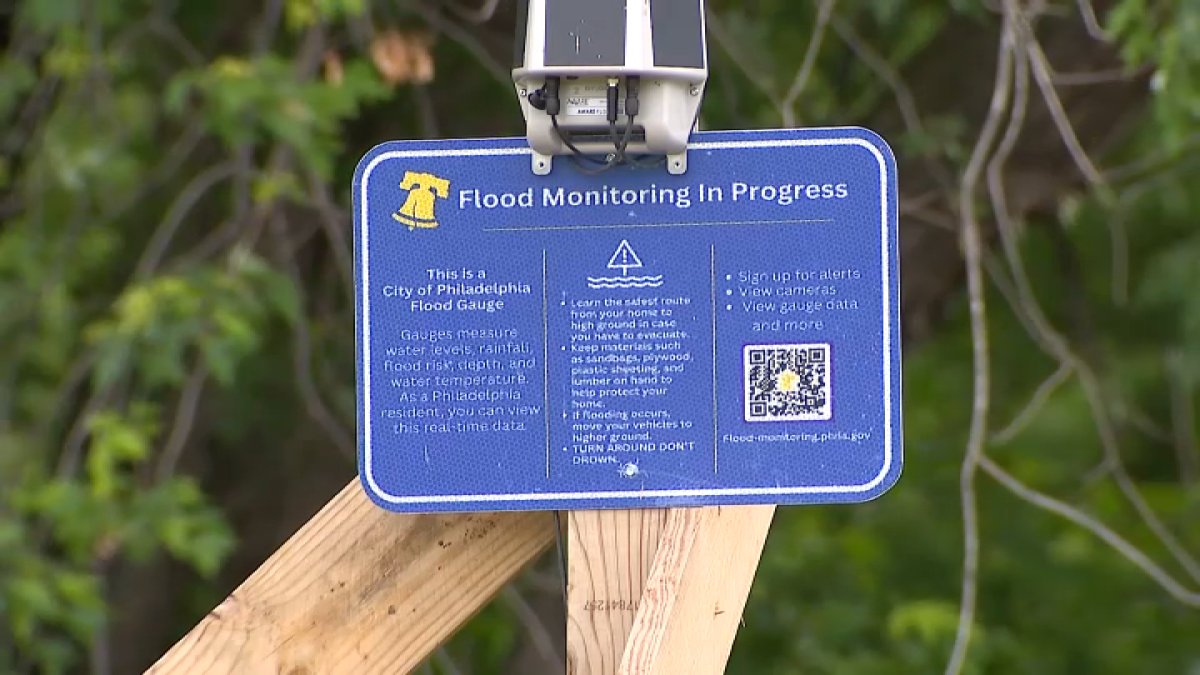
Philadelphia officials have launched a new Philadelphia public flood monitoring system designed to provide residents and business owners with real-time data to better prepare for and respond to rising water levels. The initiative, introduced on Saturday, May 9, 2026, transitions critical emergency data from internal government use to a public-facing web platform, allowing for immediate situational awareness during severe weather events.
The system was officially unveiled during a ribbon-cutting ceremony held during Eastwick Community Day in Southwest Philadelphia. Developed by the Philadelphia Office of Emergency Management (OEM), the technology allows users to monitor flood conditions across the city via smartphones or computers, providing a vital layer of protection in a state where flooding is recognized as one of the most common and costly natural disasters.
By integrating live data feeds and visual monitoring, the city aims to reduce the risks associated with sudden water rises that can overwhelm urban infrastructure, including sewers, streets, rivers, and creeks. The launch represents a strategic shift toward community-led resilience, emphasizing the importance of providing citizens with the same tools used by emergency responders to make informed safety decisions.
Real-Time Data and Urban Monitoring Capabilities
The new monitoring network currently utilizes nine strategic locations across Philadelphia to track water levels and environmental conditions. This data is accessible to the public through the official portal at flood-monitoring.phila.gov, where users can search for specific addresses or browse a map of the city’s most vulnerable points.
According to the Office of Emergency Management, the system provides more than just water depth measurements. Users can track several key meteorological and hydrological metrics, including:
- Real-time water levels: Current depths at monitoring gauges to identify potential overflows.
- Precipitation tracking: Real-time rainfall data to gauge the intensity of ongoing storms.
- Environmental metrics: Monitoring of water temperature and barometric pressure.
- Visual verification: Live camera feeds from flood-prone areas, allowing residents to see actual conditions before attempting to travel through specific zones.
The monitoring points are strategically placed along key waterways and high-risk street locations. These include Darby Creek, Cobbs Creek, and Pennypack Creek, as well as the Manayunk Canal. The system monitors critical transit corridors and intersections, such as Kelly Drive and Midvale Avenue, Bayton Street and Church Lane, and Godfrey Avenue and Beechwood Street.
A Strategic Focus on Community Resilience in Eastwick
The deployment of this technology builds upon existing emergency frameworks in the Eastwick neighborhood of Southwest Philadelphia. Eastwick has historically faced significant challenges due to its geography, experiencing severe flooding from tropical storms and heavy rainfall. The city’s decision to launch the system during Eastwick Community Day underscores the neighborhood’s role as a focal point for the city’s climate adaptation strategies.
This initiative is a continuation of a broader effort to protect Eastwick, which previously saw the introduction of the ReadyPhiladelphia Eastwick Alerts. That program served as the city’s first neighborhood-targeted emergency messaging system, creating a localized communication loop between the OEM and residents. The new real-time monitoring system adds a visual and data-driven layer to those existing alerts, moving from simple notification to active, user-driven monitoring.
Dominick Mireles, Deputy Managing Director of Community Safety, emphasized that the development of these tools was rooted in community feedback. “Listening to residents, addressing their concerns, and incorporating their ideas into potential solutions is critical to creating safer and stronger communities,” Mireles stated. He further noted that the project was the result of inter-agency collaboration designed to provide residents with the “emergency awareness and preparedness tools and resources they need to be more prepared for flooding.”
The Role of the Citywide Flood Technology Project
The launch on May 9 marks the next phase of a comprehensive citywide flood technology project. This broader effort is structured as a pilot program intended to identify the most effective placements for gauges and cameras based on historical flood data and real-time performance. By treating the initial nine locations as a pilot, the city can refine the technology before potentially expanding the network to other flood-prone areas of the city.

The integration of this technology is part of a larger urban planning goal to mitigate the impact of “flash flooding,” which often develops quickly with little warning. By providing public access to barometric pressure and rainfall data alongside water levels, the OEM is enabling a more sophisticated level of preparedness for the average citizen, allowing them to anticipate flooding before water reaches the streets.
For residents and business owners, the practical application of the system is immediate. During a storm event, a business owner in the Manayunk area or a resident near Cobbs Creek can verify the status of nearby waterways without relying solely on general weather forecasts, which may not account for the hyper-local nature of urban creek overflows.
How to Access and Use the Flood Monitoring System
The city has designed the interface to be intuitive for a global and local audience, ensuring that accessibility is not a barrier during an emergency. Residents can access the system through the following steps:
1. Visit flood-monitoring.phila.gov on any mobile device or desktop computer.
2. Use the map interface to select a specific gauge or camera location.
3. Enter a specific address to find the nearest monitoring point.
4. Review the live camera feed and current water level readings to determine if a route is safe or if property protections (such as sandbags or barriers) need to be deployed.
The OEM encourages all Philadelphians to familiarize themselves with the tool before the next major weather event occurs, as real-time data is most effective when users already understand how to interpret the readings for their specific neighborhood.
As the city continues to monitor the effectiveness of this pilot program, the Office of Emergency Management is expected to evaluate the data collected to determine where additional gauges and cameras are most needed. Further updates regarding the expansion of the network and the integration of more neighborhood-specific alerts will be provided through official city channels.
World Today Journal encourages readers to share this resource with those living in flood-prone urban areas. We welcome your comments on how your city is utilizing technology to combat climate-related flooding.