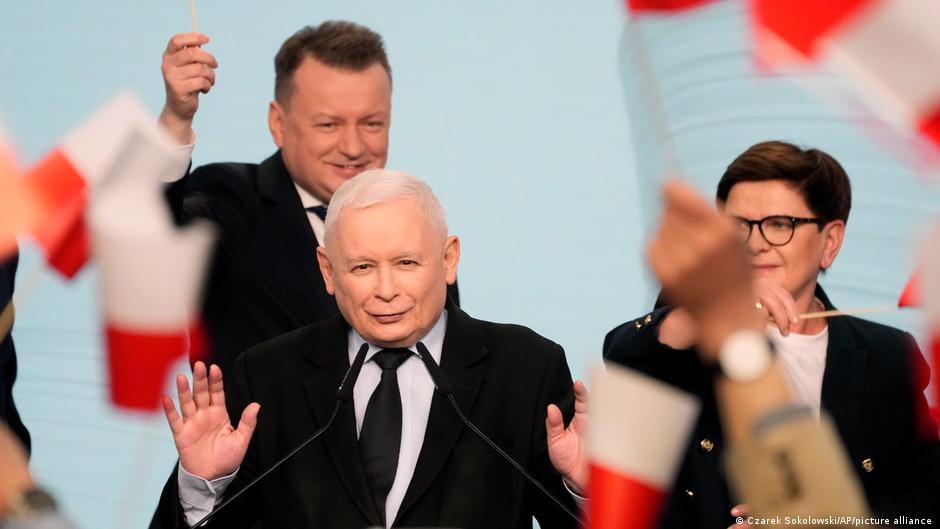
Poland’s main conservative opposition force is grappling with internal fractures following a high-stakes power struggle that centers on the political future of former Prime Minister Mateusz Morawiecki. The internal discord within the Law and Justice party—known by its Polish acronym PiS—has escalated sharply amid disputes over party direction, leadership strategy, and alignment with far-right political factions. According to reports from European public broadcasters and regional news outlets, party leadership faced mounting pressure over how to position the nationalist movement against the current coalition government led by Prime Minister Donald Tusk.
The friction inside Poland’s largest opposition party broke into the open as senior figures debated disciplinary measures against Morawiecki, a central architect of the party’s economic policies during its eight years in power. Political analysts note that any formal move to marginalize or expel Morawiecki could alienate moderate conservative voters and significantly dampen the party’s broader electoral appeal. The internal friction highlights a deeper identity crisis for PiS as it navigates the post-election landscape and attempts to maintain a unified front against the ruling centrist administration.
Party insiders and parliamentary sources have confirmed that debates over ideological purity and tactical alliances have created deep divisions within the PiS leadership council. While hardline factions advocate for a more assertive, populist posture that embraces elements of Poland’s far-right political spectrum, moderate voices within the party warn that such a shift risks isolating key demographics necessary to win future national elections. The ideological tug-of-war comes at a critical juncture for the Polish political opposition, which is striving to rebuild its voter base following its ouster from power in late 2023.
Ideological Shifts and the Far-Right Dilemma
The strategic debate inside the Law and Justice party largely revolves around how to respond to the growing electoral footprint of alternative nationalist groups, such as the Confederation Liberty and Independence party. According to political commentators following Polish parliamentary developments, some factions within PiS believe that adopting harder-right rhetoric is essential to recapturing disillusioned voters. Conversely, pragmatists argue that moving too far to the political margins will permanently fracture the broad tent coalition that kept PiS in power for two consecutive terms.
Mateusz Morawiecki, who served as prime minister from 2017 until late 2023, has frequently been viewed by moderate conservatives as a bridge to center-right business interests and European Union partners. His potential sidelined status or departure from the core leadership circle has raised concerns among party loyalists who credit his administration with steering Poland through complex economic challenges, including the COVID-19 pandemic and the regional energy crisis sparked by the conflict in Ukraine. Public opinion surveys cited by regional analysts indicate that any prolonged internal conflict could severely erode public trust in the opposition’s governance capabilities.
Implications for the Polish Political Landscape
The current turbulence within the opposition ranks offers a strategic advantage to Prime Minister Donald Tusk’s governing coalition, which continues to implement its legislative agenda while managing a diverse parliamentary majority. Political scientists note that a divided opposition struggles to mount effective legislative resistance or present a coherent alternative vision for Poland’s economic and foreign policies. As the internal power struggle unfolds, attention remains focused on upcoming party congresses and regional committee meetings where the leadership issues are expected to come to a head.
Observers of Polish politics emphasize that the resolution of this internal crisis will dictate the trajectory of conservative politics in Poland for years to come. Whether PiS can reconcile its internal factions or whether the party will suffer a permanent splintering remains one of the most critical questions facing the nation’s democratic institutions. Official party statements and scheduled leadership votes in the coming weeks will provide clearer signals regarding the ultimate direction of the opposition movement.
Keep reading