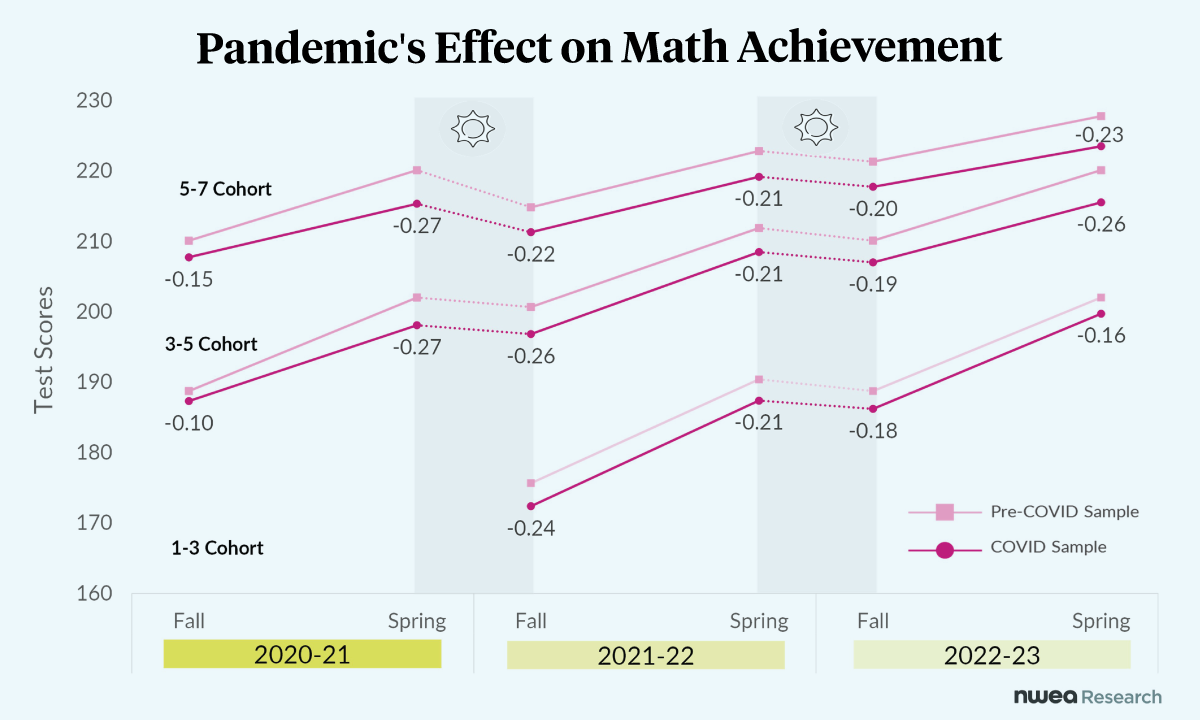
For years, the Israeli education system has operated as a cornerstone of national resilience, adapting to the unique pressures of a region in constant flux. Though, a compounding series of systemic shocks—beginning with the global pandemic and accelerating through the trauma of recent conflict—has left a generation of students in a state of profound fragility. Educators are now sounding the alarm over a significant decline in academic performance and cognitive stamina, describing a phenomenon of “educational rupture” that threatens the long-term trajectory of millions of young learners.
The crisis is not merely a matter of falling grades but a fundamental shift in how students process information. According to Professor Florence Strul-Zilberberg, a high school teacher observing these trends on the ground, the cumulative effect of these disruptions has manifested as an alarming drop in school levels. The struggle is most evident in core competencies: students are finding it increasingly difficult to read long-form texts, compose coherent written arguments and solve basic problems that would have been routine for previous cohorts.
This academic erosion is not isolated to a single demographic but spans across key disciplines, including mathematics, sciences, and language arts—specifically Hebrew and English. The result is a student body characterized by a lack of concentration, a loss of methodical study habits, and a pervasive decline in self-confidence. As the education system attempts to bridge these gaps, the challenge is compounded by a psychological environment where stability has become a luxury.
The COVID-19 Catalyst and the Digital Divide
The current fragility began with the onset of the COVID-19 pandemic, which triggered a chaotic transition to remote learning. While digital tools were deployed to maintain continuity, the “virtual school” failed to replicate the structural stability of the physical classroom. For many students, the lack of a disciplined environment led to immediate academic detachment. This period exposed and widened existing socioeconomic inequalities, as students without reliable internet access or a supportive home environment were effectively left behind.
The pandemic did more than create gaps in knowledge; it disrupted the social-emotional development of children during critical growth phases. The inability to engage in peer-to-peer learning and the loss of the teacher-student bond created a pedagogical fracture. This initial shock left the system vulnerable, meaning that when subsequent crises hit, students had no academic or emotional “buffer” to lean on.
The Psychological Toll of Conflict and Trauma
If the pandemic created a pedagogical gap, the events of October 7 and the ensuing conflicts have introduced a layer of profound psychological trauma. The impact of war on the classroom is not limited to those in direct conflict zones; it is a national phenomenon. Students are navigating a landscape of anxiety, grief, and instability, often while dealing with the displacement of their families or the absence of parents serving as military reservists.
Professor Strul-Zilberberg emphasizes that normal learning is nearly impossible in a country experiencing collective shock. The cognitive load required to process trauma competes directly with the cognitive resources needed for academic achievement. This has led to observable deficits in memory and a sharp decline in motivation. When the home and the school—the two primary pillars of a child’s stability—are both affected by the volatility of war, the “educational stability” necessary for deep learning vanishes.
The resulting state is one of permanent instability. Students are no longer moving through a linear educational journey but are instead navigating a succession of crises. This environment prevents pedagogical continuity, making it difficult for teachers to build upon previous lessons because the students’ mental and emotional states are in constant flux.
Analyzing the Academic Decline
The decline in performance is most visible in subjects that require sustained focus and complex synthesis. The struggle with “long texts” mentioned by educators is a critical indicator of a decline in deep reading skills, a prerequisite for higher education and critical thinking. When students lose the ability to engage with complex narratives or multi-step mathematical problems, the gap between their current level and the required curriculum widens.
- Mathematics and Science: A decline in the ability to solve simple problems suggests a loss of foundational logic and a decrease in the persistence required to operate through difficult equations.
- Language Proficiency: Struggles in both Hebrew and English indicate a broader crisis in literacy and communication, affecting how students express their thoughts and interpret information.
- Cognitive Function: The combination of stress and disrupted schooling has led to shortened attention spans and impaired memory retention.
Key Takeaways on the Educational Crisis
| Driver | Primary Impact | Long-term Risk |
|---|---|---|
| COVID-19 | Digital divide and loss of classroom structure | Permanent learning gaps in foundational years |
| October 7 / War | Collective trauma and psychological shock | Chronic anxiety and cognitive impairment |
| Systemic Instability | Loss of pedagogical continuity | Decreased motivation and academic detachment |
The Path Toward Recovery
Addressing this “fragile generation” requires more than just remedial tutoring; it necessitates a holistic approach that integrates mental health support with academic recovery. The Israeli education system must reconcile the need for curriculum adherence with the reality of a traumatized student body. This means prioritizing emotional regulation and psychological safety before attempting to close the academic gaps in math and science.
For policymakers and educators, the goal is to restore the school as a sanctuary of stability. By creating predictable environments and providing targeted support for those most affected by the digital divide and war-time trauma, there is a possibility of reversing the current trend. However, the window for intervention is narrow, as these gaps risk becoming permanent if not addressed during the current developmental stages of the affected students.
The recovery process will likely require an unprecedented level of coordination between the Ministry of Education, mental health professionals, and community organizations to ensure that no student remains “detached” from the system.
The next critical checkpoint for the education system will be the release of the upcoming national assessment data and the implementation of specialized trauma-informed teaching modules across the school districts. These updates will provide a clearer metric of whether the current recovery efforts are successfully stabilizing the student population.
Do you believe educational systems globally are equipped to handle cumulative crises like these? Share your thoughts in the comments below or share this analysis with your network.
Related reading