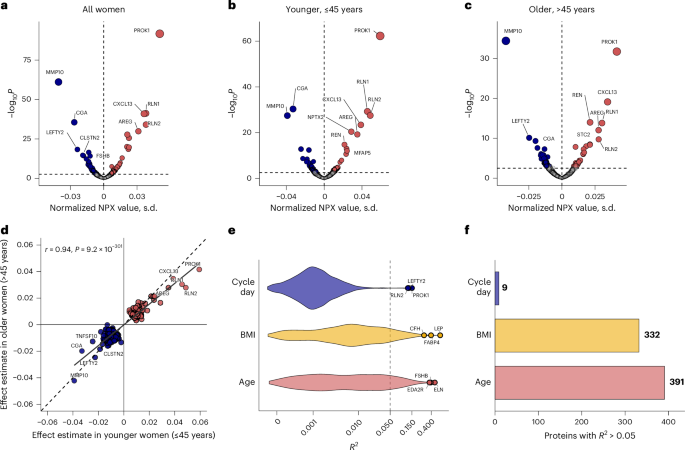
Understanding the intricacies of the human menstrual cycle has long been a cornerstone of reproductive medicine, but a novel breakthrough is shifting the focus from hormones to proteins. A comprehensive study published on April 13, 2026, has identified a detailed plasma proteomic signature of the human menstrual cycle, offering a new lens through which clinicians and researchers can view female reproductive biology.
By analyzing the protein composition of blood plasma, researchers have uncovered distinct patterns that shift across different phases of the menstrual cycle. This discovery moves beyond traditional hormone tracking, providing a more complex and nuanced map of the biological changes occurring within the female body every month.
The research, detailed in Nature Medicine, represents one of the largest efforts to date to map the proteome—the entire set of proteins expressed by a genome—specifically in the context of the menstrual cycle. By leveraging large-scale data, the study provides a foundation for more accurate predictions of cycle phases and a deeper understanding of how these proteins relate to overall health.
Mapping the Proteome: The Scale of the Study
The depth of this research was made possible through the use of the UK Biobank, a massive longitudinal study that provides researchers with genetic and health information from half a million participants. For this specific analysis, researchers focused on a cohort of over 2,700 women, examining the circulating proteins in their plasma across various stages of their menstrual cycles .
The scale of the molecular analysis was equally ambitious. The team tracked nearly 3,000 different circulating plasma proteins, searching for those that fluctuated in a predictable manner. Proteins are the workhorses of the body, executing the instructions sent by DNA and regulated by hormones; seeing how they change in tandem with the menstrual cycle provides a high-resolution picture of reproductive physiology.
The resulting data revealed that these proteins do not change randomly. Instead, they form distinct “proteomic signatures”—specific combinations and concentrations of proteins that are characteristic of particular phases of the cycle. This means that a blood sample could potentially act as a biological timestamp, revealing exactly where a woman is in her cycle with high precision.
Clinical Implications for Gynecological Health
While the ability to predict the phase of a menstrual cycle is scientifically significant, the broader implications for women’s health are where this research holds the most promise. The study suggests that these proteomic patterns can shed light on the underlying mechanisms of various gynecological disorders.
Many reproductive health issues, such as polycystic ovary syndrome (PCOS) or endometriosis, are characterized by disruptions in the normal cycling of hormones and biological processes. By establishing a “baseline” proteomic signature for a healthy cycle, researchers can now more easily identify deviations in those signatures that may signal the presence of a disorder.
This approach could lead to the development of more sophisticated diagnostic tools. Rather than relying solely on patient-reported symptoms or intermittent hormone tests, clinicians may eventually use proteomic profiling to detect subtle biological irregularities long before they manifest as severe clinical symptoms.
Why a Proteomic Signature Matters
To understand why this is a leap forward, it is helpful to distinguish between proteomics and the traditional endocrine (hormone) approach. Hormones, like estrogen and progesterone, act as the “signals” or messengers. Proteins, however, are often the “effectors”—the molecules that actually carry out the physiological changes in the uterine lining, the ovaries, and other systemic organs.
By identifying the plasma proteomic signature of the human menstrual cycle, scientists are essentially looking at the actual work being done in the body, rather than just the signals being sent. This provides a more comprehensive understanding of how the reproductive system interacts with the rest of the body’s biological systems.
The Path Toward Personalized Reproductive Medicine
The ability to accurately predict the menstrual cycle phase through plasma proteins opens the door to highly personalized healthcare. In the future, this could influence how medications are timed or how fertility treatments are administered, ensuring that interventions are aligned with the patient’s specific biological state.

this research contributes to the broader effort of closing the “gender health gap” in medical research. For decades, many large-scale biological studies focused primarily on male subjects or failed to account for the cyclical biological changes in women. Integrating menstrual cycle proteomics into broader health data helps ensure that medical benchmarks are accurate for all patients.
Key Takeaways
- Large-Scale Data: The study utilized data from over 2,700 women via the UK Biobank.
- Protein Mapping: Nearly 3,000 circulating plasma proteins were analyzed to find distinct patterns.
- Predictive Power: The research established a proteomic signature that allows for the accurate prediction of the menstrual cycle phase.
- Medical Potential: The findings provide new insights into female reproductive biology and the nature of gynecological disorders.
As we glance forward, the next step for the scientific community will be to validate these proteomic signatures across more diverse populations to ensure the markers are universal. While the UK Biobank provides a robust dataset, expanding this research to include various ethnicities and ages will be critical for global clinical application.
Notice currently no scheduled public hearings or regulatory filings regarding the immediate clinical rollout of this proteomic testing, as the research remains in the discovery and validation phase. However, the publication in Nature Medicine marks a significant milestone in the transition from basic biology to potential diagnostic application.
Do you believe proteomic tracking will eventually replace traditional hormone testing in reproductive health? Share your thoughts in the comments below or share this article with your network to join the conversation.
Related reading