
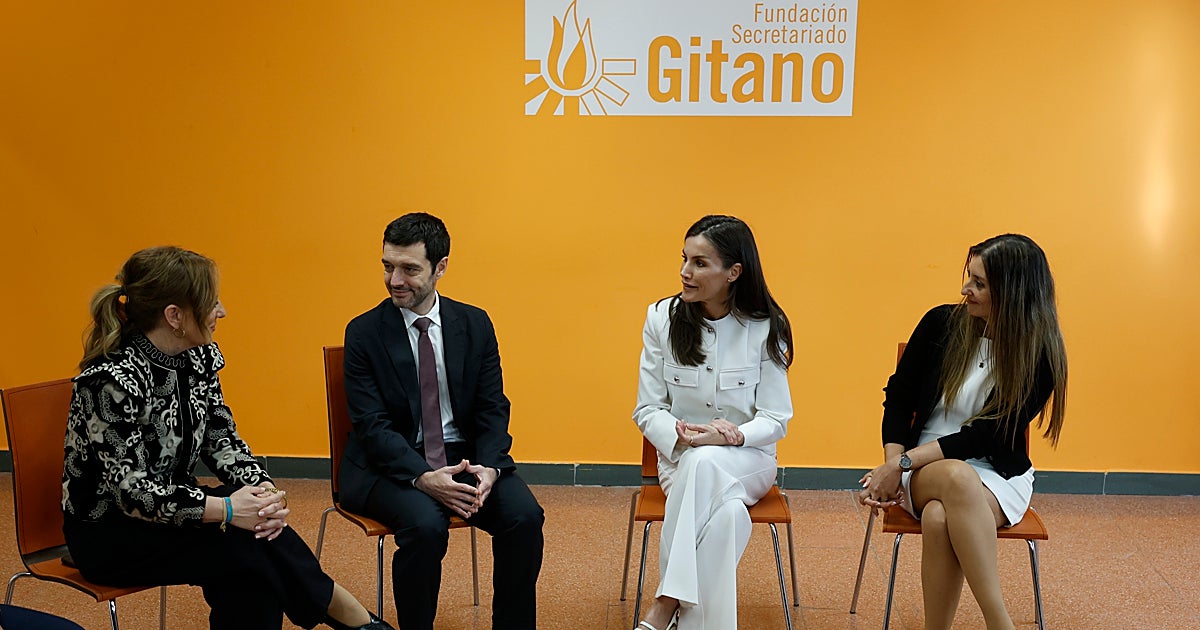
In a gesture aimed at amplifying the voices of one of Spain’s most marginalized groups, Queen Letizia’s meeting with Roma women in Vallecas on Thursday, April 30, 2026, served as a poignant intersection of royal advocacy and grassroots struggle. The visit, centered on the critical issues of employment access, educational attainment, and gender equality, took place in the heart of Madrid’s working-class Vallecas district, where the Queen engaged in an intimate dialogue over coffee with women who have spent decades fighting systemic barriers.
The encounter was not merely a ceremonial appearance but a targeted effort to highlight the “double discrimination” faced by Roma women—the intersection of ethnic prejudice and gender-based inequality. By stepping into a community space to listen to first-hand accounts of hardship and resilience, the Queen positioned herself as a bridge between the institutional power of the state and the lived realities of women striving for social and economic autonomy.
Central to the day’s events was the collaboration with the Fundación Secretariado Gitano (FSG), an organization dedicated to the integration and empowerment of the Roma community. The dialogue focused on the specific gaps that prevent Roma women from entering the formal labor market and the educational hurdles that often truncate their professional aspirations. For many of the women present, the visit represented a historic moment of visibility, validating their struggle for basic rights and recognition within Spanish society.
Breaking the Cycle: Employment and Education in Vallecas
The conversation in Vallecas pivoted heavily toward the economic precariousness that continues to plague Roma households. For many Roma women, the path to employment is obstructed not by a lack of will or skill, but by ingrained stereotypes and structural exclusions. During the dialogue, participants shared stories of the “invisible walls” they encounter during job applications, where ethnic identity often outweighs professional qualifications.
Education was identified as the primary tool for breaking this cycle of poverty. However, the Queen and the representatives from the Fundación Secretariado Gitano discussed how educational gaps are often wider for girls within the community. Factors ranging from early family responsibilities to a lack of culturally sensitive support in schools contribute to higher dropout rates. The objective of the visit was to underscore that educational equity is not just about school enrollment, but about ensuring that Roma women have the support systems necessary to complete their degrees and transition into meaningful careers.
By focusing on the “access to employment” framework, the Queen highlighted the demand for corporate social responsibility and public policy shifts that actively dismantle discriminatory hiring practices. The discussion emphasized that when a Roma woman gains economic independence, the ripple effect benefits the entire family unit, improving health outcomes and educational prospects for the next generation.
A Dialogue of Dignity: Coffee, Culture, and Caló
The atmosphere of the meeting was intentionally informal, designed to foster an environment of trust and openness. The choice of a “coffee dialogue” allowed the women of Vallecas to speak candidly about their lives, moving beyond the sterile environment of official government offices. This approach mirrored the Queen’s broader strategy of using her platform to bring attention to “invisible” social crises through direct, human-centric engagement.

A significant highlight of the visit was the celebration of Roma identity and heritage. The event included a tribute to the cultural richness of the Roma people, featuring traditional music and a symbolic gesture involving a plaque written in Caló—the mixed language spoken by the Spanish Roma community. The inclusion of Caló was a powerful acknowledgment of a linguistic and cultural identity that has often been suppressed or ignored by the mainstream.
The presence of music and art during the encounter served as a reminder that the fight for equality is not only about economic metrics but about the right to exist and thrive with dignity. For the women in attendance, the act of sharing their culture with the Queen was an expression of pride and a demand for a society that values diversity rather than merely tolerating it.
The Queen as a Social ‘Altavoz’
Throughout her tenure, Queen Letizia has increasingly utilized her role to act as an “altavoz”—a loudspeaker—for those without a voice in the political sphere. Her focus on the Roma community in Vallecas is part of a consistent pattern of advocacy for women’s rights and social inclusion. By associating the Crown with the struggle for gender equality among Roma women, she brings a level of national and international attention to an issue that is frequently sidelined in general policy discussions.
The Queen’s choice of attire for the visit—a simple, white ensemble—was noted by observers as a reflection of the event’s purpose: to be approachable and focused on the people rather than the pomp. This intentional lack of excess served to minimize the distance between the monarchy and the citizens of Vallecas, reinforcing the message that the Queen was there to listen, not to preside.
The impact of such visits extends beyond the immediate attendees. When the highest representative of the state acknowledges the systemic struggle of a marginalized group, it sends a signal to government institutions and the private sector that the status quo is unacceptable. The “historic moment” described by the women of Vallecas lies in this shift of perception—from being viewed as subjects of social assistance to being recognized as active agents of change in their own lives.
Key Takeaways from the Vallecas Engagement
- Intersectionality: The visit highlighted the “double burden” of being both a woman and a member of the Roma community, facing compounded discrimination.
- Structural Barriers: Discussions focused on the systemic nature of unemployment and educational gaps, rather than individual failures.
- Cultural Validation: The use of the Caló language and traditional music underscored the importance of identity in the pursuit of equality.
- Institutional Partnership: The role of the Fundación Secretariado Gitano was emphasized as essential for bridging the gap between marginalized communities and state resources.
- Royal Advocacy: The Queen’s presence served to elevate the visibility of Roma women’s struggles on a national stage.
Looking Forward: From Dialogue to Action
While the visit to Vallecas provided a platform for visibility, the true measure of its success will be the tangible policy changes that follow. The dialogue raised urgent questions about the efficacy of current integration programs and the need for more aggressive anti-discrimination laws in the workplace. The women of Vallecas have made it clear that while visibility is a start, economic autonomy and educational equity are the only permanent solutions to the cycle of exclusion.
The Fundación Secretariado Gitano continues to lead the charge in implementing programs that facilitate this transition, focusing on vocational training and mentorship for young Roma women. The Queen’s engagement is expected to galvanize further support for these initiatives, potentially leading to increased funding or new public-private partnerships aimed at Roma employment.
The next confirmed checkpoint for the Crown’s social agenda involves a series of follow-up reviews on educational inclusion projects across Madrid, where the insights gathered from the Vallecas dialogue will likely inform future royal engagements and advocacy efforts.
World Today Journal encourages readers to share their perspectives on social inclusion and the role of public figures in driving systemic change in the comments below.