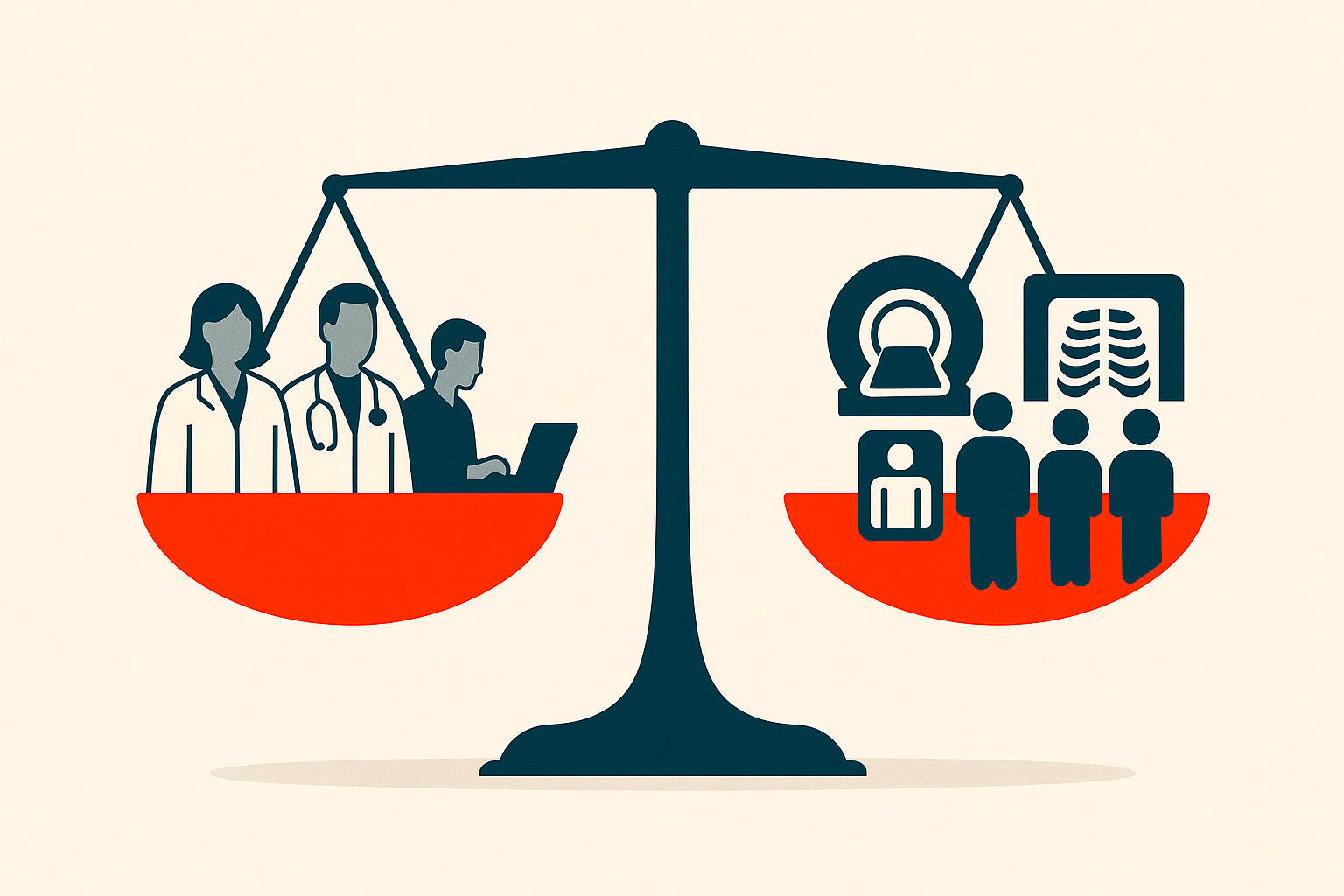
The perception of a growing healthcare crisis in many regions is often fueled by a complex interplay of factors, including an aging population, uneven distribution of medical professionals, and increasing demand for diagnostic imaging. While overall numbers of radiologists may be rising, a significant disparity exists in access to these crucial specialists, particularly in rural and underserved areas. This imbalance is prompting innovative solutions, from leveraging telemedicine to rethinking the roles within imaging teams.
The issue isn’t simply a shortage of radiologists, but a maldistribution. France Imageries Territoires, a network of 300 radiologists, has highlighted the stark inequalities across different departments in France. Their analysis reveals a significant gap between regions with ample radiological coverage and those severely lacking. This uneven distribution directly impacts patient access to timely and accurate diagnoses, potentially leading to delayed treatment and poorer health outcomes.
The Growing Divide in Radiological Access
According to France Imageries Territoires, the Rhône department boasts 4.29 radiologists for every 10,000 inhabitants, while the Eure department struggles with a mere 0.22 per 10,000. This dramatic difference underscores the challenges in ensuring equitable access to care. The network’s findings align with broader concerns about desertification in medical imaging, where access to essential services like MRI and CT scans can be significantly delayed – sometimes up to six months for mammography and four months for MRI – in certain areas.
The problem is further compounded by the aging demographic of radiologists. Over 60% of French departments have a radiologist population with an average age exceeding 60 years, with a concerning ratio of one graduating radiologist for every three who are retiring. This looming wave of retirements threatens to exacerbate existing shortages, particularly in regions already struggling to attract and retain medical professionals. Nearly a third of French departments face difficulties in accessing MRI services, exemplified by the Eure and Guadeloupe, which have half the national average of MRI scanners per inhabitant.
Telemedicine and Delegation: Potential Solutions
To address these challenges, France Imageries Territoires proposes a two-pronged approach: expanding the use of tele-interpretation and delegating certain tasks to trained technicians. Tele-interpretation, the remote analysis of medical images, could allow radiologists to serve a wider geographic area, bridging the gap in underserved regions. This approach is particularly relevant for specialties like mammography, where remote expertise can significantly improve diagnostic accuracy and reduce delays. The network suggests allowing for the remote interpretation of mammograms and delegating clinical examinations to technicians in areas with limited resources.
Delegating tasks, such as initial clinical examinations, to trained technicians could free up radiologists to focus on more complex cases and increase overall efficiency. This model requires careful consideration of training protocols and quality control measures to ensure patient safety and accurate diagnoses. However, it represents a potential pathway to optimizing the use of existing resources and extending the reach of radiological services.
The Role of Regional Health Agencies
Efforts to combat medical desertification are similarly being spearheaded by regional health agencies. In Normandy, for example, the Agence Régionale de Santé (ARS) is focusing on increasing the number of imaging centers, particularly in areas with growing populations and identified needs. These initiatives aim to improve access to essential diagnostic imaging services and address the growing demand for timely diagnoses.
The ARS is also prioritizing preventative measures, recognizing the importance of early detection in improving patient outcomes. The focus on expanding imaging capacity is a crucial step in addressing the disparities in access to care and ensuring that all residents have access to the diagnostic tools they need.
Beyond France: A Global Challenge
The challenges facing France are not unique. Medical desertification is a growing concern in many countries, driven by similar factors such as aging populations, uneven distribution of healthcare professionals, and increasing demand for specialized services. The World Health Organization (WHO) has identified a global shortage of healthcare workers, particularly in low- and middle-income countries, which exacerbates existing inequalities in access to care.
Innovative solutions, such as telemedicine, mobile imaging units, and task-shifting, are being explored worldwide to address these challenges. However, sustainable solutions require a multi-faceted approach that includes investing in medical education, incentivizing healthcare professionals to practice in underserved areas, and leveraging technology to improve access to care. The successful implementation of these strategies requires collaboration between governments, healthcare providers, and communities to ensure that everyone has access to the diagnostic imaging services they need.
The Medeor Network’s Approach
The Medeor network, supported by France Imageries Territoires, is actively working to preserve imaging centers in isolated areas and maintain services within healthcare facilities facing potential disruptions. With a community of 400 radiologists, Medeor aims to provide pragmatic and innovative solutions to ensure continuity of care. Their approach emphasizes innovation and collaboration to address the challenges of medical desertification.
The network’s efforts highlight the importance of proactive measures to prevent the closure of essential healthcare services and maintain access to care for vulnerable populations. By focusing on sustainability and innovation, Medeor is contributing to a more resilient and equitable healthcare system.
As the demand for medical imaging continues to grow, addressing the challenges of medical desertification will require sustained investment, innovative solutions, and a commitment to ensuring equitable access to care for all. The experiences of France and other countries facing similar challenges offer valuable lessons for policymakers and healthcare providers seeking to build more resilient and equitable healthcare systems.
The next step in addressing this issue will be the ongoing evaluation of telemedicine initiatives and the implementation of strategies to attract and retain radiologists in underserved areas. Continued monitoring of demographic trends and healthcare needs will be crucial to inform future policy decisions and ensure that access to diagnostic imaging services remains a priority.
What are your thoughts on the challenges of medical desertification? Share your experiences and ideas in the comments below. Don’t forget to share this article with your network to raise awareness about this critical issue.