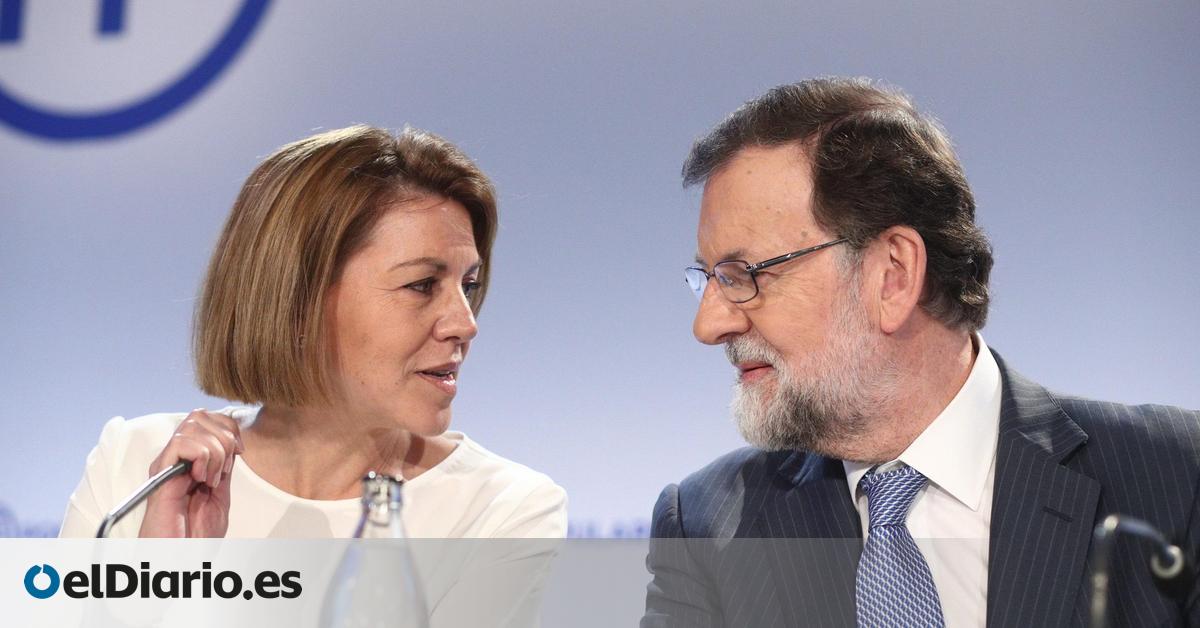
Five years after Judge Manuel García Castellón initiated the investigation into the alleged Kitchen operation, the case has reached a pivotal moment with the testimony of two former senior figures of Spain’s People’s Party (PP): Mariano Rajoy and María Dolores de Cospedal. Both are scheduled to appear as witnesses in the ongoing trial at Spain’s National Court (Audiencia Nacional), a development that underscores the enduring scrutiny of alleged police surveillance targeting former PP treasurer Luis Bárcenas.
The Kitchen investigation centers on claims that Spain’s Interior Ministry conducted a covert surveillance operation between 2013 and 2015, allegedly using reserved funds to monitor Bárcenas and seize documents related to the party’s unofficial accounting, known as the ‘B archive’ or ‘caja B’. Bárcenas, who served as the PP’s treasurer during the Gürtel corruption scandal, has consistently maintained that the operation originated within the PP hierarchy before being transferred to state institutions.
According to Bárcenas’ testimony during the trial, he instructed a fellow inmate at Soto del Real prison to delete digital files, including audio recordings he identified with the initials ‘M.R.’, which he stated referred to Mariano Rajoy. He also referenced recordings linked to Javier Arenas, another senior PP figure. These claims form part of Bárcenas’ broader assertion that the PP leadership was aware of and facilitated the initial stages of the alleged espionage plot.
The trial has seen conflicting narratives regarding the extent of involvement by Spain’s political and security establishments. While Bárcenas has pointed to the PP as the origin of the operation, judicial proceedings have largely focused on former Interior Ministry officials, including ex-minister Jorge Fernández Díaz and his deputy Francisco Martínez, who sit in the dock as the primary accused.
Judge García Castellón’s handling of the case has drawn particular attention for its treatment of potential evidence against senior PP figures. During the investigative phase, he limited probes into allegations against Cospedal, who had been briefly imputed as a suspect in connection with her alleged contacts with police commissioner José Manuel Villarejo. That imputation was later lifted after approximately two months, with the judge citing protections around private meetings as a rationale for not pursuing further inquiry.
The judge’s approach extended to Rajoy as well, with restrictions placed on lines of questioning that could potentially incriminate the former prime minister. Tribunal president Teresa Palacios has previously barred questions that might lead to self-incrimination for witnesses, a standard applied in the Kitchen proceedings. Rajoy’s appearance marks his third time testifying as a witness in a National Court case, having previously appeared during his premiership and in relation to the separate caja B investigation.
A key element of the testimony has revolved around alleged audio recordings in which Villarejo and associates used aliases such as ‘El Asturiano’ and ‘El Barbas’ to refer to Rajoy. Police inspector Gonzalo Fraga, head of Internal Affairs, testified that these terms were understood to denote Rajoy Brey, a statement he delivered without reservation during his examination.
Villarejo himself claimed to have provided Rajoy with a personal mobile number for direct communication about the Kitchen operation, asserting that the line was registered to the PP. Judge García Castellón verified the number’s association with the party but closed the investigative phase in July 2021 before determining who specifically used the line during the relevant period, leaving unresolved questions about the nature and extent of any direct contact.
Regarding the alleged existence of a recording capturing Rajoy destroying documents related to the caja B, Bárcenas has stated that he alone possesses knowledge of such a tape, which he claims shows the former prime minister shredding a photocopy of B-account balances in 2010. Bárcenas said he delivered the document to Rajoy’s office during the Gürtel investigation, asserting that Rajoy reacted with surprise at the existence of written records of illicit financing before destroying it in a paper shredder.
The tribunal has permitted questioning about peripheral matters only if they relate to clarifying aspects of the alleged espionage operation against Bárcenas. However, prosecutors have been barred from directly asking Rajoy whether he is the ‘M.R.’ referenced in Bárcenas’ handwritten notes detailing alleged illicit payments—a restriction that underscores the procedural boundaries shaping the witness examinations.
Efforts to revisit the case have emerged periodically. In 2022, following the release of an audio recording in which Cospedal reportedly urged Villarejo to halt the publication of the Bárcenas papers, prosecutors sought to renew investigative activity. However, Judge García Castellón declined to reopen the inquiry, and the Anticorruption prosecutor’s office did not appeal, reportedly following directives from its leadership.
As the trial continues, the testimony of Rajoy and Cospedal represents a significant juncture in a case that has spanned nearly a decade, reflecting ongoing tensions between judicial oversight, political accountability, and the limits of investigative authority in high-profile corruption matters.
The next scheduled development in the proceedings is the anticipated testimony of María Dolores de Cospedal following Mariano Rajoy’s appearance, with further sessions expected to examine the roles of intermediary figures such as José Luis Ortiz, former head of Cospedal’s cabinet, who has also been called to testify.
Readers following this case can access official updates through the Spanish National Court’s public proceedings portal, where hearing schedules and released testimonies are periodically posted. Share your thoughts on the implications of this testimony for Spain’s ongoing reckoning with corruption and state surveillance.
Worth a look