
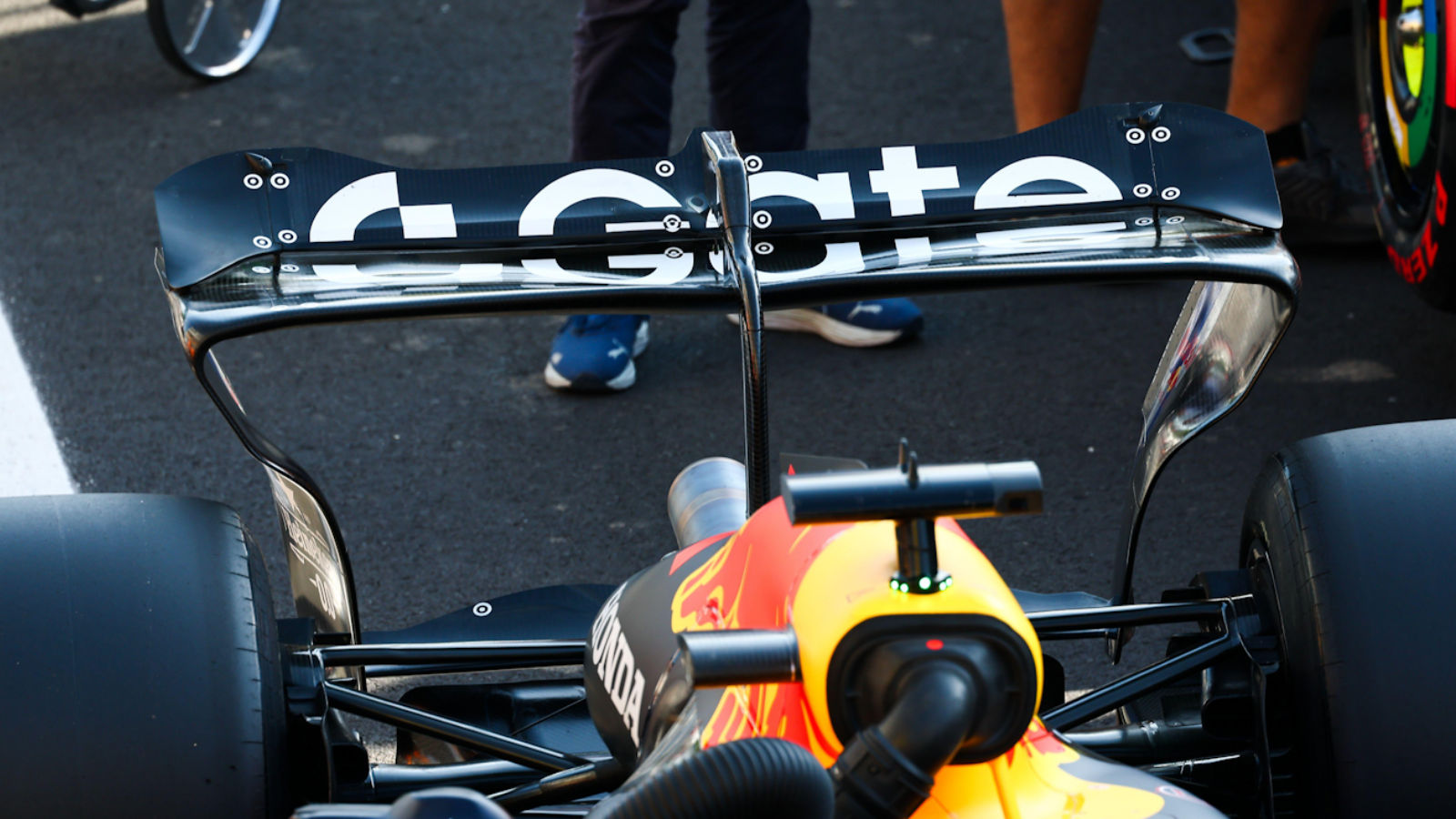
Formula 1 has returned to the United States for the Miami Grand Prix, and Red Bull Racing has arrived with a technical gamble that has immediately captured the paddock’s attention. During the free practice sessions, Max Verstappen was spotted piloting the RB22 equipped with a radical new rear wing configuration, a design already being dubbed the Macarena wing
by analysts and fans alike.
The introduction of this specific aerodynamic component is part of a broader, extensive upgrade package aimed at reversing a challenging start to the 2026 season. The RB22’s new rear wing is a direct response to a concept first pioneered by Ferrari, featuring a rotating mechanism designed to optimize the balance between downforce and straight-line speed. This technical shift comes as Red Bull seeks to reclaim its dominance in a season where the competitive gap has narrowed significantly.
The Macarena wing is not merely a cosmetic change but a functional attempt to solve ongoing balance issues that have plagued the RB22. According to reporting from GPFans, the innovation could potentially boost the car’s top speed by five to 10km per hour
, providing a critical advantage on the long straights of the Miami International Autodrome.
The Engineering Behind the ‘Macarena’ Concept
The term Macarena
refers to the wing’s ability to rotate or shift its profile, mimicking a movement similar to the famous dance. While Ferrari previously explored this rotating rear wing concept, they reportedly abandoned it due to reliability concerns. Red Bull, however, has taken a different approach to the implementation. Rather than a direct copy, the team has introduced a simplified mechanism intended to improve reliability and speed up the integration process according to technical reports.
Unlike the original Ferrari iteration, Red Bull’s version utilizes a central pillar rather than relying on the endplates for the rotation mechanism. This design choice is intended to make the wing more robust under the extreme aerodynamic loads experienced at 200 mph. The Macarena wing is paired with other significant revisions to the RB22, including a redesigned sidepod profile and updated front wing elements, signaling a comprehensive aerodynamic overhaul for the Miami weekend.
The team first validated these developments during a tightly controlled filming day at Silverstone in late April. Under the strict 200-kilometer allowance for such tests, Max Verstappen put the rotating wing through its paces to ensure the mechanism would not fail under race conditions before its public debut in Florida as reported by F1 Technical.
Hadjar’s Verdict and the Red Bull Dynamic
The Miami weekend also highlights the evolving driver dynamic at Red Bull. Isack Hadjar, who was promoted to the senior team as Verstappen’s teammate for the 2026 season, has been instrumental in the testing phase of these upgrades. Hadjar, who made a strong impression during his rookie season with Racing Bulls, has expressed a cautious optimism regarding the RB22’s new potential.
While Hadjar has acknowledged that the transition to the top team still feels weird
given the immense pressure of the second seat, he has provided critical feedback on the Miami updates. According to GPblog, the French driver has offered a verdict that suggests the updates are a step in the right direction, though he has tempered expectations regarding an immediate, overnight transformation of the car’s performance.
The synergy between the veteran Verstappen and the newcomer Hadjar is central to Red Bull’s recovery strategy. Hadjar’s ability to provide a baseline of data allows the team to refine the Macarena wing’s settings more rapidly, ensuring that Verstappen can focus on maximizing the car’s peak performance during qualifying and the race.
Key Technical Takeaways of the RB22 Miami Upgrade
- Rotating Rear Wing: The ‘Macarena’ design allows for profile shifts to balance drag and downforce.
- Top Speed Gains: Potential increase of 5 to 10 km/h on straights.
- Structural Change: Use of a central pillar for rotation instead of endplate-based mechanisms.
- Aerodynamic Suite: Redesigned sidepods and revised front wing elements to complement the rear wing.
- Validation: Tested during a 200km filming day at Silverstone prior to the Miami GP.
What This Means for the Championship Fight
For Max Verstappen, the introduction of the Macarena wing is a necessary evolution. The 2026 regulations have seen a shift in the competitive hierarchy, and the RB22 has struggled to maintain the same level of superiority seen in previous years. By adopting and refining a concept that Ferrari deemed too risky, Red Bull is signaling a willingness to take aggressive technical risks to regain the edge.
The Miami International Autodrome, with its mix of tight corners and high-speed sections, is the ideal laboratory for this experiment. If the rotating wing can provide the promised top-speed boost without sacrificing stability in the corners, Red Bull may have found a loophole to counteract the current performance of their rivals.
However, the risk remains high. The history of rotating or “active” aerodynamic elements in F1 is fraught with reliability failures and regulatory scrutiny. The team must ensure that the Macarena wing adheres strictly to the FIA’s technical regulations regarding movable aerodynamic devices to avoid any potential disqualifications or forced redesigns.
The next critical checkpoint for the team will be the qualifying session, where the true impact of the Macarena wing on single-lap pace will be revealed. Following that, the race will determine if the mechanism can withstand the heat and turbulence of a full Grand Prix distance.
Do you think Red Bull’s ‘Macarena’ wing will be the deciding factor in the 2026 title race? Share your thoughts in the comments below and follow World Today Journal for live updates from the Miami paddock.