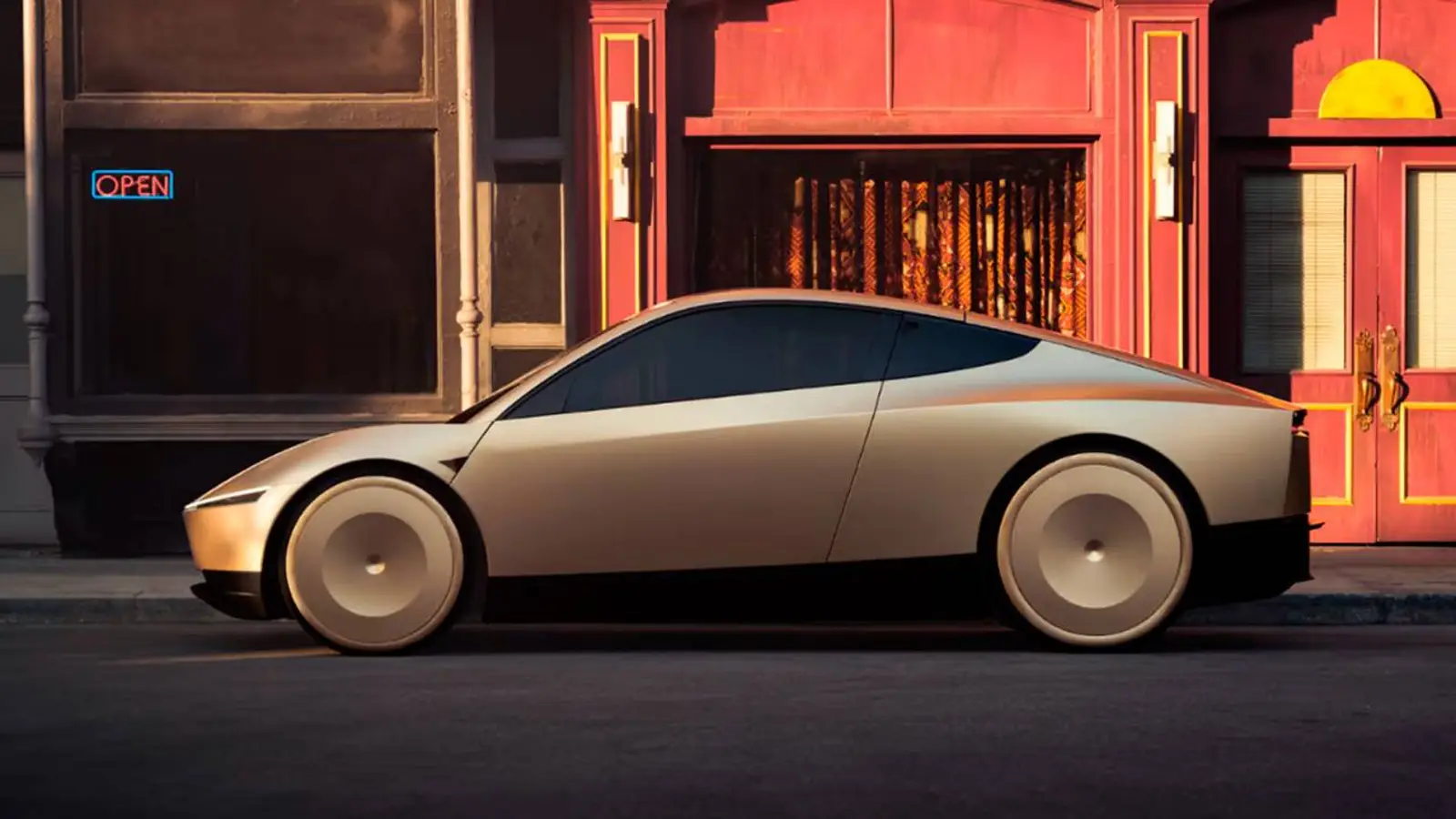
Tesla is advancing toward the potential launch of its autonomous Cybercab robotaxi service, with recent reports indicating that production of the vehicle began in late 2025. The development marks a significant milestone in the company’s long-term vision for fully self-driving transportation, a goal that has been both anticipated and scrutinized by industry experts, regulators, and the public alike. As the electric vehicle pioneer continues to refine its AI-driven technology, the prospect of deploying a fleet of driverless Cybercabs in real-world conditions moves closer to reality.
According to multiple industry sources, the initial production run of the Cybercab is expected to support a pilot robotaxi service, most likely based in Austin, Texas. The city has emerged as a leading testbed for autonomous vehicle innovation, hosting trials by several major tech and automotive companies due to its favorable regulatory environment, infrastructure readiness, and growing demand for alternative transit solutions. If confirmed, Austin would join a select group of U.S. Cities at the forefront of integrating self-driving technology into public mobility networks.
The Cybercab, first unveiled by Tesla in 2024 as part of its “We, Robot” event, is designed as a purpose-built autonomous vehicle with no steering wheel or pedals. Its futuristic, symmetrical design features gull-wing doors and a compact footprint intended to optimize urban maneuverability and passenger capacity. Unlike retrofitted models, the Cybercab is engineered from the ground up for full self-driving operation, relying entirely on Tesla’s Full Self-Driving (FSD) software suite and its proprietary AI hardware, including the latest iteration of the Dojo supercomputer for neural network training.
Tesla’s approach to autonomy differs significantly from competitors such as Waymo and Cruise, which rely heavily on lidar and high-definition mapping. Instead, Tesla’s vision-based system uses a network of cameras and neural nets trained on real-world driving data collected from its consumer fleet. While this method has drawn praise for its scalability, it has also faced criticism over safety concerns and inconsistent performance in complex urban environments, particularly during adverse weather or low-light conditions.
Regulatory approval remains a critical hurdle. In the United States, the National Highway Traffic Safety Administration (NHTSA) oversees the safety standards for autonomous vehicles, and any deployment of a driverless robotaxi service would require compliance with Federal Motor Vehicle Safety Standards (FMVSS), potentially including exemptions for vehicles lacking traditional controls. As of early 2026, Tesla has not publicly announced receipt of such exemptions for the Cybercab, though the company has previously sought regulatory flexibility for its FSD features.
Texas, still, has positioned itself as a permissive jurisdiction for autonomous testing. The Texas Department of Transportation (TxDOT) allows companies to operate self-driving vehicles under a statewide framework that emphasizes innovation and economic development. Austin, in particular, has welcomed autonomous trials through partnerships with the University of Texas and the Capital Metropolitan Transportation Authority (CapMetro), creating a collaborative ecosystem for testing emerging mobility technologies.
Should the pilot launch proceed, the Cybercab robotaxi service could offer a glimpse into the future of urban transit — one where on-demand, electric, and driverless rides reduce reliance on private car ownership and potentially lower traffic congestion and emissions. Proponents argue that such systems could improve accessibility for non-drivers, including the elderly and people with disabilities, while reducing the cost per mile of transportation through increased vehicle utilization.
Critics, however, caution against overestimating the readiness of current AI systems to handle the full complexity of city driving without human oversight. Incidents involving Tesla’s FSD beta program, including collisions and near-misses documented by the National Transportation Safety Board (NTSB), have raised questions about the robustness of the technology in unpredictable scenarios. Transparency regarding safety data, disengagement rates, and incident reporting remains a point of contention between Tesla and regulatory bodies.
Tesla has not issued an official statement confirming the start of Cybercab production or detailing plans for an Austin-based pilot. The company’s typical approach involves limited public commentary until milestones are nearing completion, often revealing updates through earnings calls, social media posts by CEO Elon Musk, or regulatory filings. Investors and analysts continue to monitor Tesla’s progress closely, as the success of the Cybercab could influence perceptions of the company’s long-term viability beyond its core electric vehicle business.
For now, the convergence of completed production tooling, regulatory leniency in Texas, and Tesla’s persistent push toward autonomy suggests that a limited robotaxi deployment in Austin may be imminent. Whether this marks the beginning of a scalable service or another phase in a prolonged development cycle will depend on technical validation, regulatory clearance, and public trust — all of which remain works in progress.
As the story develops, World Today Journal will continue to monitor official sources, including NHTSA updates, TxDOT announcements, and Tesla’s investor communications, for verified information on the Cybercab’s status and any upcoming milestones related to its autonomous robotaxi ambitions.
Stay informed. Share your thoughts in the comments below, and help spread awareness of the evolving landscape of autonomous transportation by sharing this article with your network.