
European leaders are accelerating military spending and arms deliveries to Ukraine, but high-profile voices in security circles warn the move risks provoking an overreaction from Russia—one that could destabilize the continent. According to Reuters, defense budgets across the EU have risen by an average of 12% in 2024, with Germany alone pledging €100 billion over the next decade—a record investment. Meanwhile, NATO’s latest summit in Vilnius last July formalized plans to “strengthen deterrence” against Russia, including prepositioned weapons stockpiles near Ukraine’s borders. Yet analysts like Marco Rovelli, a former Italian intelligence officer and geopolitical risk consultant, argue these steps could backfire, framing Europe’s actions as reckless provocation rather than defensive strategy.
Rovelli, who has advised governments on crisis management in Eastern Europe, told Il Fatto Quotidiano that Europe’s military buildup risks “playing with fire”—a phrase that resonates given Russia’s repeated warnings about NATO expansion. “The narrative that this is purely defensive is fading,” he said. “From Moscow’s perspective, every tank sent to Kyiv is a threat to its western flank.” This tension comes as Russia’s own defense spending hits $110 billion in 2024, up 30% since 2021, according to NATO’s latest intelligence assessments. The question now is whether Europe’s actions will trigger a Russian escalation—or whether they’re calculated steps to avoid one.
What’s clear is that the stakes are rising. Ukraine’s counteroffensive, now in its second year, has exposed gaps in both sides’ military capabilities, while Russia’s mobilization of reservists and drone strikes on European energy infrastructure have tested NATO’s resolve. The EU’s latest defense pact, signed in March, commits member states to spend at least 2% of GDP on defense by 2027—a threshold only 10 of 27 nations currently meet. Critics like Rovelli argue this rush to arm could trigger a Russian preemptive strike, not on Ukraine alone, but on NATO’s eastern flank. “The calculus in the Kremlin is simple,” he said. “If Europe is willing to arm Ukraine to the teeth, why wouldn’t they assume the next step is a direct attack on Russian territory?”
Why Europe’s Arms Buildup Could Backfire
Europe’s military strategy hinges on three pillars: increased defense spending, accelerated arms deliveries to Ukraine, and enhanced NATO rapid-reaction forces. Yet each of these moves carries risks when viewed from Moscow’s perspective.
- Defense spending surge: Germany’s €100 billion pledge—announced in February—marks the largest rearmament since World War II. But as the Financial Times notes, only 30% of this funding is earmarked for immediate procurement, leaving gaps in short-term capabilities. Russia’s state media has already framed this as a “declaration of war,” amplifying narratives of Western aggression.
- Arms deliveries: The U.S. and EU have pledged over $100 billion in military aid since 2022, including Leopard tanks, Patriot missiles, and F-16s. Yet leaks from Ukrainian military sources suggest these weapons are being deployed in ways that could provoke Russian countermeasures, such as strikes on logistics hubs near the front.
- NATO’s eastern flank: The alliance’s new “battlegroups” in Poland, Lithuania, and Romania—now at full strength—are positioned to respond to a Russian incursion within 48 hours. But as NATO’s own risk assessment admits, these forces are “not designed for large-scale conflict,” meaning any escalation could quickly overwhelm them.
Rovelli’s warning reflects a broader debate among security analysts. While Western officials dismiss talk of Russian “escalation” as saber-rattling, historians point to Cold War precedents where miscalculated military moves led to unintended conflicts. For example, the 2008 NATO bombing of Serbia—justified as humanitarian intervention—triggered Russia’s annexation of Crimea a decade later. “History doesn’t repeat itself, but it rhymes,” Rovelli said. “Europe is writing a new chapter, and the ink isn’t dry yet.”
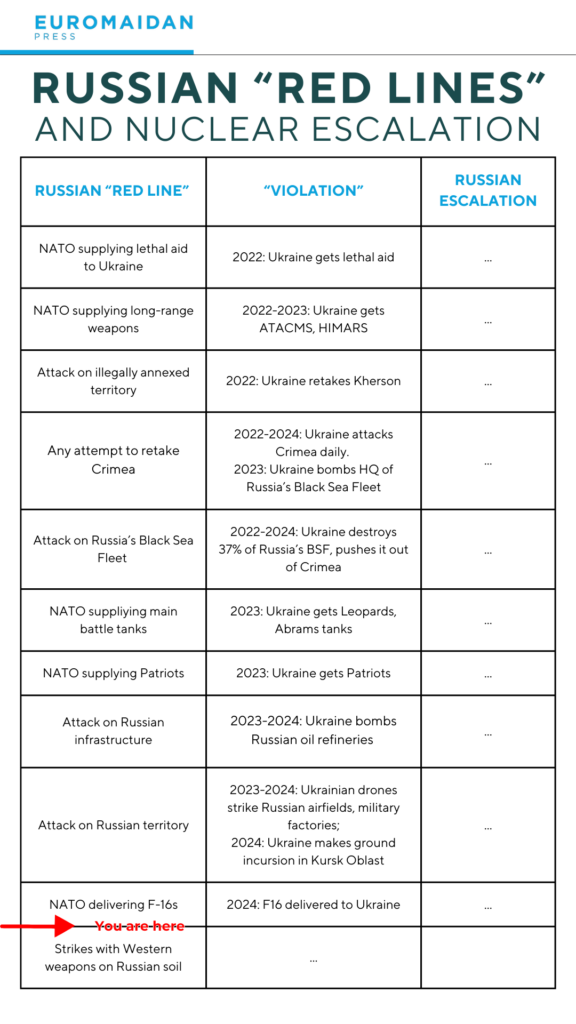
Russia’s Red Lines: What Triggers a Response?
Moscow has repeatedly outlined its three key red lines in the Ukraine war, any of which could provoke a direct response:
| Red Line | European Action | Russian Warning |
|---|---|---|
| Direct NATO involvement | Deployment of Western troops in Ukraine (rejected so far) | “Any NATO soldier on Ukrainian soil is an act of war.” — Russian Foreign Ministry, 2023 |
| Long-range strike capabilities | Delivery of ATACMS missiles (range: 300km) | “This changes the rules of engagement.” — Putin, March 2024 |
| Economic strangulation | EU price caps on Russian oil/gas, sanctions on tech exports | “We will respond with force.” — Russian Security Council, 2023 |
Europe’s current strategy—short of crossing these lines—relies on indirect support for Ukraine. But as the International Crisis Group warns, the closer Europe gets to these thresholds, the higher the risk of a Russian miscalculation. For instance, Russia’s April 2024 strikes on Ukrainian energy infrastructure—which killed 12 civilians—were framed as retaliation for “Western sabotage.” Analysts fear similar incidents could spiral if Europe continues arming Ukraine without clear exit strategies.
Who Benefits—and Who Loses?
The geopolitical divide over Europe’s military buildup is sharpening along three fault lines:
- Transatlantic unity: While the U.S. and EU agree on supporting Ukraine, disagreements over how much to spend and who controls the weapons are growing. Germany’s reluctance to send Leopard tanks until 2024 delayed Ukraine’s counteroffensive by months.
- Ukraine’s war economy: Kyiv’s military-industrial complex is booming, with defense contracts worth $20 billion in 2023 alone. But as anti-corruption watchdogs warn, much of this funding is siphoned off before reaching the front.
- Russia’s domestic narrative: Putin’s regime uses the war to justify repression at home. A Levada Center poll from May 2024 shows 78% of Russians support the war, but only 42% believe victory is possible. If Europe’s arms deliveries prolong the conflict, Putin may face internal pressure to escalate—or blame Western “sabotage” for failures.
Rovelli’s central argument is that Europe’s strategy lacks a credible off-ramp. “There’s no Plan B,” he said. “If Ukraine wins, Russia collapses. If Ukraine loses, Europe is left with a nuclear-armed, vengeful neighbor. And if the war drags on? Then we’re all losers.”
What Happens Next: Three Possible Scenarios
Analysts are watching three potential flashpoints in the coming months:
- June NATO summit (Washington, D.C.): Leaders will finalize plans for a new “Rapid Deployable Corps East”, with 30,000 troops ready to mobilize within 30 days. Russia has already threatened to treat this as a “hostile act.”
- Ukraine’s 2025 counteroffensive: If Europe continues supplying long-range missiles and drones, Russia may preemptively strike NATO logistics hubs in Poland or Romania, testing Western resolve.
- Russian presidential election (March 2024–2029): Putin’s approval ratings are stagnating at 60%. If Europe’s arms deliveries fail to deliver quick wins for Ukraine, he may escalate to rally support—or face succession risks.
For now, Europe’s leaders insist their strategy is defensive. But as Rovelli warns, the line between defense and provocation is thinner than it appears. “The problem isn’t that Europe is arming Ukraine,” he said. “It’s that they’re doing it without a strategy for the day after.”
Key Takeaways
- Europe’s defense spending is surging, but only 30% of new funds are allocated to immediate needs, leaving gaps in short-term capabilities.
- Russia’s red lines—NATO troops, long-range missiles, economic strangulation—remain uncrossed, but analysts warn Europe is edging closer to them.
- Ukraine’s war economy is thriving, but corruption risks divert funds from the front.
- Russia’s domestic support for the war is fragile, with only 42% believing victory is achievable.
- The next critical test is the June NATO summit, where plans for a new “Rapid Deployable Corps East” could trigger a Russian response.
What’s next? The European Commission is set to release its 2024–2025 defense funding plan on June 10, outlining how the €100 billion+ in new spending will be allocated. Meanwhile, Ukraine’s military leadership is expected to brief NATO allies on plans for a 2025 counteroffensive at a closed-door meeting in Brussels on June 15.
As Europe races to arm Ukraine, the question remains: Is this a calculated gamble—or a high-stakes bluff with no exit? Share your thoughts in the comments below, and follow World Today Journal for updates as this story develops.