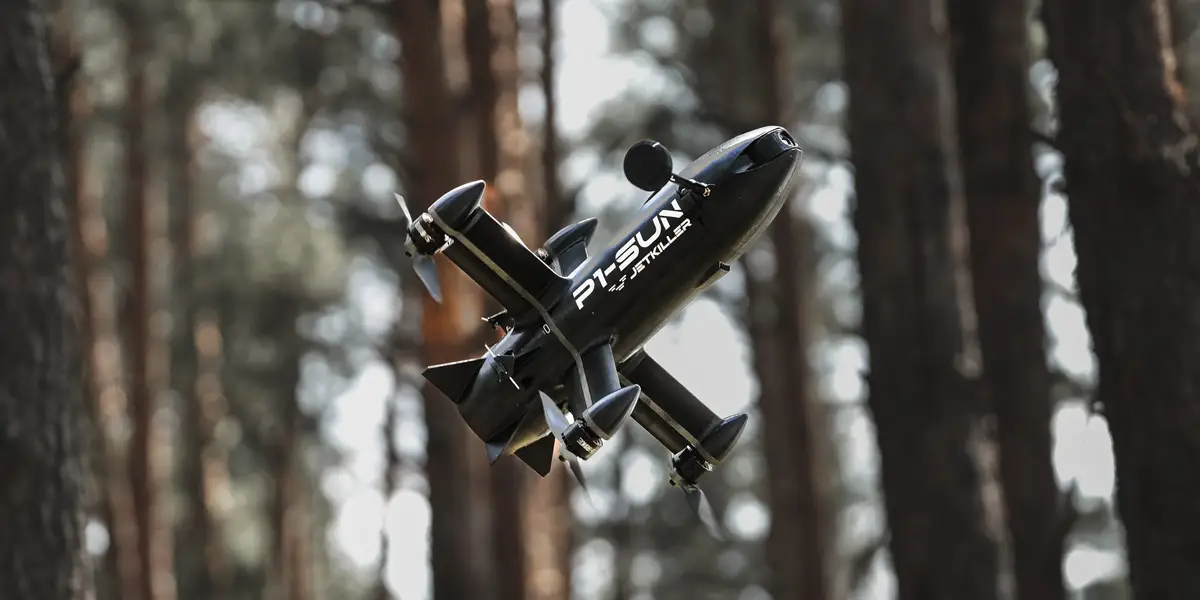
Russia has rapidly escalated its deployment of jet-powered attack drones, dropping Ukraine’s air defense interception rates from 95% down to 65% in recent skies. Ukrainian defense tech firms, including SkyFall, are racing to mass-produce high-speed AI interceptors like the JetKiller to counter the shift.
The Shift From Propeller Mopeds to Jet Engines
Iran-designed Shahed-136 kamikaze drones—known natively in Russian service as Geran-2 variants—served as Moscow’s primary long-range aerial strike weapon. Powered by low-output gasoline motors that pushed them to modest speeds of 150 to 200 kilometers per hour at altitudes under two kilometers, these noisy propeller-driven craft were heavily relied upon since autumn 2022. But their era of dominance is rapidly closing.
Ukrainian forces systematically adapted, leveraging an expanding domestic interceptor drone industry to push aerial defense success rates to 90-95% throughout 2025 and 2026. Moscow responded by introducing faster, turbine-powered alternatives designed explicitly to smash through those established defensive grids.
Air Defense Interception Rates Plunge Under Jet Pressures
The battlefield reality shifted dramatically during early August strikes. During a heavy nighttime barrage against Kyiv, Ukrainian Air Force officials reported that over half of the 115 incoming drones were jet-powered variants. While defenses intercepted roughly 85% of that initial wave, the following night brought 101 drones—more than half of them jet models—causing the overall interception success rate to plummet to 65%.
Operating at speeds two to two-and-a-half times faster than their propeller-driven predecessors, these turbojet-powered units act essentially as low-cost, downsized cruise missiles. The performance gap allows them to outrun traditional counter-drone tactics, outpace slow interceptors, and bypass air defense units before crews can reposition assets. This speed advantage has allowed Russian forces to systematically target vessels operating near the Ukrainian coastline, effectively choking off commercial export routes through the Black Sea from ports like Mykolaiv.
SkyFall and the P1-SUN JetKiller Countermeasure
To stop the bleeding, Ukrainian defense engineers are deploying high-speed interceptors built specifically for this threat. Technological-defense firm SkyFall announced the development of the P1-SUN JetKiller, a specialized interceptor designed to reach maximum flight speeds of 370 kilometers per hour (approximately 230 miles per hour) at altitudes scaling up to 9,000 meters.
Pushing quadcopters and small interceptors to 200 miles per hour and beyond traditionally risks severe motor overheating during straight-line pursuits. SkyFall representatives noted that the JetKiller overcomes this thermal hurdle, carrying a 500-gram explosive payload across a 15-minute flight window while supporting interchangeable daytime or nighttime optical cameras.
A company spokesperson, identified only by his call sign, Ares, for security purposes, stated that what is notable is that it has been used already with confirmed intercepts and is reaching mass production.
Ares, company spokesperson via Business Insider
Speaking to reporters under the security call sign Ares, the SkyFall spokesperson stated that the JetKiller has already eliminated over a dozen fast-moving jet threats on the frontline. The firm scheduled mass production to scale up in August with a target output of 50,000 interceptors per month.
AI Guidance and the Low-Cost Aerial Arms Race
Catching a target traveling at 200 miles per hour requires more than raw airframe velocity; terminal accuracy demands machine vision. The JetKiller integrates an AI-based terminal guidance system designed to acquire and lock onto incoming munitions faster than human reaction times at ranges reaching up to one kilometer.
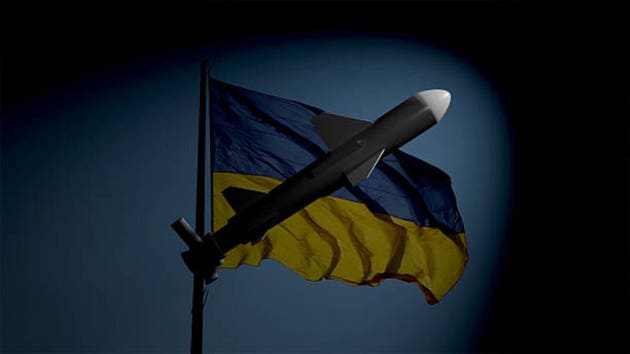
Defense companies showcased similar rapid response technologies at the Farnborough International Airshow, illustrating an accelerating global race for affordable aerial defense. Moscow continues to diversify its high-speed inventory, deploying models like the Geran-5—which Ukrainian intelligence warned in January can fly at up to 373 mph. Alongside SkyFall, competing domestic manufacturers such as The Wild Hornets are actively testing upgraded variants of their own Sting interceptors to tackle the same class of targets.