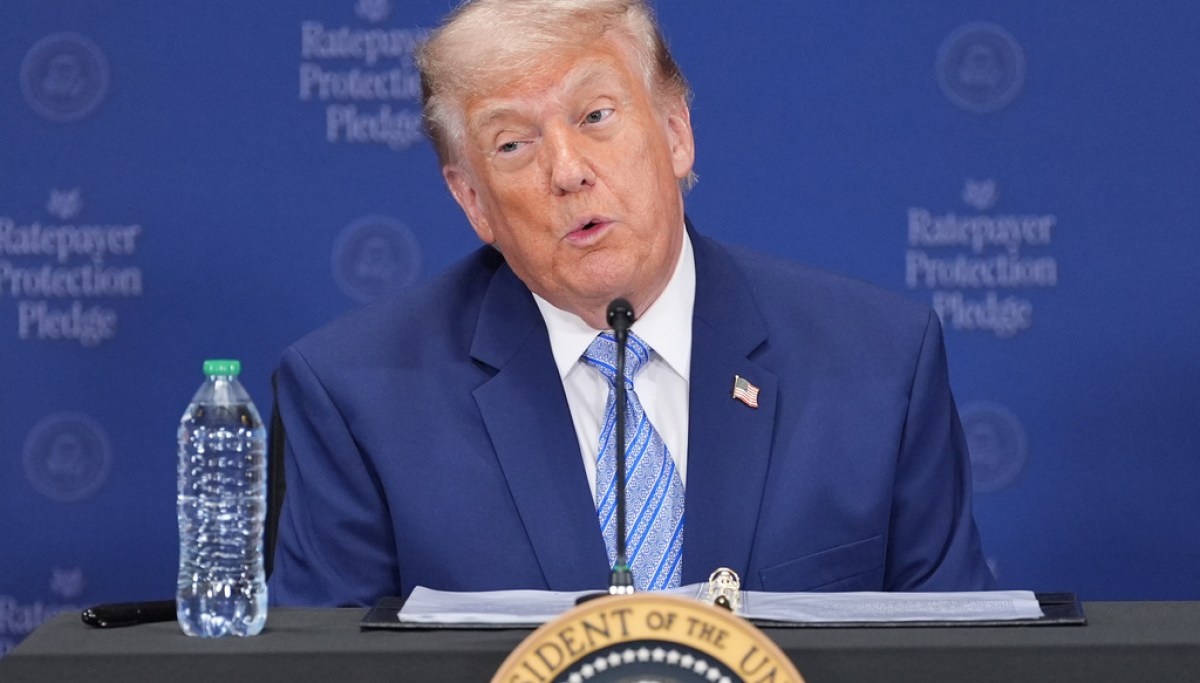
President Donald Trump warned Russia and China against supplying weapons to Iran as military tensions escalate following four U.S. service member deaths. Meanwhile, defense experts highlight critical strains on U.S. stockpiles and a deepening authoritarian partnership fueling simultaneous conflicts in Ukraine and the Middle East.
Marking Red Lines on Tehran’s Arsenal
President Donald Trump issued a direct warning to Beijing and Moscow, stating it would be very bad
for Chinese President Xi Jinping or Russian President Vladimir Putin if Washington discovers they are supplying weapons to Tehran, the Washington Examiner reported.
Trump noted that both leaders have assured him they will not supply arms to Iran. According to social media statements released on Friday, Trump said Chinese President Xi told him during a recent meeting in Beijing that China would not provide or sell weapons to the Islamic Republic.
“President Xi, at our recent meeting in Beijing, China, told me that he would not, under any circumstances, give or sell Weapons to the Islamic Republic of Iran — And that statement included Chinese Companies. Considering our relationship, I take him at his word and, besides, l am doing him very big favors, also.”
Trump added that Russian President Vladimir Putin made similar commitments regarding Iran, even as the U.S. continues supplying weapons to NATO four years after Russia’s most recent invasion of Ukraine. Trump defended those arms transfers by noting that NATO countries pay full price and manage distribution independently.
Assessing the Strategic Axis of Aggressors
Beyond immediate Middle Eastern flashpoints, military analysts argue that Washington continues to underestimate the deeply integrated partnership connecting China, Russia, Iran, and North Korea. Rear Admiral (Ret.) Mark Montgomery, co-author of the newly published book Axis of Aggressors, documented more than 600 instances of cooperation across military, economic, technological, and cyber domains, rferl.org.
Montgomery argues that Ukraine is effectively fighting all four authoritarian states simultaneously. Tehran has supplied thousands of Shahed drones alongside domestic manufacturing technology, while North Korea has deployed 12,000 soldiers and millions of artillery rounds. Meanwhile, Chinese microelectronics are actively backstopping Russian missile programs and Iranian weapons manufacturing.
Sanctions enforcement remains a persistent hurdle due to the dual-use nature of modern microelectronics. Components exported to China for civilian purposes are frequently repurposed for military use and transferred to Russia, complicating trade restrictions.
Munitions Stockpiles and Simultaneous Conflicts
The Pentagon faces severe challenges regarding its capacity to sustain simultaneous multi-theater conflicts. While U.S. force structures—including ships, aircraft squadrons, and battalions—remain close to handling concurrent crises, defense munitions are under severe pressure.
Decades of underinvestment, compounded by heavy support for Ukraine and recent operations involving Iran, have left U.S. military stockpiles heavily stressed. Defense spending has declined from roughly 4 to 5 percent of GDP at the end of the Cold War down to approximately 3 percent.
Montgomery observed that while the U.S. military maintains a formidable global footprint, the strain on deep munitions reserves represents the most serious challenge in a multi-theater conflict.
Diplomatic Shifts in Washington
As military and diplomatic tensions intersect, the White House confirmed that Trump will meet with Ukrainian President Volodymyr Zelensky on Tuesday. Zelensky is scheduled to visit Washington to attend the funeral of the late Senator Lindsey Graham (R-SC), who died earlier this month.
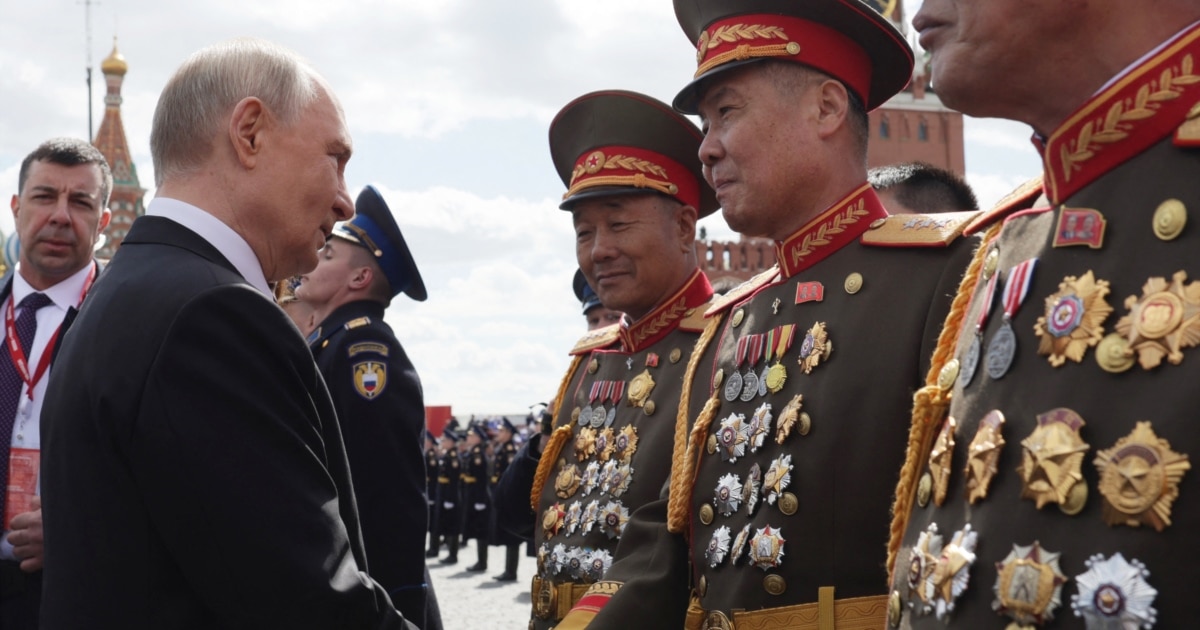
The upcoming meeting coincides with movement in the Senate on a Russia sanctions package—a core legislative priority for Graham, who had recently traveled to Turkey for a NATO summit and to Kyiv ahead of his passing.
- Beyond the Châteaux: Discovering the Hidden Gems of the Loire Valley
- VfL Wolfsburg vs. 1. FC Köln: TV Channel & Live Stream Guide
- US Intelligence Warns Putin Could Test NATO With Limited Attack (archyworldys.com)
- Taylor Swift Folklore Track Removed From Trump-Affiliated Account Over Copyright (world-today-news.com)