
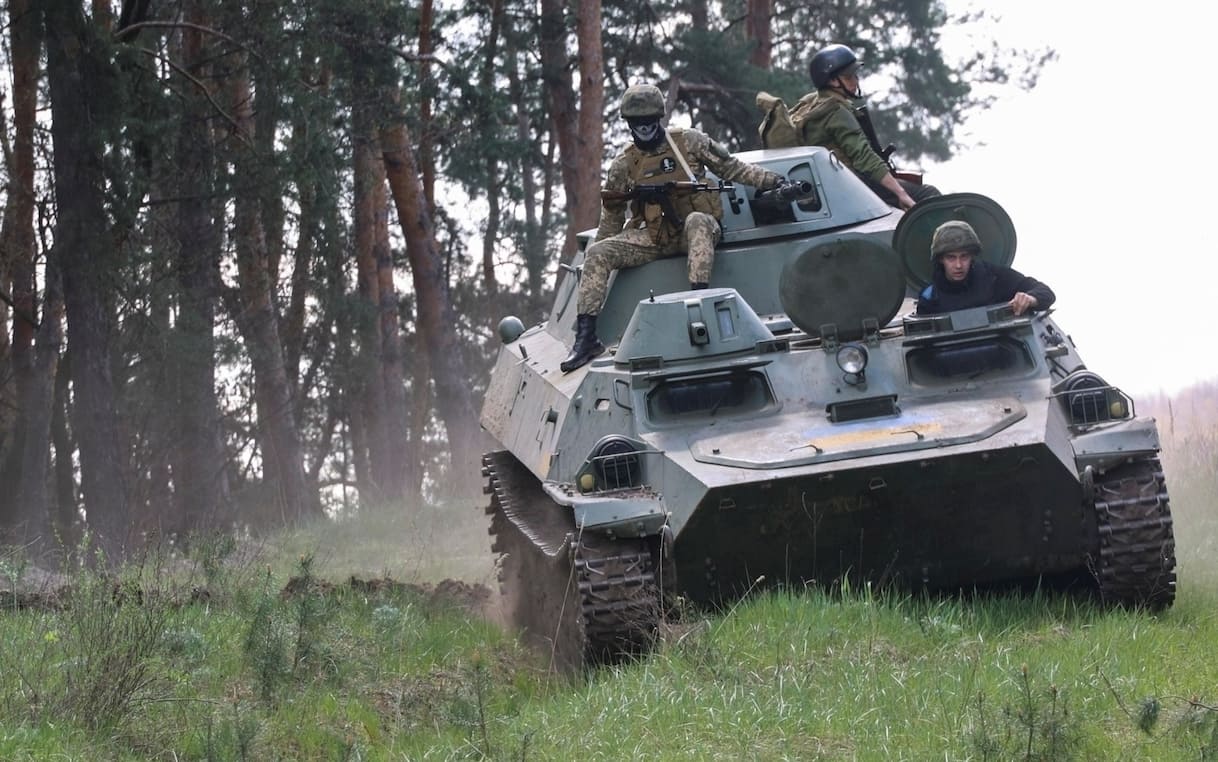
Russian forces launched a renewed offensive in northern Ukraine on Tuesday, resulting in the death of a 16-year-old boy and leaving four others injured, according to Ukrainian officials. The strikes, which targeted residential areas in the Sumy region, mark a significant escalation in Moscow’s campaign to stretch Ukrainian defenses along the northeastern front. Local emergency services confirmed the casualty figures, noting that the teenager died instantly from shrapnel wounds while the injured were transported to regional hospitals for treatment.
The attack comes amid a broader intensification of Russian aerial and artillery bombardments across multiple fronts, including Kharkiv and Donetsk, as Kyiv struggles to maintain defensive lines amid dwindling Western military aid. Ukrainian President Volodymyr Zelenskyy condemned the strike in his nightly address, calling it a “deliberate act of terror against civilians” and urging international partners to accelerate weapons deliveries. He similarly reiterated Kyiv’s position that any suspension of sanctions on Russian oil exports would directly fund further aggression, a point he has raised repeatedly in recent diplomatic engagements.
Independent verification from the Office of the United Nations High Commissioner for Human Rights (OHCHR) confirms that civilian casualties in Ukraine have risen steadily since the beginning of 2024, with over 1,200 non-combatant deaths recorded in the first four months alone. The agency attributes much of this increase to the expanded leverage of long-range drones and glide bombs by Russian forces, particularly in border regions like Sumy and Chernihiv. OHCHR’s latest report, released on May 10, notes that attacks on residential zones, schools, and medical facilities now constitute nearly 40% of all verified civilian harm incidents.
In response to the latest assault, Ukrainian air defense units reported intercepting several incoming drones and missiles over the Sumy region during the early morning hours. While specific systems used were not disclosed, military analysts indicate that the country continues to rely on a mix of Soviet-era S-300 systems and Western-supplied NASAMS and IRIS-T batteries to counter Russian aerial threats. The effectiveness of these defenses has been hampered by intermittent shortages of interceptors, a concern repeatedly raised by Kyiv in appeals to NATO allies.
Context of the Northern Front Escalation
The Sumy region, located directly north of Kyiv and bordering Russia’s Belgorod Oblast, has become a focal point of Russian efforts to divert Ukrainian troops from the more heavily contested Donbas area. Since early April, Moscow has increased the frequency of cross-border raids and drone launches from its territory, aiming to stretch Ukrainian logistics and create a perception of imminent encirclement. Military experts at the Institute for the Study of War (ISW) assess that while these operations have not yet achieved a breakthrough, they have successfully forced Kyiv to allocate additional reserves to the north, weakening its ability to concentrate forces in the east.
Recent satellite imagery analyzed by Maxar Technologies and shared with Reuters shows increased Russian troop concentrations and artillery placements near the Ukrainian border in Kursk and Belgorod regions over the past three weeks. These movements coincide with intelligence suggesting Moscow is preparing for a potential renewed offensive later in the summer, possibly timed to exploit perceived weaknesses in Ukrainian morale and Western political resolve ahead of key elections in Europe and the United States.
Despite the pressure, Ukrainian forces have demonstrated resilience, launching counter-battery strikes that have destroyed multiple Russian ammunition depots and command posts in Belgorod Oblast. The General Staff of Ukraine’s Armed Forces reported on May 12 that its units conducted over 30 successful strikes against Russian military logistics sites in the past week, significantly disrupting supply lines supporting frontline operations.
Human Impact and Civilian Response
The death of the 16-year-old victim in Sumy has drawn particular attention due to his age and the circumstances of the attack. Local residents described the scene as chaotic, with emergency responders rushing to the site after explosions rocked a quiet suburban neighborhood. While specific details about the teenager’s identity have not been publicly released by authorities to protect family privacy, community leaders confirmed he was a student at a local vocational school and had no known ties to military or paramilitary groups.
Psychological trauma from repeated attacks is becoming a growing concern in northern Ukraine, where civilians live under constant threat of aerial strikes. The World Health Organization (WHO) reported in April that anxiety and stress-related disorders have surged among populations in frontline regions, with nearly 60% of surveyed residents in Sumy and Chernihiv exhibiting symptoms consistent with post-traumatic stress. Access to mental health services remains limited, compounded by the destruction of clinics and the displacement of healthcare workers.
Humanitarian organizations, including the International Committee of the Red Cross (ICRC) and UNICEF, have increased their presence in the area, distributing emergency supplies and establishing temporary shelters for displaced families. However, funding shortfalls and logistical challenges hinder sustained operations, particularly as winter approaches and heating needs rise. The UN Office for the Coordination of Humanitarian Affairs (OCHA) estimates that over 1.8 million people in northern Ukraine require urgent assistance, a figure that continues to grow with each modern wave of attacks.
Diplomatic and Military Implications
The latest raid has reignited debate among Western allies about the adequacy of current support levels for Ukraine. While the United States and European Union have pledged additional aid packages, delays in disbursement and political opposition in some member states have slowed delivery timelines. Germany recently approved a new tranche of military assistance worth €500 million, including air defense components, but officials acknowledge it will take weeks before these systems reach the front lines.
Zelenskyy has intensified his diplomatic outreach, visiting several European capitals in recent weeks to urge faster action. In a speech to the Polish Sejm on May 8, he warned that “every day of delay costs lives” and called for the immediate unfreezing of immobilized Russian sovereign assets to fund Ukraine’s defense. The proposal has gained traction in some EU circles but faces legal and political hurdles, particularly in countries concerned about setting precedents for asset seizure.
On the battlefield, Ukrainian commanders continue to adapt to the evolving threat, employing mobile defense tactics and decentralized command structures to reduce vulnerability to precision strikes. The use of drone reconnaissance and electronic warfare has expanded, with units increasingly relying on domestically produced systems like the UJ-23 “Shkval” to detect and neutralize incoming threats. Still, without a significant increase in long-range strike capabilities and sustained Western backing, officials warn that holding the line through the coming months will remain an uphill struggle.
The next major development to watch is the scheduled NATO defense ministers’ meeting in Brussels on June 11–12, where further aid packages and long-term security commitments for Ukraine are expected to be discussed. Until then, communities in Sumy and other northern regions remain on high alert, bracing for the possibility of additional attacks as the conflict enters another critical phase.
Russian forces launched a renewed offensive in northern Ukraine on Tuesday, resulting in the death of a 16-year-old boy and leaving four others injured, according to Ukrainian officials. The strikes, which targeted residential areas in the Sumy region, mark a significant escalation in Moscow’s campaign to stretch Ukrainian defenses along the northeastern front. Local emergency services confirmed the casualty figures, noting that the teenager died instantly from shrapnel wounds while the injured were transported to regional hospitals for treatment.
The attack comes amid a broader intensification of Russian aerial and artillery bombardments across multiple fronts, including Kharkiv and Donetsk, as Kyiv struggles to maintain defensive lines amid dwindling Western military aid. Ukrainian President Volodymyr Zelenskyy condemned the strike in his nightly address, calling it a “deliberate act of terror against civilians” and urging international partners to accelerate weapons deliveries. He also reiterated Kyiv’s position that any suspension of sanctions on Russian oil exports would directly fund further aggression, a point he has raised repeatedly in recent diplomatic engagements.
Independent verification from the Office of the United Nations High Commissioner for Human Rights (OHCHR) confirms that civilian casualties in Ukraine have risen steadily since the beginning of 2024, with over 1,200 non-combatant deaths recorded in the first four months alone. The agency attributes much of this increase to the expanded use of long-range drones and glide bombs by Russian forces, particularly in border regions like Sumy and Chernihiv. OHCHR’s latest report, released on May 10, notes that attacks on residential zones, schools, and medical facilities now constitute nearly 40% of all verified civilian harm incidents.
In response to the latest assault, Ukrainian air defense units reported intercepting several incoming drones and missiles over the Sumy region during the early morning hours. While specific systems used were not disclosed, military analysts indicate that the country continues to rely on a mix of Soviet-era S-300 systems and Western-supplied NASAMS and IRIS-T batteries to counter Russian aerial threats. The effectiveness of these defenses has been hampered by intermittent shortages of interceptors, a concern repeatedly raised by Kyiv in appeals to NATO allies.
Context of the Northern Front Escalation
The Sumy region, located directly north of Kyiv and bordering Russia’s Belgorod Oblast, has become a focal point of Russian efforts to divert Ukrainian troops from the more heavily contested Donbas area. Since early April, Moscow has increased the frequency of cross-border raids and drone launches from its territory, aiming to stretch Ukrainian logistics and create a perception of imminent encirclement. Military experts at the Institute for the Study of War (ISW) assess that while these operations have not yet achieved a breakthrough, they have successfully forced Kyiv to allocate additional reserves to the north, weakening its ability to concentrate forces in the east.
Recent satellite imagery analyzed by Maxar Technologies and shared with Reuters shows increased Russian troop concentrations and artillery placements near the Ukrainian border in Kursk and Belgorod regions over the past three weeks. These movements coincide with intelligence suggesting Moscow is preparing for a potential renewed offensive later in the summer, possibly timed to exploit perceived weaknesses in Ukrainian morale and Western political resolve ahead of key elections in Europe and the United States.
Despite the pressure, Ukrainian forces have demonstrated resilience, launching counter-battery strikes that have destroyed multiple Russian ammunition depots and command posts in Belgorod Oblast. The General Staff of Ukraine’s Armed Forces reported on May 12 that its units conducted over 30 successful strikes against Russian military logistics sites in the past week, significantly disrupting supply lines supporting frontline operations.
Human Impact and Civilian Response
The death of the 16-year-old victim in Sumy has drawn particular attention due to his age and the circumstances of the attack. Local residents described the scene as chaotic, with emergency responders rushing to the site after explosions rocked a quiet suburban neighborhood. While specific details about the teenager’s identity have not been publicly released by authorities to protect family privacy, community leaders confirmed he was a student at a local vocational school and had no known ties to military or paramilitary groups.
Psychological trauma from repeated attacks is becoming a growing concern in northern Ukraine, where civilians live under constant threat of aerial strikes. The World Health Organization (WHO) reported in April that anxiety and stress-related disorders have surged among populations in frontline regions, with nearly 60% of surveyed residents in Sumy and Chernihiv exhibiting symptoms consistent with post-traumatic stress. Access to mental health services remains limited, compounded by the destruction of clinics and the displacement of healthcare workers.
Humanitarian organizations, including the International Committee of the Red Cross (ICRC) and UNICEF, have increased their presence in the area, distributing emergency supplies and establishing temporary shelters for displaced families. However, funding shortfalls and logistical challenges hinder sustained operations, particularly as winter approaches and heating needs rise. The UN Office for the Coordination of Humanitarian Affairs (OCHA) estimates that over 1.8 million people in northern Ukraine require urgent assistance, a figure that continues to grow with each new wave of attacks.
Diplomatic and Military Implications
The latest raid has reignited debate among Western allies about the adequacy of current support levels for Ukraine. While the United States and European Union have pledged additional aid packages, delays in disbursement and political opposition in some member states have slowed delivery timelines. Germany recently approved a new tranche of military assistance worth €500 million, including air defense components, but officials acknowledge it will take weeks before these systems reach the front lines.
Zelenskyy has intensified his diplomatic outreach, visiting several European capitals in recent weeks to urge faster action. In a speech to the Polish Sejm on May 8, he warned that “every day of delay costs lives” and called for the immediate unfreezing of immobilized Russian sovereign assets to fund Ukraine’s defense. The proposal has gained traction in some EU circles but faces legal and political hurdles, particularly in countries concerned about setting precedents for asset seizure.
On the battlefield, Ukrainian commanders continue to adapt to the evolving threat, employing mobile defense tactics and decentralized command structures to reduce vulnerability to precision strikes. The use of drone reconnaissance and electronic warfare has expanded, with units increasingly relying on domestically produced systems like the UJ-23 “Shkval” to detect and neutralize incoming threats. Still, without a significant increase in long-range strike capabilities and sustained Western backing, officials warn that holding the line through the coming months will remain an uphill struggle.
The next major development to watch is the scheduled NATO defense ministers’ meeting in Brussels on June 11–12, where further aid packages and long-term security commitments for Ukraine are expected to be discussed. Until then, communities in Sumy and other northern regions remain on high alert, bracing for the possibility of additional attacks as the conflict enters another critical phase.