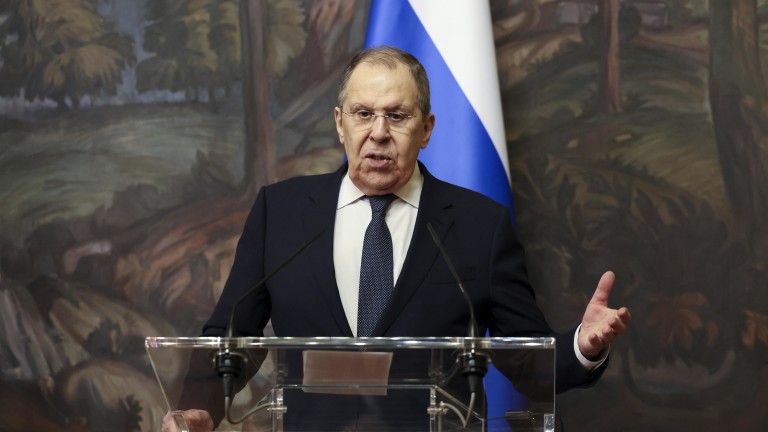
Moscow has pledged to actively operate to prevent a joint military operation by the United States and Israel against Iran, a commitment voiced by Russian Foreign Minister Sergey Lavrov. The statement comes amid heightened tensions in the Middle East and growing concerns over potential escalation following recent events.
“We are talking about our close friends. All those who suffer from American and Israeli aggression are our strategic partners, and we maintain dialogue with them,” Lavrov stated, according to reports from News.bg and Fakti.bg. “We will do everything possible to work with other peaceful members of the international community, including in the UN Security Council and the General Assembly, to create an atmosphere that will craft this operation absolutely impossible.” Russia’s stance reflects its deepening alignment with Iran and its broader opposition to what it views as destabilizing U.S. And Israeli policies in the region.
Russia’s Diplomatic Efforts and Concerns Over Regional Stability
Lavrov emphasized the urgent need for an immediate cessation of hostilities. He expressed concern that the United States’ understanding of the situation in the Middle East signaled an intention to “finish off” the current regime in Iran. This assessment underscores Russia’s belief that Washington is pursuing a policy of regime change, a prospect Moscow strongly opposes. Kremlin spokesperson Dmitry Peskov echoed this sentiment, stating, as reported by the BBC, that “there have been no requests from the Iranian side; our consistent position is well known to all and there has been no change.”
This commitment to preventing a U.S.-Israeli operation against Iran is rooted in Russia’s strategic partnership with Tehran. Russia and Iran have a longstanding defense and economic cooperation agreement, and have increasingly coordinated their foreign policies in recent years. This partnership has been further solidified by shared opposition to Western policies and a mutual interest in regional stability – as defined by their respective interests. The Russian Foreign Ministry has too accused the United States of using a “fabricated threat from Iran” as a pretext for undermining the country’s constitutional order, according to News.bg.
The Context of Recent Events and Russia’s Position
The current situation is complicated by the recent death of Iranian Supreme Leader Ayatollah Ali Khamenei, which, according to reports from News.bg, occurred on the first day of a conflict initiated by the U.S. And Israel. President Vladimir Putin condemned the “cynical murder” of Khamenei, further demonstrating Russia’s strong support for Iran. The circumstances surrounding Khamenei’s death and the initiation of the conflict remain subject to ongoing scrutiny and differing narratives.
Russia’s diplomatic efforts are not limited to verbal condemnations. Lavrov indicated that Moscow intends to leverage its influence within international organizations, such as the UN Security Council and the General Assembly, to build a coalition of nations opposed to military intervention against Iran. This strategy aims to create a diplomatic environment that would make any such operation politically and internationally untenable. The success of this effort will depend on Russia’s ability to garner support from other key players, including China and potentially some European nations.
Strategic Partnership and Historical Ties
The foundation of Russia’s strong stance towards Iran lies in a formal treaty of strategic partnership between the two countries. This agreement, signed in 2022, outlines a framework for cooperation in various fields, including defense, security, trade, and energy. Reuters reported that the treaty signaled a deepening of ties between Moscow and Tehran, particularly in the face of Western sanctions and geopolitical challenges.
Historically, Russia (and previously the Soviet Union) has maintained a complex relationship with Iran, marked by periods of cooperation and competition. Still, in recent years, the two countries have found common ground in their opposition to U.S. Hegemony and their shared desire for a multipolar world order. This convergence of interests has led to a significant strengthening of their strategic partnership.
Implications for Regional Security and Global Geopolitics
Russia’s firm opposition to a potential military operation against Iran has significant implications for regional security and global geopolitics. A conflict involving Iran could have devastating consequences for the Middle East, potentially drawing in other regional and international actors. Russia’s efforts to prevent such a conflict are therefore seen as a crucial factor in maintaining stability in the region.
However, Russia’s actions are also viewed with skepticism by some Western governments, who accuse Moscow of using its support for Iran to advance its own geopolitical interests and undermine Western efforts to contain Iran’s nuclear program. The International Atomic Energy Agency (IAEA) has repeatedly expressed concerns about Iran’s nuclear activities, and Western powers have imposed sanctions on Tehran in an attempt to compel it to comply with international safeguards. The IAEA’s website provides ongoing updates on its monitoring activities in Iran.
The Role of the UN Security Council
Russia’s pledge to work within the UN Security Council to prevent a military operation against Iran highlights the importance of this international body in addressing the crisis. However, the Security Council’s effectiveness is often hampered by disagreements among its permanent members, including Russia, the United States, China, France, and the United Kingdom. Any resolution aimed at preventing a conflict would likely face a veto from one or more of these powers.
The current situation underscores the complex and multifaceted challenges facing the international community in the Middle East. Russia’s role as a key player in the region, its strategic partnership with Iran, and its opposition to Western policies all contribute to the intricate dynamics at play. The coming weeks and months will be critical in determining whether diplomatic efforts can succeed in preventing a further escalation of tensions and averting a potentially catastrophic conflict.
As of today, March 5, 2026, the situation remains fluid and highly sensitive. Further developments are expected as diplomatic efforts continue and as the United States and Israel assess their options. The international community will be closely watching Russia’s actions and its efforts to prevent a military operation against Iran.
Key Takeaways:
- Russia is actively working to prevent a joint U.S.-Israeli military operation against Iran.
- Moscow views Iran as a strategic partner and opposes any attempts at regime change.
- Russia intends to leverage its influence within the UN Security Council to build international opposition to military intervention.
- The situation remains highly volatile and requires careful diplomatic handling.
Stay informed on this developing story. We will continue to provide updates as they become available. Share your thoughts and perspectives in the comments below.