
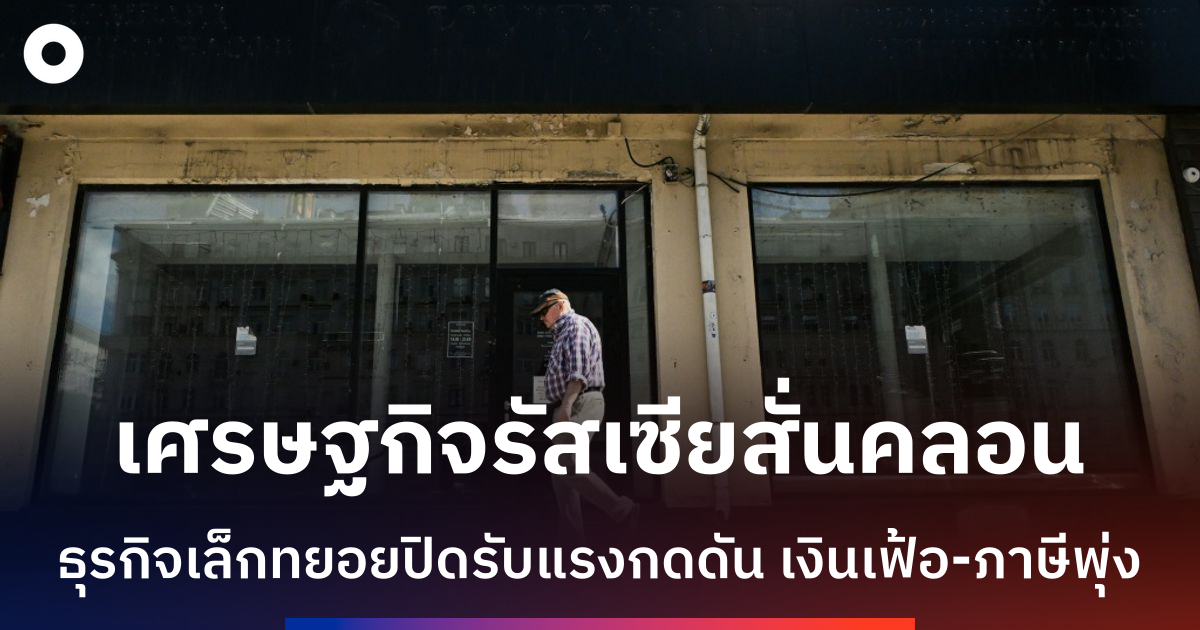
Russia is currently operating a dual-track economy where massive state investment in the military-industrial complex masks a severe decline in small business viability and civilian economic health. While the Kremlin reports overall GDP growth, this figure is driven by wartime production, leaving non-military small and medium enterprises (SMEs) to struggle with labor shortages, high interest rates, and severed trade links.
The Russian economy’s shift toward “military Keynesianism” has created a stark divide. According to data from the Federal State Statistics Service (Rosstat), the industrial sector has seen significant growth, but this is concentrated in defense plants. Meanwhile, small businesses, which provide essential services and consumer goods, face a shrinking workforce as laborers are recruited into the armed forces or lured by high wages in defense factories.
Central Bank of Russia (CBR) policies have further strained the private sector. To combat inflation fueled by war spending, the CBR has maintained high key interest rates—reaching 16% in late 2023 and remaining elevated through 2024—making it nearly impossible for small businesses to secure affordable loans for expansion or survival. This monetary tightening, paired with the “war economy” priority, has effectively sidelined the civilian entrepreneurial class.
Why is the Russian “War Economy” harming small businesses?
The primary driver of distress for Russian SMEs is the systemic diversion of resources toward the military. The Russian government has pivoted its fiscal priority to ensure the continuous production of tanks, missiles, and ammunition. This has led to “overheating” in the defense sector, which sucks up capital and labor from the rest of the economy.
Labor shortages have reached critical levels. The mobilization of hundreds of thousands of men and the migration of tech workers following the 2022 invasion of Ukraine have left small firms unable to fill basic roles. Defense contractors, backed by state guarantees, can offer salaries that small cafes, workshops, and retail stores cannot match. This wage competition drives up costs for small businesses without a corresponding increase in their revenue.
Trade barriers also remain a significant hurdle. While Russia has attempted “parallel imports” to replace Western brands, the costs of logistics and the risk of secondary sanctions have made these routes expensive. Small importers who once relied on stable European or American supply chains now face volatile prices and unreliable delivery schedules from intermediaries in Central Asia or China.
How does the “Dual Economy” function in practice?
Russia’s economic structure has split into two distinct layers: the state-led military sector and the struggling civilian sector. The military layer is characterized by unlimited state funding, guaranteed demand, and priority access to raw materials. The civilian layer, comprising the bulk of the country’s small businesses, operates in an environment of scarcity and high cost.

This imbalance is visible in the national GDP figures. While the International Monetary Fund (IMF) has revised Russia’s growth projections upward due to military spending, this growth does not translate to improved living standards for the average citizen. Instead, it reflects the volume of hardware produced for the front lines in Ukraine.
The “dual economy” also creates a distortion in the financial markets. State banks provide preferential credit to defense firms, while commercial loans for civilian startups are prohibitively expensive. This ensures that any new economic activity is aligned with the state’s war goals rather than diversified market growth.
What are the long-term risks of this economic shift?
Economists warn that the current trajectory is unsustainable. The reliance on military spending creates a “bubble” that may burst if the conflict ends or if state coffers are depleted. Once the massive injections of government cash into defense plants stop, there will be no healthy civilian infrastructure to absorb the displaced workers or maintain the economy.
Furthermore, the degradation of the SME sector erodes the country’s innovation capacity. Small businesses are typically the drivers of efficiency and technological adaptation. By starving these entities of capital and talent, Russia is experiencing a “de-industrialization” of its civilian sector, making it even more dependent on imports from China.
The risk of systemic instability increases as the gap between the “war winners” (defense oligarchs and state contractors) and the “war losers” (small business owners and fixed-income pensioners) widens. This economic stratification could lead to social friction if the promised victories in Ukraine do not materialize to justify the domestic hardship.
Comparison: State Defense vs. Private SME Metrics
| Metric | Military-Industrial Complex | Small & Medium Enterprises (SMEs) |
|---|---|---|
| Funding Source | Direct State Budget/Guarantees | Commercial Loans/Private Equity |
| Labor Market | High Demand/Competitive Wages | Severe Shortages/Wage Pressure |
| Growth Driver | State Orders (GOZ) | Consumer Spending/Local Demand |
| Risk Level | Low (State-Backed) | High (Bankruptcy/Insolvency) |
The divergence in these two sectors illustrates why Russia’s macroeconomic data can be misleading. A rising GDP does not indicate a healthy economy if that growth is solely the result of producing munitions that are destroyed in combat, while the domestic service and retail sectors wither.

The next critical indicator for the Russian economy will be the Central Bank’s decision on interest rates during its next scheduled policy meeting, as well as the release of the quarterly industrial production reports which will show if civilian output has bottomed out or continues to decline.
Share your thoughts on the sustainability of Russia’s war economy in the comments below or share this report with your network.