Unlocking Plant Resilience: The Cellular Key to Saltwater Survival
Rising sea levels and increasing salinity pose a critically important threat to global agriculture and coastal ecosystems. But what if we could engineer plants to thrive in thes harsh conditions? Recent research has pinpointed a surprisingly simple cellular mechanism that explains the remarkable saltwater tolerance of mangrove trees – and offers a promising pathway for creating more resilient crops.
The Challenge of saltwater Intrusion
As coastlines recede and saltwater encroaches further inland, traditional agricultural lands are increasingly at risk.Saltwater inundation damages crops, reduces yields, and threatens food security. Consequently, scientists have been diligently seeking ways to enhance salt tolerance in plants.
Mangroves: Nature’s Saltwater Experts
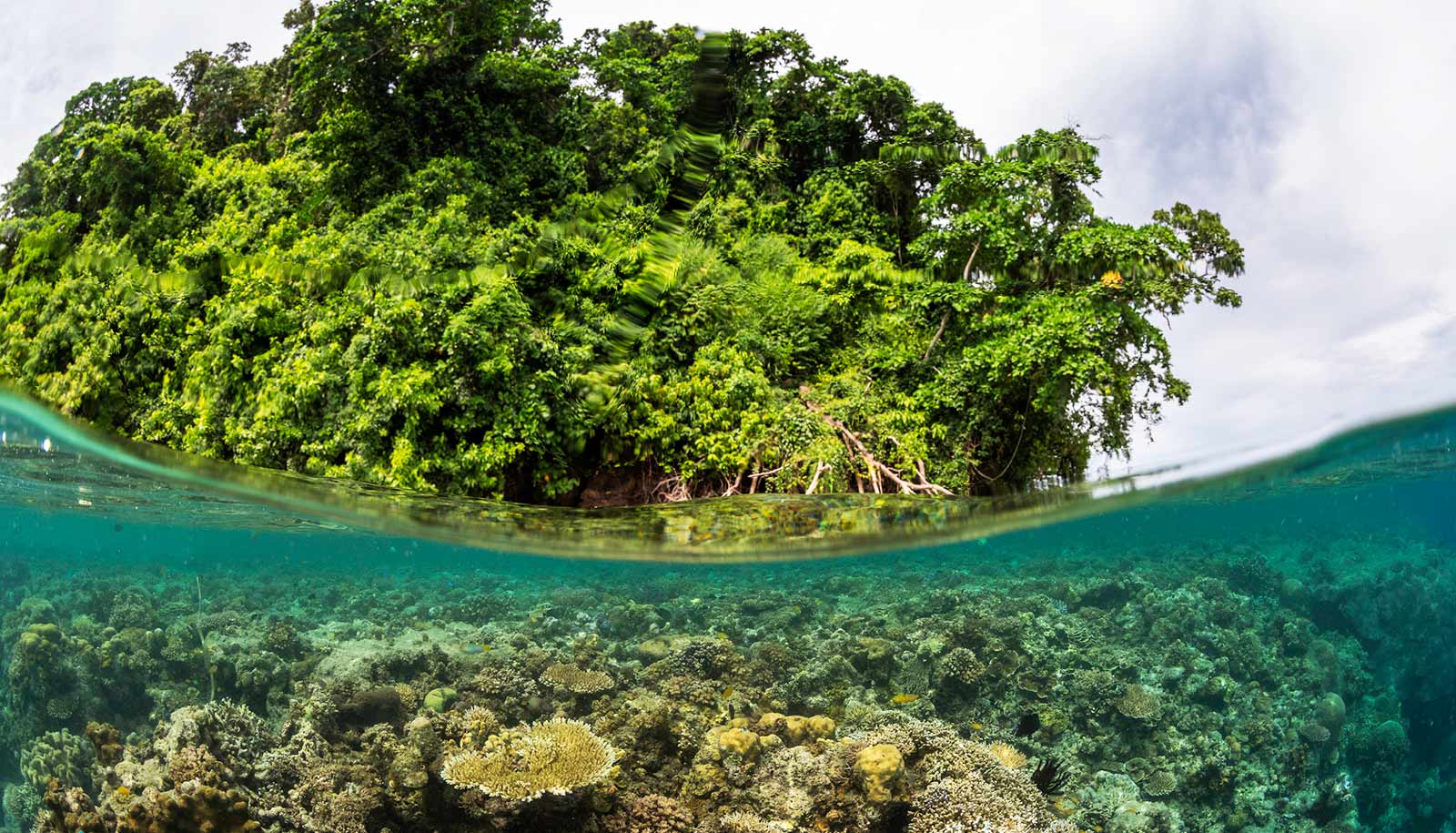
Mangrove trees, found in tropical and subtropical coastal regions, have evolved to not only survive but flourish in environments saturated with salt. for centuries, their resilience has intrigued researchers. But the underlying cellular mechanisms remained largely a mystery – until now.
A Breakthrough in Current Biology
A new study published in Current Biology reveals that a few key cell traits are critical to a plant’s ability to withstand saltwater. This research, led by scientists at new York University, Guangxi University, Florida International university, and San Francisco State University, analyzed 34 mangrove species and over 30 related organisms.
What the Research Revealed: Smaller & Stronger
The team discovered a consistent pattern: mangroves possess unusually small cells with significantly thicker cell walls compared to their inland counterparts. This combination provides two crucial benefits:
* Mechanical Strength: Thicker cell walls offer greater structural support, enabling the plant to tolerate the physical stress of saltwater.
* Wilting Prevention: smaller cells help maintain turgor pressure, preventing wilting even in highly saline conditions.
Essentially, these plants have repeatedly evolved to build stronger, more compact cellular structures. This adaptation isn’t about complex biochemical pathways; its about essential cell design.
Evolutionary Insights
Interestingly, mangroves have evolved independently – nearly 30 times over the last 200 million years – to develop this cellular strategy.this repeated evolution underscores the effectiveness of this simple solution. As co-author Guo-Feng Jiang of Guangxi University explains, “studying the breadth of biodiversity often reveals that nature offers simple solutions to complex challenges.”
Implications for Agriculture & Beyond
This discovery has significant implications for the future of agriculture. Instead of focusing on complex genetic modifications, researchers can now explore strategies to manipulate cell size and cell wall properties in crops.
Here’s how this could translate into real-world benefits:
* Developing Salt-Tolerant Crops: Engineering crops with smaller cells and thicker walls could allow them to thrive in saline soils.
* Restoring Coastal Ecosystems: Utilizing these principles could aid in the restoration of mangrove forests and other vital coastal habitats.
* Enhancing Food Security: Expanding the range of arable land by making it suitable for salt-tolerant crops.
As Adam Roddy, assistant professor at NYU, notes, “These results also point to a promising strategy to engineering salt-tolerant plants.”
Looking Ahead
This research, supported by the US National Science Foundation, represents a significant step forward in our understanding of plant resilience. By unlocking the secrets of mangrove survival, we’re one step closer to building a more lasting and food-secure future in a changing climate.