
The legal battle over the Galeón San José, one of the world’s most valuable submerged treasures, has entered a critical new phase following the release of a pivotal witness. The Colombian government is now leaning heavily on technical evidence provided by Thomas “Tommy” Thompson, a renowned American treasure hunter, to defend its claim over the shipwreck against a massive international lawsuit.
At the heart of the conflict is a clash between the concept of national cultural heritage and the commercial claims of private salvage firms. With billions of dollars in gold, silver, and historical artifacts at stake, the case has develop into one of the most expensive and complex legal challenges in Colombia’s history, testing the boundaries of international maritime law and sovereign rights.
The tension reached a new peak on March 4, when 73-year-old Tommy Thompson was released from a United States prison according to reports on his release. For the Colombian state, Thompson is not merely a former treasure hunter but a key asset whose technical findings are essential to refuting the claims of a competing American firm.
The $10 Billion Clash: Sea Search Armada vs. Colombia
Colombia is currently defending itself before the Permanent Court of Arbitration in the Netherlands against a lawsuit filed by the American firm Sea Search Armada (SSA). The firm is seeking a staggering indemnification of $10 billion—approximately 40 trillion Colombian pesos as detailed in legal filings.
The dispute dates back decades. Sea Search Armada claims that it first located the Galeón San José in 1982, asserting that it had authorization from the Colombian government under the presidency of Belisario Betancur. Based on this claim, SSA is demanding at least 50% of the shipwreck’s contents, which include gold coins, silver ingots, and priceless porcelain.
Yet, the Colombian state, through the Agencia Nacional de Defensa Jurídica del Estado (Andje), has mounted a robust defense. Supported by legal firms GBS Disputes and Xtrategy LLP, Colombia argues that SSA—and its predecessor, Glocca Morra Company—never actually found the ship and were never even close to locating it according to the state’s memorial of defense. Colombia maintains that neither the national Supreme Court nor any international tribunal has ever recognized SSA’s rights to the vessel.
The Strategic Role of Tommy Thompson
The release of Tommy Thompson introduces a volatile element into the proceedings. Colombia’s strategy relies heavily on a technical dictum provided by Thompson, which serves as a cornerstone of the state’s defense. By utilizing Thompson’s expertise and findings, Colombia aims to prove that the previous claims made by Sea Search Armada regarding the ship’s location were inaccurate.

The reliance on Thompson is a calculated risk; although his technical data is invaluable, his status as a “treasure hunter” creates a complex narrative in a case where Colombia is simultaneously arguing that the ship is a protected cultural asset rather than a commercial prize. The state’s ability to sustain its defense in international courts depends on the validity of this technical evidence to discredit SSA’s 1982 claims.
Defining Submerged Cultural Heritage
Beyond the financial dispute, the case hinges on the legal definition of the shipwreck. Colombia has declared the Galeón San José a “Bien de Interés Cultural de la Nación” (Asset of National Cultural Interest) as of 2020 per official government declarations. This designation allows the state to argue that the ship and its contents are protected under national and international legislation governing submerged cultural heritage.
This legal framework shifts the conversation from “who found it first” to “who has the right to preserve it.” By framing the ship as heritage rather than “treasure,” Colombia seeks to invalidate the commercial contracts claimed by SSA, asserting that cultural property cannot be owned or sold by private entities.
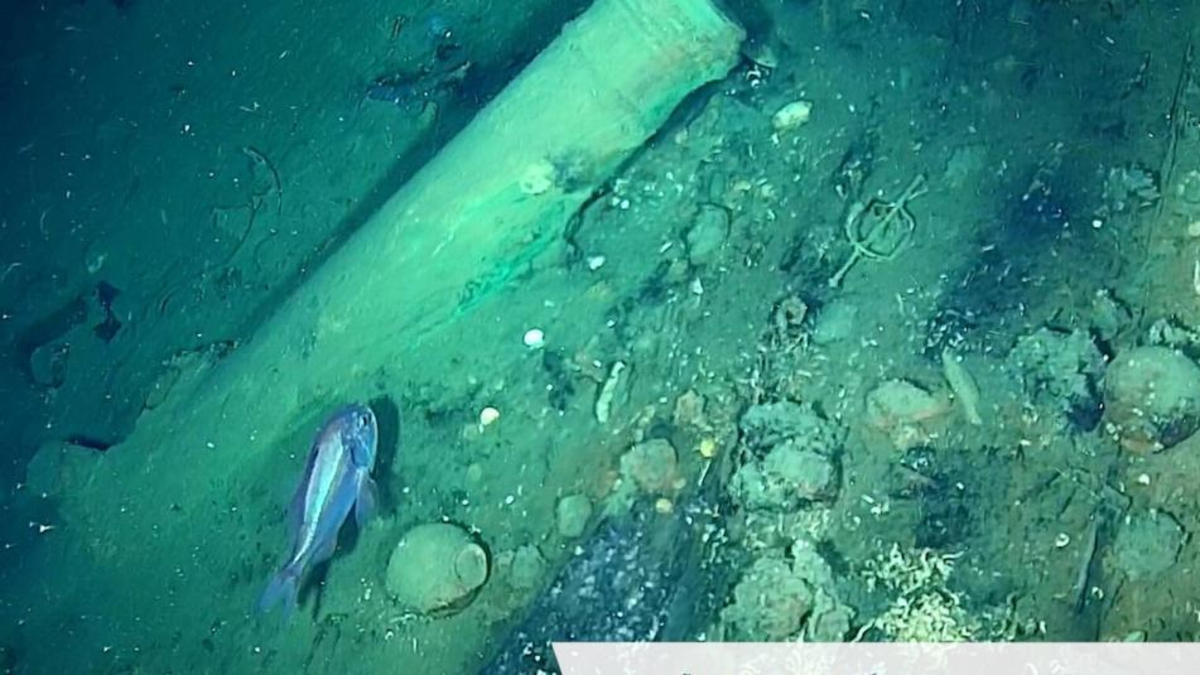
The practical application of this policy began in November 2025, when the Colombian government started recovering the first treasures and objects from the site. These initial finds included gold coins, porcelain cups, and a massive cannon weighing more than two tons, extracted during the first phase of technical exploration.
| Date | Event |
|---|---|
| June 8, 1708 | The Galeón San José is sunk by the English Navy near Cartagena. |
| 1982 | Sea Search Armada claims to have located the shipwreck. |
| 2015 | The Colombian Navy officially locates the shipwreck. |
| 2020 | Shipwreck declared a Bien de Interés Cultural de la Nación. |
| November 2025 | First phase of treasure and artifact recovery begins. |
| March 4, 2026 | Tommy Thompson is released from U.S. Prison. |
What Happens Next?
The legal battle continues to unfold within the Permanent Court of Arbitration. While previous windows for a definition of the case were anticipated in late 2025, the ongoing nature of the defense—and the strategic integration of Tommy Thompson’s evidence—indicates that the resolution remains a complex process.
The Colombian government, led by the Andje, continues to meet with its legal counsel to refine the steps necessary to protect the findings from the shipwreck. The outcome will not only determine the fate of billions of dollars in gold and silver but will also set a global precedent for how nations protect submerged cultural heritage against private salvage claims.
The next critical checkpoints will involve the submission and validation of further technical reports and the court’s final evaluation of the “cultural heritage” versus “commercial salvage” arguments.
Do you believe historical shipwrecks should belong to the nation that finds them or the descendants of the original owners? Share your thoughts in the comments below.