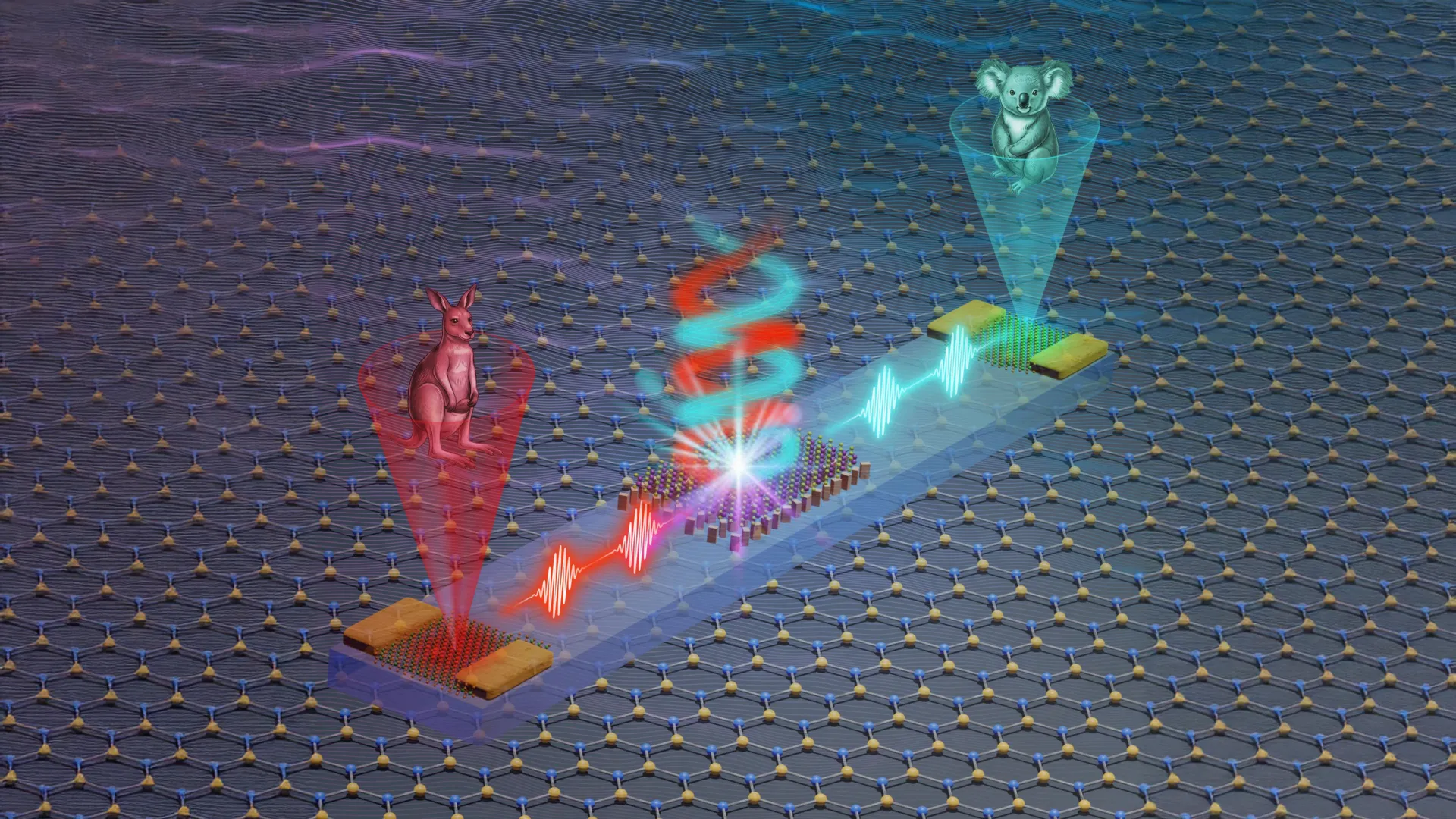
In the rapidly evolving landscape of high-performance computing, researchers have reached a significant milestone in the development of a new light-powered chip. By integrating the generation, steering, and detection of light-based information into a single, compact device, scientists are opening new pathways for the future of artificial intelligence and quantum computing. This advancement, detailed in the journal Nature Photonics, addresses long-standing technical hurdles in the field of valleytronics, offering a potential solution for faster and more energy-efficient data processing systems.
As the demand for computational power grows alongside the complexity of AI models, the limitations of traditional electrical circuits—which rely on electron movement—have become increasingly apparent. The new integrated chip, developed by researchers at the Monash School of Physics and Astronomy, utilizes atomically thin materials and nanoscale structures to manipulate light in ways that were previously difficult to achieve in a single, integrated platform. This approach represents a shift toward hardware capable of processing information with greater speed and reduced heat dissipation.
Harnessing the ‘Valley’ Degree of Freedom
At the core of this technological breakthrough is the control of a unique quantum property of light known as the “valley degree of freedom.” In the context of solid-state physics, valleys are energy extremes in the electronic structure of certain materials. By effectively manipulating these states, researchers can encode information in a manner that differs fundamentally from traditional binary systems. The ability to generate these signals, guide them across a circuit, and convert them back into electrical data within one device is a critical step toward practical, real-world application.
The research, led by Dr. Chi Li, focuses on overcoming the structural complexities that have historically constrained valleytronic devices. By combining advanced nanotechnology with specialized, atomically thin materials, the team has created a system that maintains control over light signals while they are steered along specific paths on the chip. This integration is essential for scaling the technology, as it reduces the need for external, bulky equipment to manage signal processing, thereby moving closer to the goal of high-density, energy-efficient photonic computing.
Implications for AI and Quantum Systems
The implications of this discovery for the tech industry are substantial. Artificial intelligence—particularly the training and deployment of large-scale models—requires massive amounts of data throughput and energy. Current electronic architectures often face “bottlenecks” where the speed of data transfer between memory and processors limits overall performance. Photonic, or light-based, computing offers a way to bypass some of these limitations, as photons can carry more information with significantly less energy consumption than electrons.

the ability to encode data using the valley degree of freedom provides a potential building block for quantum technologies. Quantum computing relies on the ability to maintain and manipulate quantum states, and the precision offered by this new chip suggests that it could serve as a platform for more robust quantum information processing. While the technology is still in the research phase, the successful integration of these functions on a single chip provides a tangible roadmap for future engineering efforts in the semiconductor industry.
Future Research and Development
As the field continues to mature, the focus will likely shift from proof-of-concept designs to scalability and manufacturing viability. The researchers at Monash University have demonstrated that it is possible to bridge the gap between theoretical physics and integrated circuit design. Future work will be required to determine how these chips can be mass-produced and integrated into existing computing infrastructure, such as data centers and specialized AI accelerators.

The scientific community continues to monitor these developments as they relate to the broader trend of “post-Moore’s Law” computing. With traditional silicon-based transistors reaching their physical limits, innovations that leverage quantum properties and photonic signals are increasingly viewed as essential for sustaining the pace of technological progress in the coming decades. Readers interested in following the progression of this research can find updates through official publications from the Monash School of Physics and Astronomy as new findings are released.
For more updates on advancements in hardware engineering and emerging computing architectures, stay tuned to our Tech section. We welcome your thoughts on how light-based computing might reshape the future of your digital devices—feel free to share your perspectives in the comments section below.
Keep reading