The Surprisingly Complex Science Behind Scotch Tape’s Screech
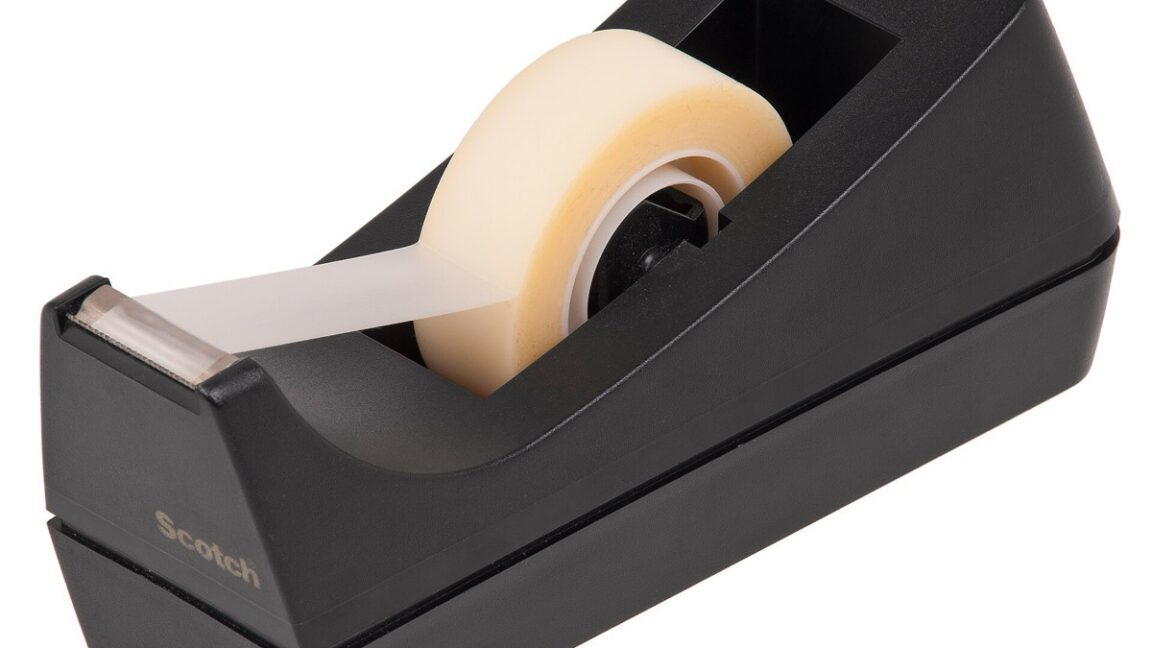
For decades, the high-pitched screech produced when peeling a strip of Scotch tape has been a universally recognized, and often irritating, sound. Often compared to the sound of fingernails on a chalkboard, this seemingly simple noise has puzzled scientists for years. Now, research published in Physical Review E in 2026 has finally pinpointed the source: a train of weak shockwaves generated by cracks traveling across the tape at supersonic speeds. This discovery builds on decades of investigation, beginning with early observations of light emitted during the peeling process and, surprisingly, even the detection of X-rays under specific conditions.
The story of this seemingly mundane sound’s scientific unraveling is a testament to persistent curiosity. While the annoyance of the screech is familiar to most, the underlying physics remained elusive until recently. The initial investigations into the phenomenon weren’t focused on the sound itself, but rather on a related effect: triboluminescence, the emission of light when certain materials are mechanically stressed. As early as the 17th century, scientists observed that peeling tape could produce a glowing line where the tape end pulls away from the roll. This phenomenon, also seen in materials like diamonds and even Life Savers candies when crushed, sparked initial interest in the physics of adhesive separation.
From X-rays to Shockwaves: A History of Investigation
The connection between peeling Scotch tape and more energetic phenomena emerged in 1953, when Russian scientists reported detecting electrons with enough energy to emit X-rays while peeling tape in a vacuum. This initial finding, however, was met with skepticism. It wasn’t until 2008 that researchers at UCLA successfully replicated the X-ray emission, confirming the earlier observations. The UCLA team, led by Carlos G. Camara, used X-ray imaging while unwinding tape in a vacuum chamber, demonstrating that the process could indeed generate X-rays. Their work, published in Nature, showed that this effect was linked to triboluminescence, but the mechanism remained unclear.
While the X-ray emission is fascinating, it requires a near-perfect vacuum to occur, meaning it poses no risk to everyday tape users. The more immediate puzzle was the source of the characteristic screech. Researchers began to focus on the mechanics of the peeling process itself. In 2010, a team including Sigurdur Thoroddsen of King Abdullah University of Science and Technology (KAUST) used ultra-fast imaging to identify a crucial element: a series of transverse cracks that propagate across the width of the adhesive at supersonic speeds. This research, published in Physical Review E, revealed that these cracks were central to the “stick-slip” mechanism responsible for the peeling action, but didn’t fully explain the sound.
A 2024 study further solidified the link between the screeching sound and these transverse cracks, but still didn’t pinpoint the exact mechanism generating the noise. Published in Scientific Reports, the research demonstrated a direct correspondence between the cracks and the audible sound, setting the stage for the latest investigation.
The Role of Shockwaves in the Tape Screech
The 2026 study, again led by Thoroddsen and his colleagues, sought to determine if the sound was directly generated by the rapidly moving crack tips. The team hypothesized that the speed of these cracks would create shockwaves, resulting in the distinct pulses of sound associated with peeling tape. To test this, they combined high-speed imaging of the fractures with simultaneous recordings of the sound waves produced during the peeling process. Researchers manually peeled Scotch tape using a metal rod, meticulously capturing the crack propagation with two synchronized video cameras and the resulting sound with two microphones.
Their findings revealed that the screech isn’t simply a byproduct of the cracking, but rather a direct result of it. The sound arises from a series of weak shockwaves that build up as the transverse cracks race across the tape and culminate when they reach the edge. The supersonic speed of these cracks, relative to the surrounding air, is critical to the generation of these shockwaves. As the crack opens, it creates a partial vacuum between the tape and the surface it’s being peeled from. “The crack moves too fast for this void to be filled immediately, even though air is sucked in from the direction perpendicular to the crack,” the authors explained in their publication. “The void therefore moves with the crack until it reaches the end of the tape and collapses into the stationary air outside.” Each time a fracture tip reaches the edge, it generates a sound pulse, creating the familiar, high-pitched screech.
This research, published in Physical Review E with DOI 10.1103/p19h-9ysx, provides a comprehensive explanation for a phenomenon that has intrigued scientists for decades. The work highlights the complex physics hidden within everyday occurrences, demonstrating that even the simple act of peeling a piece of tape can reveal fundamental principles of material science, and acoustics.
Implications and Future Research
While the immediate impact of understanding the tape screech may seem limited, the research has broader implications for understanding fracture mechanics and triboluminescence. The principles governing the generation of shockwaves in this system could be applied to other materials and processes involving rapid crack propagation. The continued investigation of triboluminescence could lead to the development of new technologies, such as novel sensors or energy harvesting devices. The initial work on X-ray emission from peeling tape, though requiring vacuum conditions, demonstrated the potential for harnessing this phenomenon for imaging applications.
The story of the Scotch tape screech serves as a compelling example of how scientific curiosity can unravel the mysteries hidden in plain sight. From initial observations of light emission to the recent identification of shockwave generation, each step in the investigation has deepened our understanding of the fundamental physics at play. As researchers continue to explore the intricacies of material behavior, we can expect further insights into the seemingly simple, yet surprisingly complex, world around us.
Further research is expected to focus on manipulating the properties of adhesive materials to control or even eliminate the screeching sound, potentially leading to more user-friendly tape products. The team at KAUST is currently investigating different adhesive formulations and tape geometries to explore these possibilities. The next steps will involve detailed modeling of the crack propagation process to predict and optimize the acoustic properties of adhesive materials.