
Screen time has grow an inescapable part of daily life for adolescents around the world. From completing school assignments on laptops to scrolling through social media on smartphones, watching streaming content, or playing video games, digital devices are deeply embedded in how teenagers learn, connect, and entertain themselves. This pervasive use raises important questions about its impact on physical health, mental well-being, and social development during a critical stage of growth.
This article begins a three-part series examining the relationship between screen time and adolescence. Drawing on recent peer-reviewed research and public health data, it explores what we know—and what remains uncertain—about how screen use affects teenagers today. The goal is to provide families, educators, and health professionals with evidence-based insights to support healthier digital habits.
Screen time refers to the use of any digital display—smartphones, tablets, computers, or televisions—for activities such as social media, gaming, streaming, or video content. Although much of this use is recreational, many adolescents also rely on devices for educational purposes. Researchers increasingly distinguish between passive screen time—like endless scrolling or watching short-form videos—and active screen time, which includes online learning, video chatting with family, or creating digital content. Evidence suggests that the type of interaction may matter as much as the total time spent.
Adolescence is a pivotal period for brain development, emotional regulation, and the formation of social skills. Excessive screen use can interfere with these processes by displacing physical activity, disrupting sleep patterns, and reducing opportunities for face-to-face interaction. Understanding these effects is essential for promoting healthy development in a digital age.
Physical Health Implications of Screen Time
One of the most consistent findings in adolescent health research is the link between high screen time and reduced physical activity. A systematic review and dose-response meta-analysis of 44 studies found that adolescents with the highest levels of screen use were approximately 27% more likely to be overweight or obese compared to those with lower use, even after adjusting for other factors such as diet and socioeconomic status link.springer.com. This association is largely attributed to the displacement of physical activity by sedentary screen-based behaviors.
Sleep disruption is another well-documented consequence of excessive screen use. Exposure to blue light emitted by screens in the evening can suppress melatonin production, delaying sleep onset and reducing overall sleep duration. Studies show that adolescents with high screen use are more likely to experience later bedtimes, shorter sleep, and insomnia symptoms. The American Academy of Pediatrics emphasizes that sleep, physical activity, and healthy eating are interconnected behaviors, and recommends that pediatricians address all three together when advising families on digital media use publications.aap.org.
These patterns are supported by large national datasets and reports from the Centers for Disease Control and Prevention (CDC), which have found that teenagers with higher non-schoolwork screen time are more likely to report insufficient physical activity, weight concerns, and irregular sleep routines cdc.gov. The consistency of these findings across different populations and study designs strengthens confidence in the relationship between heavy screen use and adverse physical health outcomes.
Mental and Emotional Health Risks
Mental health represents one of the most extensively studied areas in screen time research. Multiple large-scale national surveys, longitudinal studies, and systematic reviews have identified a significant association between high screen use and increased symptoms of depression and anxiety among adolescents. A cross-sectional analysis of CDC survey data found that teenagers who reported four or more hours of daily non-schoolwork screen time had about twice the rate of anxiety and depression symptoms compared to those with less than four hours per day cdc.gov.
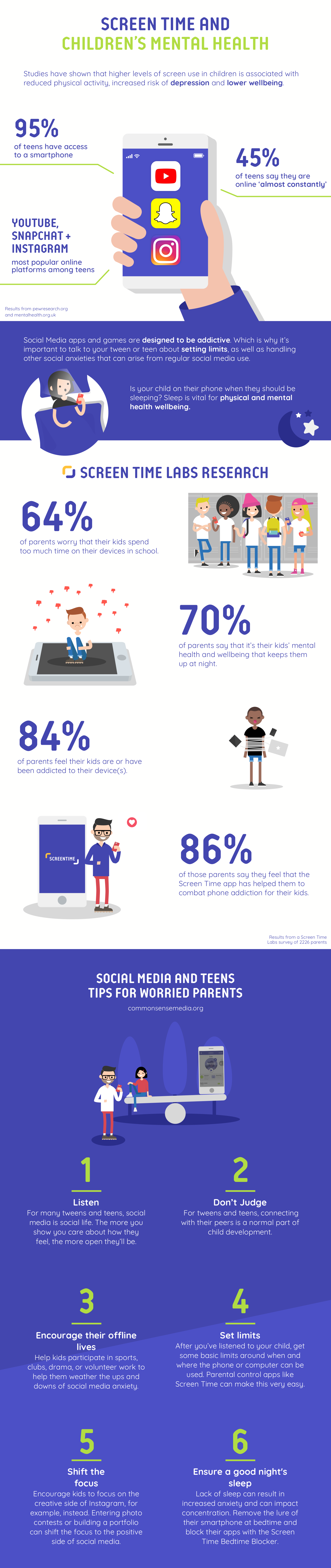
Similar trends emerged in a large prospective U.S. Cohort study of over 9,500 adolescents, which found that higher baseline screen time predicted greater depressive and anxiety symptoms, as well as inattention, at a two-year follow-up link.springer.com. Researchers caution that these findings reflect associations, not necessarily causation, as pre-existing mental health challenges or social stressors may influence both screen use and emotional well-being. Nevertheless, the strength and consistency of the evidence across diverse study designs warrant attention from clinicians and caregivers.
Emerging research also highlights the mediating role of lifestyle behaviors. A 2026 study published in Nature Mental Health analyzed data from over 50,000 U.S. Children and adolescents and found that physical activity accounted for nearly 39% of the link between high screen time (four or more hours daily) and mental health symptoms such as anxiety and depression nature.com. Irregular bedtimes and short sleep duration also contributed as mediating factors, suggesting that interventions promoting regular physical activity and consistent sleep routines may help mitigate some of the mental health risks associated with excessive screen use.
Social and Emotional Development in a Digital Context
Face-to-face interaction remains a cornerstone of healthy social development during adolescence. These in-person exchanges help young people build communication skills, practice empathy, and learn emotional regulation through real-time feedback. When screen time displaces opportunities for direct interaction—whether with peers, family, or mentors—it may limit the development of these critical competencies during a sensitive developmental window.
Heavy screen use has also been linked to increased exposure to cyberbullying, online harassment, and feelings of social isolation. However, the digital landscape is not uniformly harmful. For some adolescents—particularly those who feel marginalized in their offline environments—online communities can provide valuable connection, emotional support, and access to information. Social media platforms can foster identity exploration and peer support when used intentionally and in moderation.
The key distinction lies in how and why screens are used. Passive consumption, such as endless scrolling or binge-watching, tends to carry higher risks, while active uses like collaborative school projects, video calls with relatives, or creative digital expression may offer benefits. Ongoing research aims to better differentiate between harmful and beneficial forms of screen engagement, recognizing that context, content, and individual vulnerability all play a role.
Unanswered Questions and Ongoing Research
Despite growing evidence, significant gaps remain in our understanding of screen time’s long-term impact. One major uncertainty involves the effects of heavy screen use as adolescents transition into adulthood. Because smartphones, social media platforms, and digital behaviors evolve rapidly, longitudinal studies struggle to retain pace with technological change, making it difficult to assess lasting consequences.

Researchers are also working to identify which types of screen time are most likely to be harmful versus beneficial. Educational use, video chatting with family, and creative digital projects may carry different risks and rewards compared to passive entertainment or compulsive gaming. There is ongoing debate about whether screen time directly causes negative outcomes or primarily reflects underlying issues such as stress, loneliness, or lack of alternative activities.
scientists are investigating whether certain adolescents are more vulnerable to the adverse effects of screen use due to factors like developmental stage, existing mental health conditions, family environment, or access to supportive relationships. Understanding these nuances will be essential for designing targeted interventions and public health guidance.
As this series continues, the next article will focus specifically on the connection between screen time and adolescent mental health, examining the latest findings on anxiety, depression, and emotional regulation in greater detail.
For parents, educators, and health professionals seeking reliable information on managing adolescent screen use, trusted resources include the American Academy of Pediatrics’ guidelines on digital media, the CDC’s adolescent health reports, and peer-reviewed journals such as Preventing Chronic Disease and Nature Mental Health. These sources provide evidence-based recommendations that can help families navigate the challenges and opportunities of raising healthy teenagers in a connected world.
We welcome your thoughts and experiences. How has screen time affected the adolescents in your life? Share your insights in the comments below, and consider sharing this article with others who may find it useful.
Worth a look