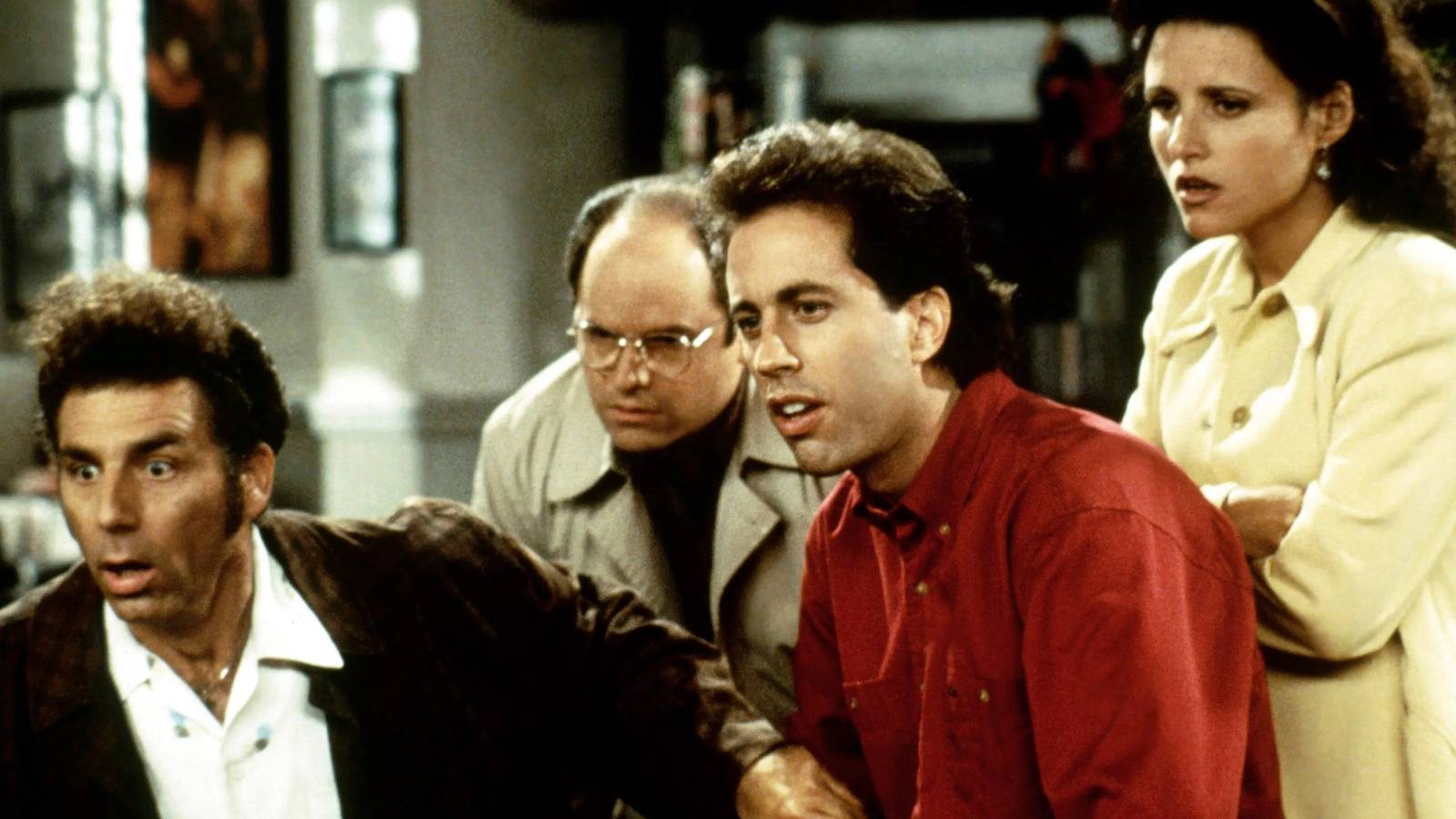
In the high-stakes arena of the streaming wars, where platforms spend billions of dollars annually to capture a fickle global audience, the most valuable asset isn’t always the next big original hit. Sometimes, the most potent weapon in a company’s arsenal is a thirty-year-old sitcom about a neurotic comedian and his three equally dysfunctional friends in Manhattan.
Netflix’s decision to secure the streaming rights to Seinfeld represents one of the most aggressive content acquisition strategies in the history of digital media. While the streaming giant has invested heavily in its own proprietary library, the sheer cultural gravity of Seinfeld proved to be a value proposition that outweighed the risks of a staggering price tag. By integrating this legacy pillar into its ecosystem, Netflix didn’t just buy a show. it bought a guaranteed anchor for subscriber retention.
The Netflix Seinfeld licensing deal underscores a critical pivot in how streaming services view “originality.” For years, the industry mantra was that owning the intellectual property (IP) from the ground up was the only way to ensure long-term viability. However, as the market reaches a saturation point, the reliability of “comfort TV”—shows with established, multi-generational appeal—has become a strategic priority for platforms fighting to reduce churn rates.
For a technology editor specializing in software and AI-driven distribution, the Seinfeld acquisition is more than a television deal; it is a data-driven play. By leveraging a show that already possesses a global footprint, Netflix can utilize its recommendation algorithms to bridge the gap between older demographics who remember the original NBC run and Gen Z viewers discovering the “show about nothing” for the first time via social media clips.
The $500 Million Gamble: The Economics of Legacy Content
Industry reports have long highlighted the immense cost associated with bringing Seinfeld to the Netflix library. While exact contract terms are often shielded by non-disclosure agreements, it has been widely reported that the licensing deal cost Netflix approximately $500 million over a multi-year period. To put this in perspective, such a sum could fund the production of dozens of original series or several high-budget feature films.
Why pay half a billion dollars for a show that finished its original run in the late 1990s? The answer lies in the concept of “proven IP.” Unlike a Netflix Original, which carries the inherent risk of failure—regardless of the budget—Seinfeld arrives with a pre-installed global fan base and a track record of success that spans decades. In the economics of streaming, a “guaranteed hit” is often more valuable than a “potential hit.”
This acquisition strategy reflects a broader trend in the “streaming wars,” where legacy media libraries are being treated as gold mines. The cost of acquiring these rights is high, but the cost of losing subscribers to a competitor who owns the “cultural zeitgeist” is higher. By controlling Seinfeld, Netflix ensures that a significant portion of the comedy viewing experience remains within its walled garden.
Anatomy of a Cultural Juggernaut
To understand why Netflix was willing to pay such a premium, one must look at the architecture of the show itself. Created by Larry David and Jerry Seinfeld, the series originally aired on NBC from July 5, 1989, to May 14, 1998. Over the course of nine seasons and 180 episodes, it redefined the sitcom genre by eschewing traditional plot-driven narratives in favor of the minutiae of daily life.
The show’s brilliance lay in its ensemble cast and its commitment to a specific kind of observational humor. The series follows a fictionalized version of Jerry Seinfeld and his core circle: his best friend George Costanza (played by Jason Alexander), his ex-girlfriend Elaine Benes (played by Julia Louis-Dreyfus), and his eccentric neighbor Cosmo Kramer (played by Michael Richards). Set primarily in and around Seinfeld’s apartment in Manhattan’s Upper West Side, the show captured a specific New York energy that remains timeless.
The description of Seinfeld as “a show about nothing” is perhaps one of the most successful marketing pivots in television history. In reality, the show was about everything—the social contracts, the unspoken rules of dating, the frustrations of waiting for a table at a Chinese restaurant, and the absurdities of modern urban existence. This universality is exactly what makes it an ideal asset for a global streaming platform; the frustrations of a “close talker” or a “low talker” translate across borders and generations.
Originals vs. Icons: The Streaming Dilemma
Netflix has spent the last decade attempting to build its own pantheon of pop culture phenomenons. The platform has produced acclaimed original comedies such as Unbreakable Kimmy Schmidt, I Think You Should Leave, and Grace and Frankie. These shows have found dedicated audiences and critical success, yet they often struggle to achieve the same level of ubiquitous cultural penetration that Seinfeld maintained during its peak.

This creates a paradoxical challenge for the streaming industry. When a show is “native” to a platform, it is easier to market and cheaper to maintain. However, the very nature of the fragmented streaming landscape—where content is split across Netflix, Disney+, Max, and Hulu—makes it harder for any single new show to become a “water cooler” moment. In the 1990s, Seinfeld benefited from a linear television model where millions of people watched the same episode at the same time on a single network (NBC).
In the era of on-demand viewing, that shared cultural experience is diluted. By licensing Seinfeld, Netflix isn’t just adding content; it is attempting to recapture that feeling of a “universal” show. The algorithmic discovery process helps, but it cannot manufacture the thirty years of nostalgia and cultural shorthand that Seinfeld already possesses.
Comparison: The Value Proposition of Content Types
| Feature | Netflix Originals | Licensed Legacy Hits (e.g., Seinfeld) |
|---|---|---|
| Risk Level | High (May not find an audience) | Low (Proven global appeal) |
| Cost Structure | Production & Marketing costs | Heavy upfront licensing fees |
| Cultural Impact | Incremental/Niche | Established/Universal |
| Longevity | Variable | High “Comfort Watch” value |
The Tech Angle: Algorithms and the “Comfort Watch”
From a software engineering perspective, the integration of Seinfeld into the Netflix UI is a masterclass in data utilization. Netflix does not simply list the show in the “Comedy” category; it uses behavioral data to identify “comfort watch” patterns. Many users engage in “passive viewing,” where they play familiar episodes of a favorite show in the background while performing other tasks. This behavior increases the total “time spent on platform,” a key metric for subscriber retention.

the “snippet culture” of TikTok and Instagram has created a new pipeline for legacy content. Short, viral clips of Kramer sliding into Jerry’s apartment or George’s neurotic meltdowns serve as organic advertisements that drive younger users back to the full episodes on Netflix. The Netflix Seinfeld licensing deal essentially allows the company to monetize the viral nature of the internet, turning social media memes into subscription hours.
This synergy between legacy IP and modern distribution tech is the blueprint for the next phase of the streaming wars. We are likely to see more platforms pursuing “mega-deals” for archival content that can act as a safety net for their riskier original investments. The goal is to create a balanced portfolio: high-risk, high-reward Originals to win awards and attract new demographics, and low-risk, high-reliability Legacy hits to keep existing subscribers from canceling.
What This Means for the Future of Content
The success of the Seinfeld acquisition suggests that the industry is moving away from the “Originals at any cost” phase. The sheer volume of content being produced today has led to “content fatigue,” where viewers are overwhelmed by choice. In this environment, the familiarity of a classic sitcom is a powerful psychological draw.
For creators, this signals a shift in how “success” is measured. While a new series might get a few million views in its first week, the long-tail value of a show that remains relevant for thirty years is the ultimate goal. The Seinfeld model proves that if a show can capture the fundamental absurdities of human nature, its value only appreciates over time.
As Netflix continues to refine its hybrid model of original production and strategic licensing, the focus will likely shift toward identifying other “cultural anchors”—shows that possess the same universal appeal and timelessness as Seinfeld. Whether through massive licensing deals or the acquisition of entire studios, the race to own the “comfort TV” market is just beginning.
The next major checkpoint for the industry will be the upcoming quarterly earnings reports, where Netflix typically reveals its subscriber growth and content spend. Analysts will be watching closely to see if the heavy investment in legacy titles like Seinfeld is translating into a measurable decrease in churn rates among long-term subscribers.
Do you think legacy shows are more valuable than new originals in the streaming era? Share your thoughts in the comments below and let us know which classic series Netflix should acquire next.