
The Seoul Metropolitan Government has moved to structurally secure the financial future of its northern districts, establishing a dedicated “Gangbuk Development Account” to fund a massive urban overhaul. This fiscal maneuver, recently solidified through a city council ordinance, is designed to transform the northern region of the capital into a primary economic engine, aiming to erase the long-standing development gap between the affluent south and the historically underserved north.
Known as the “Gangbuk Golden Age” initiative, the strategy shifts away from a reliance on general municipal budgets toward a “ring-fenced” funding model. By creating a separate account for public contribution funds—money paid by developers in exchange for zoning incentives—the city ensures that capital generated from urban growth is directly reinvested into the infrastructure of Gangbuk and the southwestern districts.
For global investors and urban planners, this represents a significant pivot in Seoul’s governance. Rather than sporadic project funding, the city is implementing a systemic financial mechanism to guarantee the execution of high-cost, long-term infrastructure. This move comes as the city accelerates its “Gangbuk Golden Age 2.0” plan, which envisions a complete reconfiguration of the city’s transit and skyline to foster balanced regional growth.
The Fiscal Engine: How the Gangbuk Development Account Works
At the heart of this initiative is a sophisticated use of “public contributions.” In Seoul’s urban planning model, when a private developer is granted a “zoning upgrade”—such as permission to build a taller building or increase the floor area ratio (FAR)—they are required to provide a public contribution. This can take the form of land, facilities, or cash payments to the city.
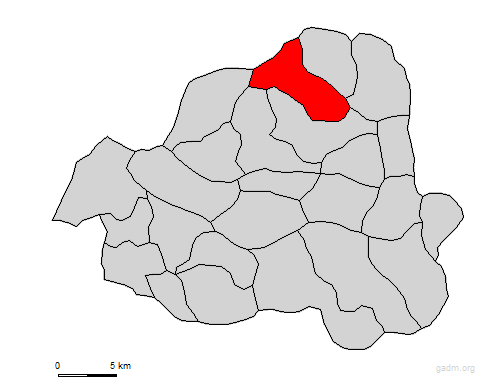
Previously, these contributions often flowed into a general fund, where they could be allocated across various municipal needs. The newly established Seoul Metropolitan Government account changes this by earmarking these funds specifically for the development of Gangbuk and the southwestern regions. This prevents the “dilution” of resources and provides a guaranteed revenue stream for projects that might otherwise struggle for budget priority.
From an economic perspective, this is a strategic move to incentivize private development. By guaranteeing that the resulting public contributions will be used to improve the surrounding infrastructure—such as new subway lines or roads—the city creates a “virtuous cycle.” Improved infrastructure increases land value, which attracts more development, which in turn generates more funds for the account.
Infrastructure as a Catalyst: Transit and Tunnels
The primary targets for these funds are massive transportation projects designed to break the “Gangnam-centric” flow of the city. The city has identified 12 core projects with a total estimated investment of 16 trillion won, including eight major transportation network projects planned to modernize the city’s connectivity.
Two flagship projects stand out as the pillars of this transformation:
- The Gangbuk Transversal Line: A critical rail project designed to connect the eastern and western parts of northern Seoul, reducing the need for commuters to travel south to Gangnam just to move across the city.
- The Gangbuk Underground Urban Expressway: A high-capacity subterranean road system aimed at alleviating chronic surface-level congestion and reclaiming street-level space for pedestrian-friendly urban environments.
These projects are not merely about traffic; they are about economic accessibility. By reducing commute times and increasing the “reach” of northern districts, the city hopes to attract corporate headquarters and startup hubs to areas that have historically been viewed as residential or stagnant.
Redefining the Skyline: Zoning and Landmark Development
To maximize the funds flowing into the development account, Seoul is aggressively relaxing zoning laws. The city is introducing a policy to allow the floor area ratio (FAR) to be relaxed up to 1,300% for specific transit-oriented development (TOD) zones. This allows for the construction of “super-tall” landmarks and high-density mixed-use complexes around major transit hubs.
This density strategy serves two purposes. First, it creates the high-value real estate necessary to generate the “public contributions” that feed the development account. Second, it creates a new urban identity for Gangbuk. By encouraging the construction of landmark buildings, the city aims to move away from the low-rise, fragmented urban fabric of the north toward a modern, vertical cityscape that can compete with the commercial prestige of the south.
This approach mirrors successful urban density models seen in cities like Tokyo and Singapore, where high-density hubs are integrated directly with mass transit to minimize car dependency and maximize economic throughput per square meter.
Strategic Overview: Gangbuk Golden Age 2.0
| Focus Area | Key Mechanism | Primary Goal |
|---|---|---|
| Finance | Dedicated Development Account | Stable, earmarked funding via public contributions |
| Mobility | Transversal Line & Underground Expressways | Reduction of regional transit disparity |
| Urban Form | FAR Relaxation (up to 1,300%) | High-density landmark construction |
| Economic | Regional Balance Initiative | Decentralization of business hubs from Gangnam |
The Broader Economic Context: Addressing the North-South Divide
For decades, Seoul has been defined by a stark divide. Gangnam, the southern district, became the center of finance, luxury retail, and high-end education. Gangbuk, while containing the historic heart of the city, suffered from aging infrastructure and a lack of large-scale commercial investment.
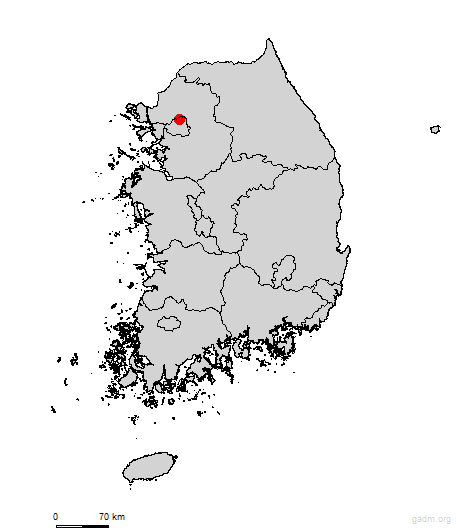
This disparity is not just a social issue but an economic efficiency problem. When a city’s economic activity is overly concentrated in one sector, it leads to extreme congestion, inflated real estate prices in the core, and underutilized assets in the periphery. By aggressively investing in the “Gangbuk Golden Age,” the Seoul Metropolitan Government is attempting to “unlock” the latent value of the northern districts.
The success of this plan depends on the city’s ability to maintain the integrity of the Development Account. By legally protecting these funds through an ordinance, the city is signaling to the private sector that these projects are “too big to fail” and are decoupled from the volatility of annual political budget cycles.
What Happens Next
With the ordinance passed and the account established, the city is now moving into the procurement and detailed design phase for the identified 12 core projects. The immediate next checkpoint will be the release of the specific site selections for the high-density FAR relaxation zones, which will determine exactly where the new landmarks will rise.
As these projects move from the legislative phase to the construction phase, the market will be watching closely to see if the “virtuous cycle” of public contributions and infrastructure growth holds. If successful, Seoul could provide a global blueprint for how mega-cities can use targeted fiscal tools to correct internal regional inequality.
We invite our readers to share their perspectives on this urban experiment. Do you believe dedicated funding accounts are the most effective way to drive regional balance in major cities? Let us know in the comments below.