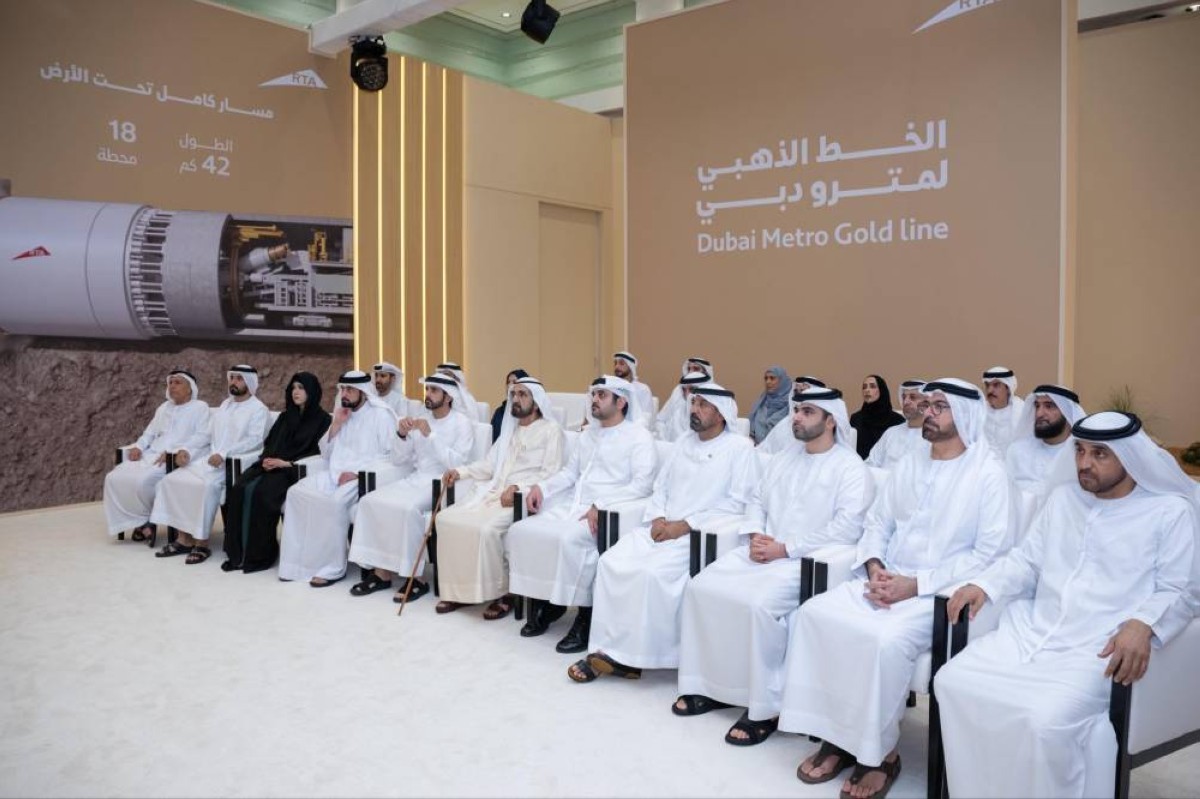
On Wednesday, April 22, 2026, Sheikh Mohammed bin Rashid Al Maktoum, Vice President and Prime Minister of the United Arab Emirates and Ruler of Dubai, officially announced the launch of the Golden Line for Dubai Metro, marking the largest sustainable transport project in the emirate’s history. The initiative, revealed through his verified social media channels, outlines a 42-kilometre underground rail line designed to serve 1.5 million residents by 2032.
The Golden Line represents a strategic expansion of Dubai’s public transport network, aiming to integrate with 55 major real estate developments currently under construction. With a total investment of 34 billion UAE dirhams—equivalent to approximately 9.26 billion US dollars—the project will increase the existing metro network’s length by 35 per cent upon completion. The line will run at a depth of up to 40 metres below ground, connecting 15 key areas across the city.
According to the announcement, the Golden Line is scheduled for inauguration on September 9, 2032—a date described by Sheikh Mohammed as “iconic.” The project aligns with Dubai’s broader vision to become the world’s best city to live in, reinforcing the emirate’s commitment to sustainable urban mobility and long-term infrastructural growth.
The initiative builds on Dubai’s existing metro system, which currently operates two lines—the Red and Green Lines—serving millions of passengers annually. By extending the network into new districts, the Golden Line aims to reduce traffic congestion, lower carbon emissions, and provide residents with a faster, more reliable alternative to private vehicle use.
Urban planners and transport experts have noted that such large-scale metro expansions are critical for supporting Dubai’s continued population and economic growth. Projects of this scale require meticulous coordination between federal and municipal authorities, private developers, and international engineering firms to ensure timely delivery and operational safety.
As of the announcement date, no detailed route map or station list has been released publicly. Though, officials confirmed that the line will serve densely populated and commercially active zones, enhancing connectivity between residential hubs, business districts, and leisure destinations.
The funding model for the Golden Line follows Dubai’s established approach to major infrastructure projects, combining government allocation with strategic public-private partnerships. Similar financing structures were used for the initial phases of the Dubai Metro, which began operations in 2009 and have since become a benchmark for urban rail in the Middle East.
Environmental impact assessments are expected to precede construction, given the line’s deep underground alignment and urban routing. Authorities have emphasized that sustainability will be a core principle throughout the project’s lifecycle, from design and materials to energy-efficient train operations.
Public reaction to the announcement has been largely positive, with residents and business leaders expressing optimism about improved accessibility and reduced commute times. Social media engagement around the announcement was significant, reflecting widespread interest in Dubai’s evolving transport landscape.
Looking ahead, the next major milestone will be the appointment of the lead engineering consortium and the commencement of preliminary geotechnical surveys, expected to begin in late 2026. Official updates on tender processes and construction timelines will be issued through the Roads and Transport Authority (RTA) of Dubai.
For ongoing developments, readers are encouraged to follow official channels including the RTA website and the verified social media accounts of Sheikh Mohammed bin Rashid Al Maktoum and the Dubai Government Media Office.
If you found this update informative, consider sharing it with others interested in urban development and sustainable transportation. Join the conversation by leaving your thoughts in the comments section below.
Keep reading