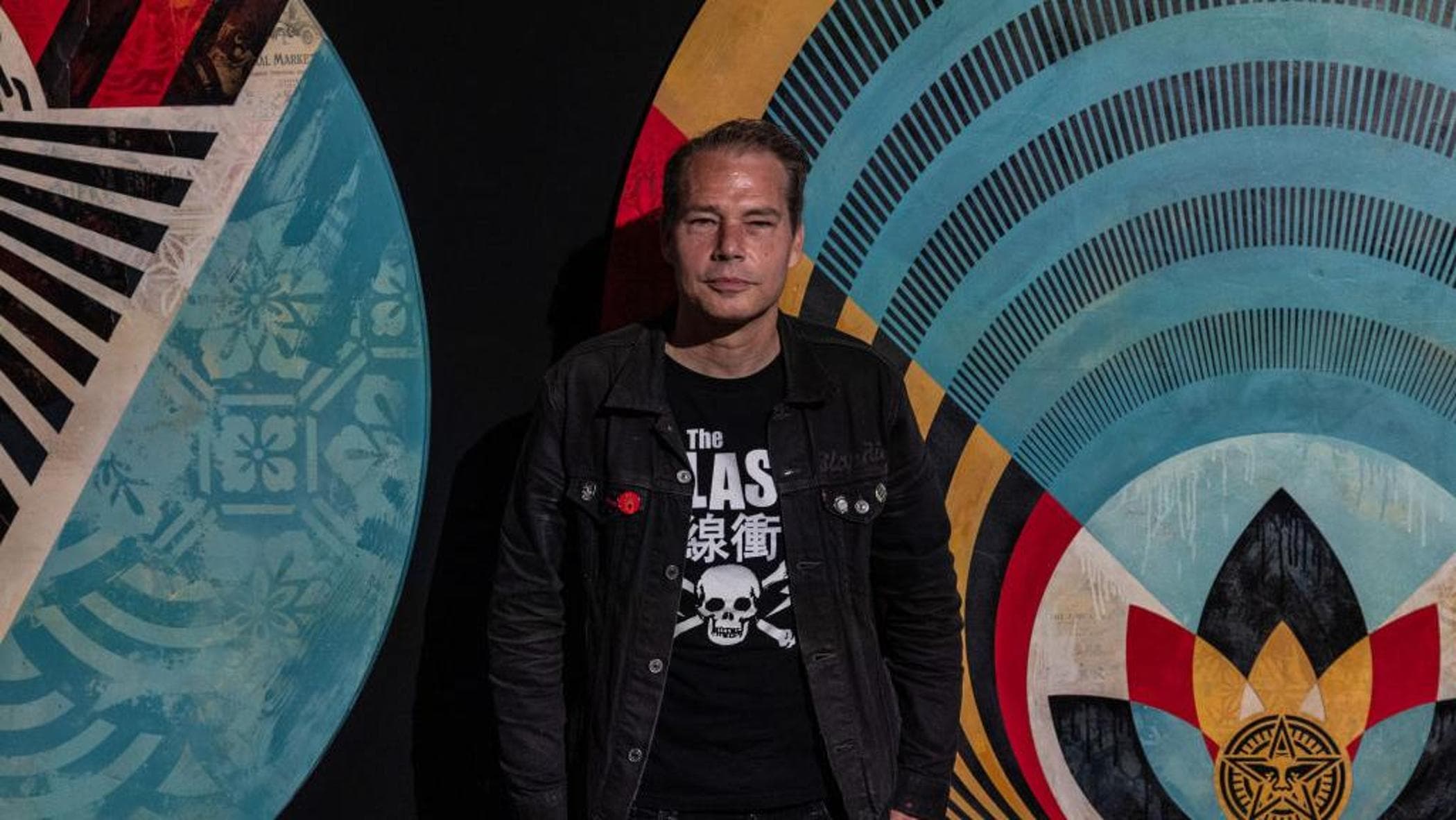
Shepard Fairey on Art, Activism, and the ‘Hope’ Legacy Amid Poltrona Frau Collaboration
Shepard Fairey, the contemporary street artist best known for creating the iconic “Hope” poster of Barack Obama’s 2008 presidential campaign, has reiterated his belief in art as a catalyst for empathy and social awareness. In recent interviews surrounding his collaboration with Italian luxury furniture brand Poltrona Frau, Fairey discussed the evolution of his artistic practice and its role in fostering dialogue about humanity’s relationship with nature and political responsibility.
The Archibald Delicate Balance Limited Edition armchair, born from Fairey’s partnership with Poltrona Frau, reinterprets a design originally created by Jean-Marie Massaud in 2009. This limited-edition piece, of which only 200 numbered units were produced, features Fairey’s signature graphic language applied through high-definition digital printing and selective 3D embossing on Pelle Frau® ColorSphere Impact Less leather—a material developed through a more responsible tanning process certified by the Leather Working Group (LWG) Gold standard.
Fairey has long used his art to engage with themes of peace, justice, and environmental stewardship. Speaking about the inspiration behind the Archibald Delicate Balance piece, he emphasized the fragility of ecological systems and the need for collective care. “We are all hanging by a thread, even flowers and nature,” Fairey stated in promotional materials for the collaboration. “We human beings should learn to move with the same delicacy and awareness as the animals and small birds, who, when they land, do so with infinite lightness, understanding the need to respect and preserve the very thread that sustains them.”
The collaboration extends beyond design into tangible environmental action. For every armchair sold, Poltrona Frau and Fairey have partnered with Treedom to plant two coffee trees in Guatemala’s Huehuetenango region, supporting a community of 80 Indigenous women. This initiative aligns with both parties’ commitments to sustainable luxury and social responsibility.
Officially unveiled during Milano Design Week 2026, the Archibald Delicate Balance Limited Edition is available exclusively through authorized Poltrona Frau retailers worldwide. The piece joins a lineage of artist collaborations under Poltrona Frau’s Limited Edition program, which has previously featured figures such as Felipe Pantone, Ozwald Boateng, and Fornasetti.
The ‘Hope’ Poster and Its Enduring Cultural Impact
Fairey’s “Hope” poster, created during the 2008 U.S. Presidential election, became one of the most recognizable political images of the 21st century. Featuring a stylized portrait of Barack Obama in red, beige, and blue with the word “Hope” beneath, the artwork was widely disseminated during the campaign and later acquired by the National Portrait Gallery in Washington, D.C.
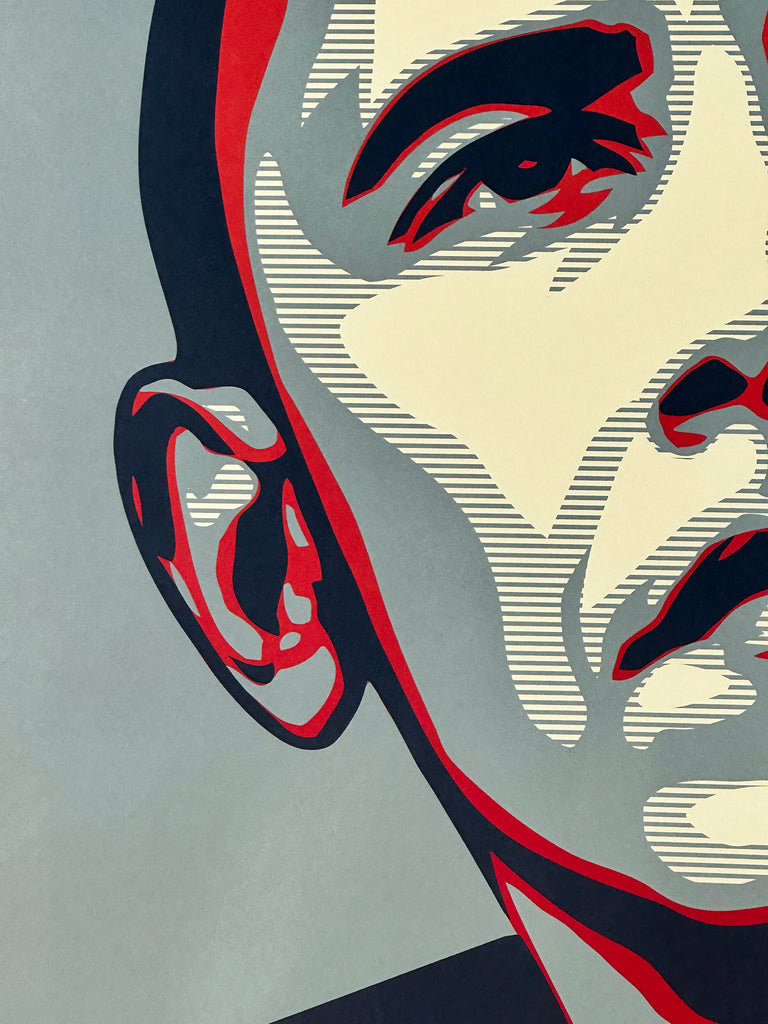
The poster’s origins trace to Fairey’s earlier work, including his “Make Art Not War” series from 2015, which similarly employed bold graphics and civic messaging. In that iteration, a female figure rendered in the colors of the French flag evoked Marianne, a national symbol of the French Republic, to channel ideals of civic identity and collective responsibility. Fairey has noted that he often uses female figures as symbols of peace, harmony, and collaboration in his work—a motif continued in the Archibald Delicate Balance chair, where a central female form on the backrest evokes Mother Nature as a guardian of life’s cycles.
While the “Hope” image was broadly celebrated, it also sparked legal debate. The Associated Press filed a lawsuit against Fairey in 2009, alleging copyright infringement over his utilize of a photograph by Mannie Garcia as the basis for the poster. The case was settled in 2011, with Fairey agreeing to share rights to the image with the AP.
Despite such controversies, the “Hope” poster remains a defining example of how street art can intersect with mainstream political discourse. Its influence extends beyond the 2008 election, having been referenced in subsequent campaigns and cultural movements as a shorthand for optimism and civic engagement.
Art as a Tool for Empathy and Environmental Awareness
Fairey has consistently framed his artistic practice as a means of building empathy across social and ecological divides. In discussing the Archibald Delicate Balance collaboration, he described the project as an invitation to “pause, observe, and recognize the preciousness and vulnerability of our connection with nature.” This perspective reflects a broader shift in his work toward themes of interdependence and environmental vulnerability.
The use of sustainable materials in the armchair’s production underscores this message. The Pelle Frau® ColorSphere Impact Less leather reduces chemical and water consumption during tanning, meeting stringent environmental benchmarks set by the Leather Working Group. The high-definition printing and 3D embossing techniques allow Fairey’s artwork to develop into a tactile experience, reinforcing the idea that art can be both seen and felt.
These efforts are part of Poltrona Frau’s broader commitment to responsible luxury, which includes transparency in sourcing and partnerships that support artisan communities. The brand’s collaboration with Fairey represents a continuation of its strategy to merge Italian craftsmanship with contemporary artistic voices to create objects that carry cultural as well as functional value.
From Street Walls to Designer Collaborations
Fairey’s journey began in the early 1990s with wheat-pasted stickers and murals that appeared unexpectedly on city walls—a practice that launched his Obey brand and established his reputation for blending graphic design with social commentary. Over time, his work has appeared on clothing, album covers, and public installations, evolving from illicit street art to licensed collaborations with major institutions and brands.
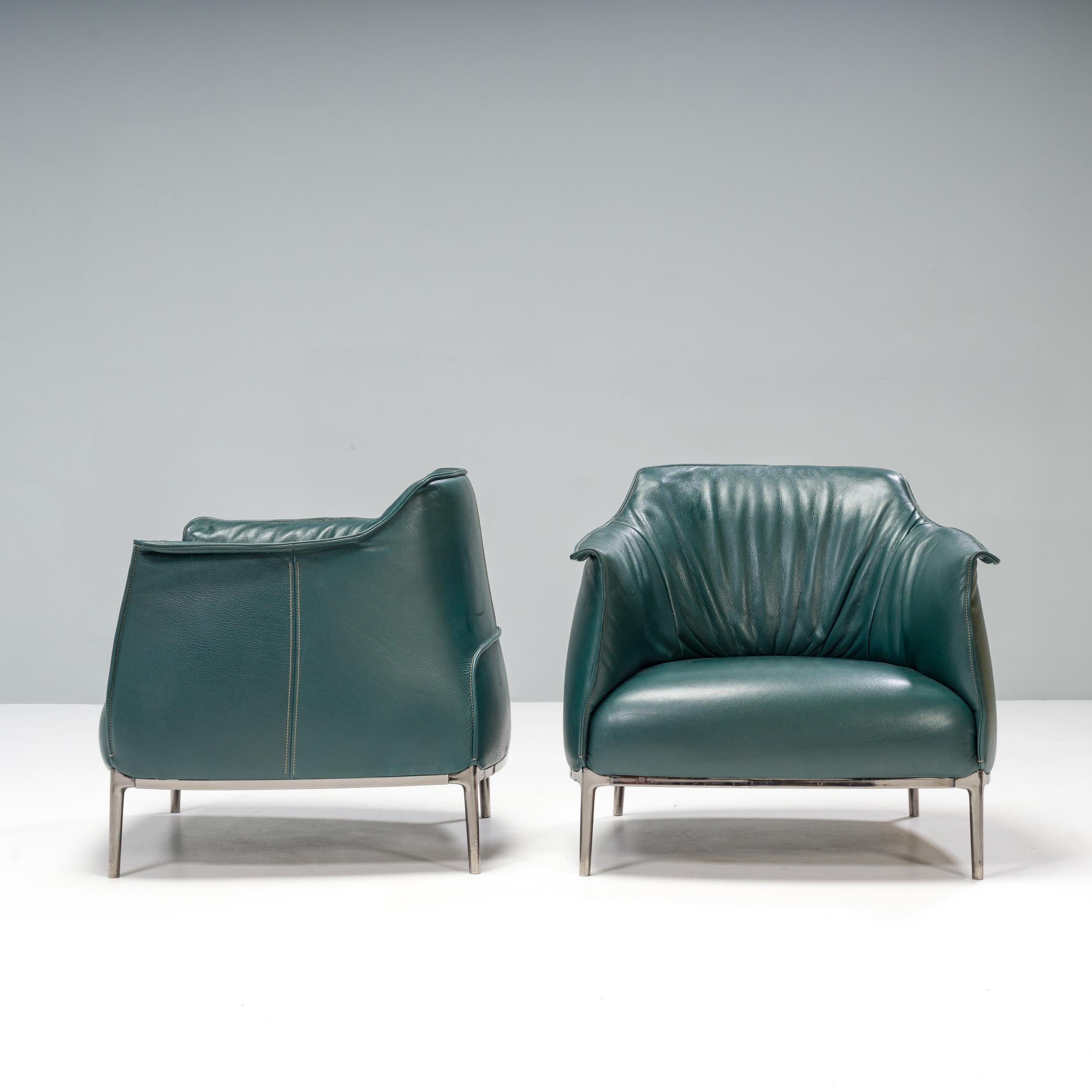
The Poltrona Frau partnership exemplifies this trajectory. By bringing his imagery into the realm of high-end furniture design, Fairey extends the reach of his message into domestic spaces, where objects like the Archibald chair can serve as daily reminders of the values he champions—care, awareness, and interconnectedness.
Such collaborations also raise questions about the commodification of dissent, a tension Fairey has acknowledged in past interviews. Yet he maintains that working within commercial frameworks can amplify, rather than dilute, a message when done with integrity and alignment to core principles.
Legacy and Ongoing Relevance
More than a decade after its creation, the “Hope” poster continues to resonate as a symbol of political possibility and grassroots energy. Its presence in museum collections, academic discourse, and popular culture attests to its lasting significance. For Fairey, the artwork remains a touchstone—not as a final statement, but as a starting point for ongoing conversations about leadership, representation, and the role of art in shaping public sentiment.
With the Archibald Delicate Balance Limited Edition, Fairey shifts focus from electoral politics to ecological mindfulness, yet the underlying intent persists: to use visual language as a means of fostering reflection and inspiring action. By embedding his motifs into a functional object designed for longevity and daily use, he ensures that the message endures beyond the moment of encounter.
As the world faces escalating environmental challenges and political polarization, Fairey’s insistence on art as an engine of empathy offers a compelling counterpoint—a reminder that creativity, when rooted in responsibility, can bridge divides and nurture a deeper sense of shared stewardship.
For updates on Shepard Fairey’s upcoming projects and collaborations, audiences can follow his official channels and those of Poltrona Frau, both of which regularly announce new releases and exhibition details.
What role do you believe art should play in shaping public awareness of social and environmental issues? Share your thoughts in the comments below and facilitate retain the conversation going.
Worth a look