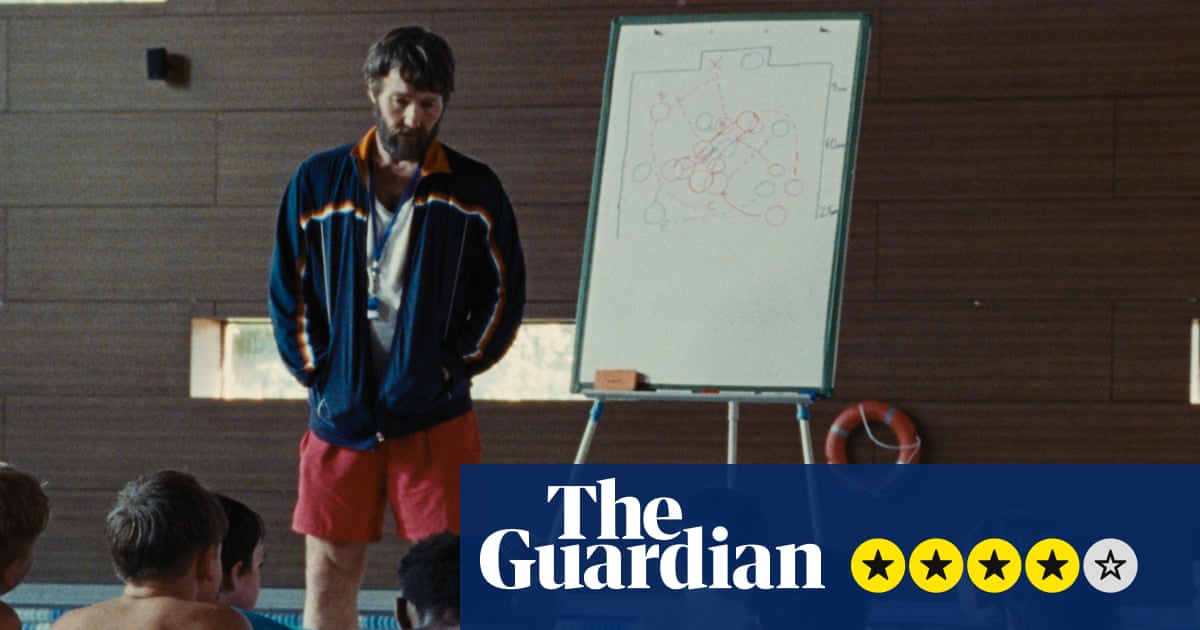
Charlie Polinger’s debut feature film “The Plague” has emerged as a striking exploration of adolescent social dynamics, set against the claustrophobic backdrop of a boys’ water polo training camp in the summer of 2003. The film, which premiered to critical attention, draws from Polinger’s personal memories to craft a narrative that examines the intense psychological landscape of pre-teen masculinity. With its submerged opening shot of a pool glittering like a starfield, the movie immediately establishes a visual language that balances stark realism with poetic intensity.
The story follows Ben (Everett Blunck), a shy yet precocious newcomer who arrives at the camp desperate to gain acceptance from the established social hierarchy led by the impish Jake (Kayo Martin). Ben’s primary motivation becomes avoiding association with Eli (Kenny Rasmussen), a housemate ostracized due to a fabricated illness the other boys call “the plague.” This made-up disease serves as a powerful metaphor for social contagion, where anyone who touches Eli must immediately scrub themselves to avoid perceived contamination—symptoms described by the children as diminished brain function and terminal dorkiness.
Despite the insistence of Coach Daddy Wags (Joel Edgerton) that Ben should simply be himself, the newcomer finds himself drawn into Jake’s psychological operations, participating in the camp’s brutal initiation rites. The film’s first hour has been noted for its echoes of juvenile initiation rites seen in works like Lucile Hadžihalilović’s, interspersed with bursts of Larry Clark-esque wantonness during scenes depicting unsupervised adolescent behavior. Polinger’s approach combines the observational precision of a nature documentary with a keen ear for the authentically nonsensical dialogue that flows directly from a 12-year-old imagination.
Directorial Vision and Personal Connection
In discussing the film’s origins, Polinger has revealed how deeply personal the project is, stating that he tapped into his own childhood memories to create what would become a Spirit Award-nominated feature. The director has emphasized that the film’s setting in 2003 at a water polo camp for young boys is not arbitrary but directly reflects his own experiences. This autobiographical foundation allows the movie to achieve a level of specificity in its portrayal of adolescent social rituals that feels both authentic and universally recognizable.
The psychological horror at the heart of “The Plague” stems from how the awkwardness of puberty is exacerbated by the cruel social games children invent when left to their own devices. Polinger has described the film as an examination of how pre-teens navigate the treacherous waters of friendship, loyalty, and belonging when adult supervision is minimal. Rather than presenting a simplistic morality tale, the director explores the complex motivations behind bullying and exclusion, showing how even sympathetic characters like Ben can become complicit in harmful social dynamics when desperate for acceptance.
Stylistic Approach and Critical Reception
Critics have highlighted Polinger’s “Fincher-like intent” in bringing impressive stylistic bite to what could have been a conventional coming-of-age story. The director’s visual approach transforms the water polo camp setting into a microcosm where the laws of the jungle play out with unsettling clarity. From the opening submerged shot to the film’s careful attention to how light and movement interact in aquatic environments, Polinger demonstrates a sophisticated understanding of how visual storytelling can externalize internal psychological states.

The film’s examination of concealed psychological depths has drawn particular praise for avoiding sensationalism while still delivering a trenchant critique of toxic masculinity in its earliest forms. By focusing on the subtle ways power operates among children—through glances, gestures, and unspoken rules—Polinger creates a work that resonates beyond its specific setting. The portrayal of coach Daddy Wags by Joel Edgerton adds another layer to this exploration, representing a well-meaning but ultimately ineffective adult presence that fails to recognize or address the psychological undercurrents threatening the boys in his charge.
Themes of Isolation and Belonging
At its core, “The Plague” investigates the universal adolescent struggle between the desire to belong and the fear of losing oneself in the process. Ben’s journey illustrates how the pressure to conform can lead individuals to participate in systems they privately question, highlighting the powerful influence of peer approval during formative years. The film’s title refers not just to the fictional disease the boys invent but also to the real emotional contagion that spreads through the camp—fear, insecurity, and the desperate need to be seen as “normal” by one’s peers.
Polinger’s work joins a tradition of films that examine how closed communities develop their own moral codes and social hierarchies, from William Golding’s “Lord of the Flies” to contemporary explorations of adolescent psychology. What distinguishes “The Plague” is its specific focus on the pre-teen years—a period often overlooked in favor of teenage narratives—when children are first experimenting with the social performance of identity while still possessing a foot in the world of childhood innocence.

The film’s release has sparked conversations about how adults perceive and respond to the complex social worlds children inhabit when unsupervised. Rather than dismissing childhood cruelty as merely “kids being kids,” Polinger’s approach suggests that understanding these dynamics requires taking children’s social worlds seriously while recognizing their limited capacity for empathy and long-term thinking at this developmental stage.
As “The Plague” continues to generate discussion on the festival circuit and beyond, it establishes Charlie Polinger as a filmmaker with a distinctive voice capable of finding profound psychological truths in seemingly ordinary settings. The movie stands as a testament to how specific, personal memories can be transformed into universally resonant art when approached with both honesty and artistic ambition.