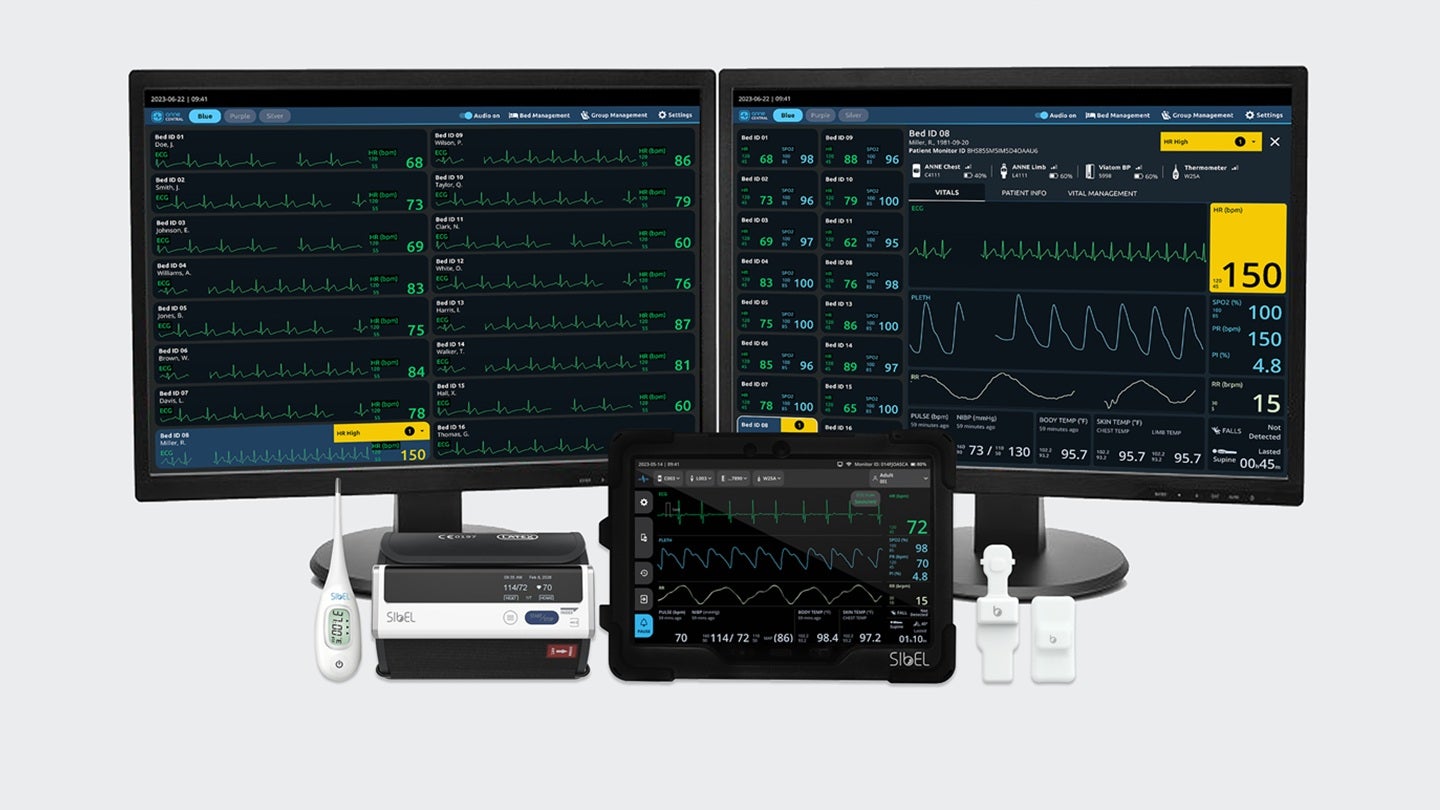
Sibel Health has secured the CE mark certification for its ANNE One platform under the European Union’s Medical Device Regulation (EU MDR), officially classifying the system as a Class IIb medical device. This regulatory milestone allows the Chicago-based health technology company to market its flagship wearable monitoring solution across the European Economic Area, facilitating the integration of clinical-grade vital sign tracking into hospital and home-care settings.
The ANNE One platform is designed to provide continuous, wireless monitoring of key physiological parameters, including heart rate, respiratory rate, and skin temperature. By achieving Class IIb status under the EU Medical Device Regulation (MDR 2017/745), the device meets rigorous safety and performance standards required for products that monitor vital physiological processes where variations could result in immediate danger to the patient. This certification serves as a formal validation of the system’s clinical utility for healthcare providers looking to transition from traditional bedside monitoring to more flexible, patient-centric digital health workflows.
Understanding the ANNE One Platform
At its core, the ANNE One system functions as a modular, wearable sensor suite. Unlike traditional wired monitors that tether patients to a wall-mounted console, the ANNE One uses lightweight, adhesive-backed sensors that transmit data wirelessly to a central hub. According to technical documentation provided by the manufacturer, the system is engineered to capture high-fidelity data, which is then processed to provide actionable insights for clinicians.
The platform’s clinical value lies in its ability to facilitate “early warning” capabilities. By continuously tracking patient vitals, the system can detect subtle trends—such as the early onset of respiratory distress or cardiac arrhythmia—before they manifest as acute clinical events. For healthcare systems managing high patient volumes, this continuous data stream is intended to support more timely clinical interventions and potentially reduce the length of hospital stays by enabling earlier discharges to home-based recovery programs.
Regulatory Significance of the EU MDR CE Mark
The transition to the EU MDR has created a more stringent regulatory environment for medical device manufacturers operating in Europe. Achieving a CE mark under these updated rules requires comprehensive clinical evaluation reports, robust post-market surveillance plans, and strict quality management system audits. For Sibel Health, the Class IIb designation signifies that the ANNE One platform has successfully navigated these enhanced requirements, which were implemented to increase transparency and patient safety across the EU.

As noted by the European Medicines Agency (EMA), the MDR framework places greater emphasis on clinical evidence throughout the entire lifecycle of a medical device. By securing this certification, Sibel Health demonstrates that the ANNE One platform has undergone the necessary scrutiny to prove its technical performance and clinical efficacy in a real-world European medical context. This regulatory approval is a prerequisite for commercial distribution in all EU member states, as well as countries that recognize the CE mark for medical device compliance.
Clinical Impact and Future Integration
The integration of wearable technology like the ANNE One platform into standard clinical practice represents a broader shift toward “hospital-at-home” models. By enabling clinicians to monitor patients remotely with the same level of confidence as in-hospital monitoring, healthcare providers can better manage resources and improve patient outcomes. The system’s ability to provide continuous, accurate data helps bridge the gap between episodic care and constant observation.
Looking ahead, the focus for Sibel Health will likely shift toward the practical implementation of the system within European hospital networks. Successful adoption in this market depends on the platform’s compatibility with existing Electronic Health Record (EHR) systems and the ability of hospital IT departments to integrate wireless data streams securely. As healthcare organizations in Germany, France, and other EU nations continue to prioritize digital transformation, platforms that hold verified regulatory status are positioned to play a central role in modernizing patient monitoring.
The next phase for Sibel Health involves the expansion of its commercial footprint and the establishment of partnerships with European health systems. Interested stakeholders and clinical administrators can monitor the company’s official communications for updates regarding regional rollouts and pilot program results. For further details on the regulatory classification of medical devices in the EU, the European Commission’s official portal provides ongoing guidance and public databases for registered products. We welcome readers to share their insights on the role of wearable tech in the future of inpatient care in the comments below.