
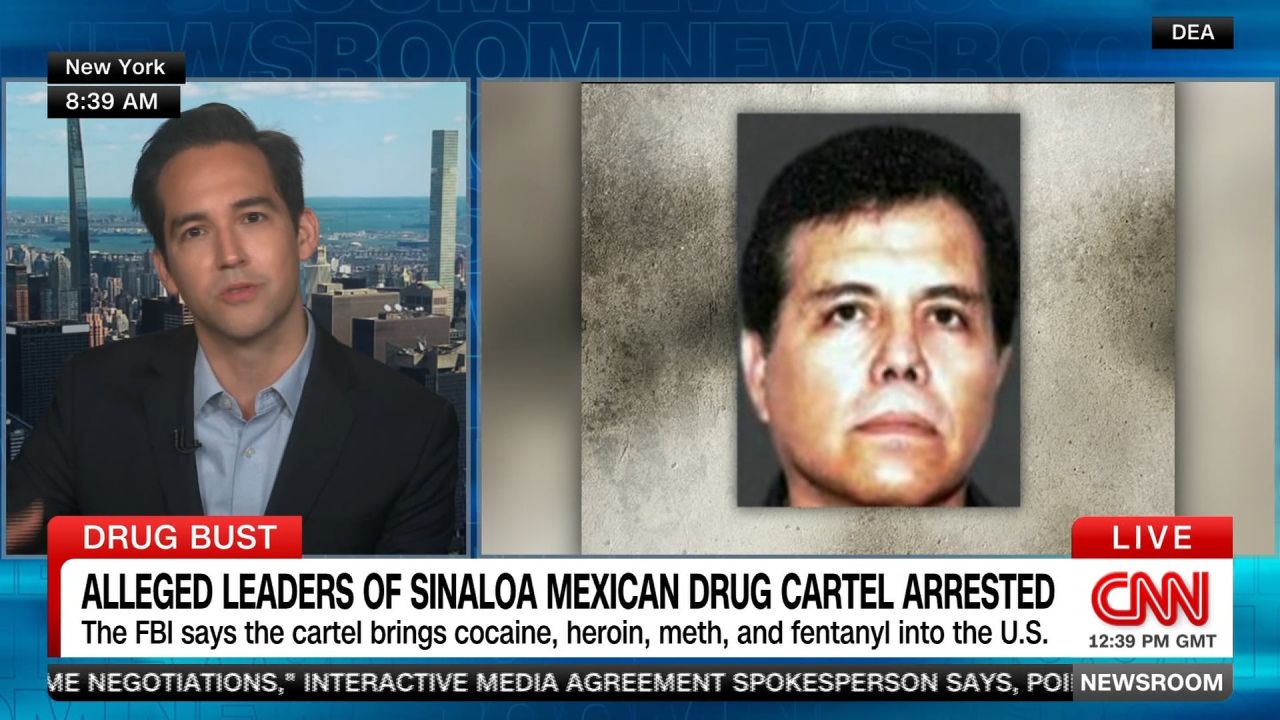
U.S. Indictment Accuses Sinaloa Governor of Conspiracy with Cartel
Rubén Rocha Moya, the current governor of the Mexican state of Sinaloa, has been indicted in a U.S. Federal court on charges related to drug trafficking and firearms offenses, the U.S. Department of Justice announced on Wednesday, April 29, 2026. The indictment alleges a long-running conspiracy involving Rocha Moya and nine other current and former Mexican officials who are accused of collaborating with the Sinaloa Cartel, specifically the faction known as “Los Chapitos,” to distribute massive quantities of narcotics into the United States. This development marks a significant escalation in U.S. Efforts to combat the flow of fentanyl and other illicit drugs, and raises serious questions about corruption within the Mexican government.
The case, presented before the U.S. District Court for the Southern District of New York, is assigned to Judge Katherine Polk Failla. According to the Department of Justice, the accused are alleged to have provided support to the Sinaloa Cartel in exchange for financial compensation. The indictment details how these officials allegedly leveraged their positions to facilitate the cartel’s operations, allowing it to operate with greater impunity and expand its reach into the U.S. Drug market. The charges underscore the complex challenges facing both the U.S. And Mexico in their ongoing struggle against transnational criminal organizations.
Allegations of Collaboration with ‘Los Chapitos’
The indictment specifically links Rocha Moya and the other defendants to “Los Chapitos,” the sons of imprisoned drug lord Joaquín “El Chapo” Guzmán. This faction has reportedly been vying for control of the Sinaloa Cartel following Guzmán’s conviction, and imprisonment. The U.S. Government alleges that the accused officials provided protection and logistical support to “Los Chapitos,” enabling them to maintain their dominance in the drug trade. The Department of Justice statement emphasizes the cartel’s “ruthless” nature and its decades-long role in flooding U.S. Communities with dangerous narcotics.
Federal prosecutor Jay Clayton stated that the Sinaloa Cartel’s success is inextricably linked to corrupt politicians and law enforcement officials. “As the indictment demonstrates, the Sinaloa Cartel, and other similar drug trafficking organizations, could not operate with such freedom or success without corrupt politicians and law enforcement officials on their payroll,” Clayton said. This assertion highlights the U.S. Government’s belief that systemic corruption is a key enabler of the cartel’s activities. The indictment aims to dismantle not only the cartel’s operational network but also the corrupt infrastructure that supports it.
The Accused: A List of Officials
Alongside Governor Rocha Moya, the indictment names Enrique Inzunza Cázarez, a Mexican Senator and former Secretary of Government for the state of Sinaloa, as one of the key defendants. The Department of Justice has not yet released a comprehensive list of all nine accused individuals, but further details are expected to emerge as the case progresses. The involvement of a sitting senator suggests the alleged corruption extends to the highest levels of Mexican political power. Rocha Moya, 76, was elected in 2021 and is scheduled to complete his term in 2027, according to reporting from BBC News Mundo.

The breadth of the indictment, encompassing both current and former officials, suggests a sustained pattern of collaboration between the cartel and government representatives. This raises concerns about the depth of corruption within Sinaloa and potentially other Mexican states. The U.S. Government’s decision to pursue charges against high-ranking officials signals a determination to address the root causes of the drug trade and hold those responsible accountable.
Implications for U.S.-Mexico Relations
The indictment is likely to strain already complex relations between the United States and Mexico. The Mexican government, under President Claudia Sheinbaum, has not yet issued an official response to the charges. However, the accusations are certain to fuel tensions and potentially complicate ongoing cooperation on issues such as drug interdiction, border security, and immigration. The timing of the indictment, coming shortly after Sheinbaum’s election, adds another layer of sensitivity to the situation.
Experts in U.S.-Mexico relations anticipate that the Mexican government will likely view the U.S. Action as an infringement on its sovereignty. However, the U.S. Government maintains that the charges are based on credible evidence and are necessary to protect its national security interests. The case could also prompt a reassessment of U.S. Security assistance to Mexico, with potential implications for funding and intelligence sharing. The outcome of the legal proceedings and the subsequent diplomatic response will be closely watched by both countries and the international community.
The Sinaloa Cartel: A History of Violence and Influence
The Sinaloa Cartel is one of the most powerful and well-organized drug trafficking organizations in the world. Founded in the 1980s, it has grown to control a significant portion of the illicit drug trade between Mexico and the United States. The cartel is known for its ruthless violence, its sophisticated logistics network, and its ability to corrupt government officials at all levels. The arrest and extradition of Joaquín “El Chapo” Guzmán in 2017 did not dismantle the cartel, and “Los Chapitos” have since emerged as key leaders, continuing the organization’s criminal activities.

The cartel’s primary source of revenue is the production and trafficking of narcotics, including fentanyl, methamphetamine, cocaine, and heroin. Fentanyl, in particular, has become a major driver of the opioid crisis in the United States, with a dramatic increase in overdose deaths in recent years. The U.S. Government has made combating the fentanyl trade a top priority, and the indictment of Governor Rocha Moya is part of a broader effort to disrupt the cartel’s supply chain and hold its leaders accountable. The cartel’s influence extends beyond drug trafficking, encompassing money laundering, extortion, and other criminal enterprises.
What Happens Next?
The next step in the legal process will be the attempt to extradite Rocha Moya and the other accused officials from Mexico to the United States. Mexico’s constitution prohibits the extradition of its citizens, but You’ll see exceptions for crimes committed against the U.S. Government. The U.S. Government will likely pursue extradition through diplomatic channels, presenting evidence to support its case. The process could be lengthy and contentious, and it is not certain whether Mexico will ultimately comply with the extradition request.
If the accused are extradited, they will face trial in the U.S. District Court for the Southern District of New York. The trial is expected to be complex and could involve extensive evidence gathering and witness testimony. The U.S. Government will need to demonstrate that the accused knowingly conspired with the Sinaloa Cartel and that they received financial benefits in exchange for their support. The outcome of the trial will have significant implications for U.S.-Mexico relations and the fight against drug trafficking. A hearing date has not yet been set, but the Department of Justice is expected to provide further updates as the case progresses.
Here’s a developing story, and World Today Journal will continue to provide updates as more information becomes available. We encourage readers to share their thoughts and perspectives in the comments section below.