
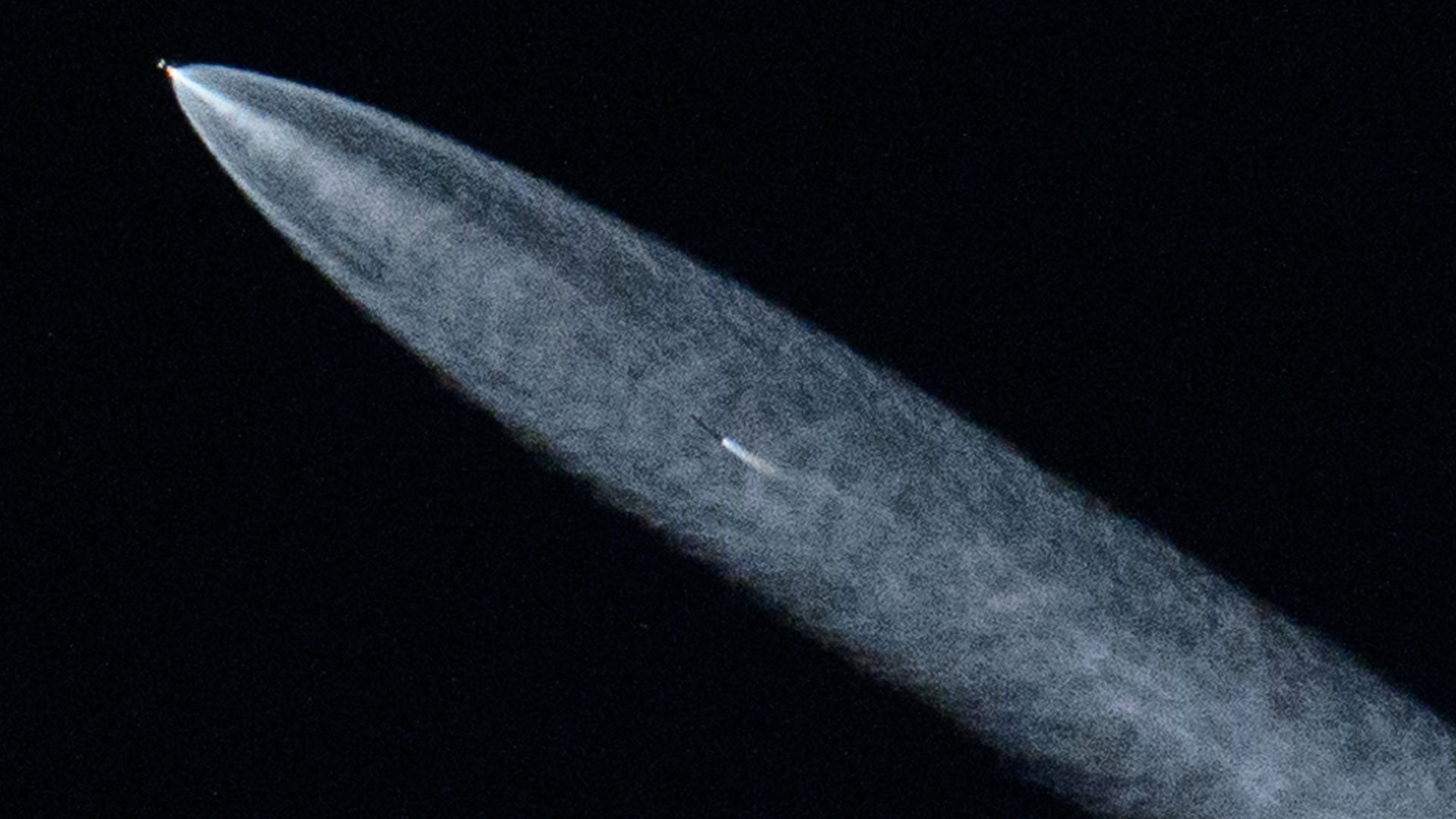
SpaceX Rocket Stage to Impact Moon in August, Astronomers Confirm
A discarded upper stage of a SpaceX Falcon 9 rocket is on a collision course with the moon, predicted to impact the lunar surface on August 5th. While posing no threat to the moon itself or any ongoing lunar missions, the event highlights the growing issue of space debris and the challenges of responsible space operations. The object, identified as 2025-010D, is a remnant from a launch that successfully delivered payloads to the moon in early 2025, including Firefly Aerospace’s Blue Ghost lander and Japan’s Hakuto-R Resilience lander.
The impending impact was first identified by Bill Gray, an astronomer and developer of Project Pluto software, which tracks near-Earth objects. Gray has been monitoring the rocket stage since its launch, noting changes in its orbit that ultimately pointed towards a lunar encounter. “We’ve been tracking it since launch. The orbit has changed a bit over the last year or so, and is now headed for a lunar impact,” Gray stated, as reported by Space.com. The impact is expected to occur on the near side of the moon.
Successful Lunar Landings Overshadowed by Orbital Debris
The Falcon 9 launch in January 2025 was notable for several achievements in commercial lunar exploration. Firefly’s Blue Ghost Mission 1, dubbed “Ghost Riders in the Sky,” achieved the first fully successful commercial lunar landing at Mare Crisium on March 2, 2025. The lander subsequently established the longest operational period for a commercial spacecraft on the moon to date. However, the mission also included Japan’s Hakuto-R M2 lander, Resilience, which unfortunately experienced a malfunction in its laser rangefinder approximately 90 seconds before its intended touchdown, resulting in a crash landing.

Despite these setbacks, the launch demonstrated the increasing capabilities of private companies in reaching the moon. The success of Blue Ghost, in particular, marked a significant milestone in the burgeoning commercial space sector. However, the fate of the Falcon 9 upper stage serves as a stark reminder of the unintended consequences of space activities and the need for improved debris mitigation strategies.
Impact Details and Scientific Implications
The rocket stage is traveling at approximately 2.43 kilometers per second (5,400 miles per hour) upon impact – roughly seven times the speed of sound, according to preliminary calculations. The impact is predicted to occur around 2:44 a.m. EDT on August 5th. While the collision is not expected to pose any risk to existing lunar infrastructure or future missions, it may create a new, compact crater that could be of interest to scientists.
“It doesn’t present any danger to anyone, though it does highlight a certain carelessness about how leftover space hardware (space junk) is disposed of,” explained Bill Gray, author of the report detailing the predicted impact. The creation of a new impact crater, even a small one, could provide valuable insights into the lunar regolith – the loose surface material covering the moon – and the processes of impact cratering. Scientists could potentially analyze the composition of the ejected material to learn more about the subsurface layers of the moon.
The Growing Problem of Space Debris
The impending lunar impact is not an isolated incident. The increasing frequency of space launches, coupled with the lack of comprehensive debris mitigation strategies, is leading to a growing accumulation of space junk in Earth orbit and, increasingly, in the Earth-moon system. This debris poses a threat to operational satellites and future space missions. The Falcon 9 upper stage is just the latest example of this escalating problem.
The issue of space debris is gaining increasing attention from international organizations and governments. Efforts are underway to develop technologies and policies to track, remove, and prevent the creation of space debris. These include active debris removal missions, improved satellite design for end-of-life deorbiting, and international agreements on responsible space behavior. However, significant challenges remain in addressing this complex issue.
Project Pluto and the Tracking of Near-Earth Objects
The prediction of the Falcon 9 impact relied heavily on the work of Bill Gray and his Project Pluto software. Project Pluto provides tools for astronomers to identify and track satellites, asteroids, and other near-Earth objects. Gray’s Guide application is widely used by both professional and amateur astronomers to monitor these objects. The software’s ability to accurately predict the trajectory of the rocket stage demonstrates the importance of continued investment in space situational awareness.

Gray’s work highlights the crucial role of independent researchers and citizen scientists in contributing to our understanding of the space environment. By providing publicly available data and tools, Project Pluto empowers astronomers around the world to participate in the monitoring and tracking of near-Earth objects, enhancing our ability to assess and mitigate potential risks.
What Happens Next?
Astronomers will continue to monitor the Falcon 9 upper stage as it approaches the moon, refining the impact prediction as new data becomes available. The impact itself is expected to be observable from Earth, although it will likely be a brief flash of light. Following the impact, scientists may analyze images of the impact site to assess the size and shape of the resulting crater.
The incident is likely to fuel further discussions about the need for more robust space debris mitigation policies and the development of technologies to address the growing problem of orbital and lunar clutter. The next major development will likely be a post-impact assessment by astronomers and potentially, future lunar missions.
This event serves as a critical reminder of humanity’s growing footprint in space and the importance of responsible stewardship of the lunar environment. As space exploration continues to accelerate, This proves essential that we prioritize the development and implementation of sustainable practices to ensure the long-term safety and accessibility of space for all.
Key Takeaways:
- A SpaceX Falcon 9 rocket stage is predicted to impact the moon on August 5th.
- The impact poses no threat to existing lunar missions or infrastructure.
- The event highlights the growing problem of space debris and the need for mitigation strategies.
- Astronomers are continuing to monitor the object and will assess the impact site afterward.
Do you have thoughts on the increasing amount of space debris? Share your comments below, and please share this article with your network.