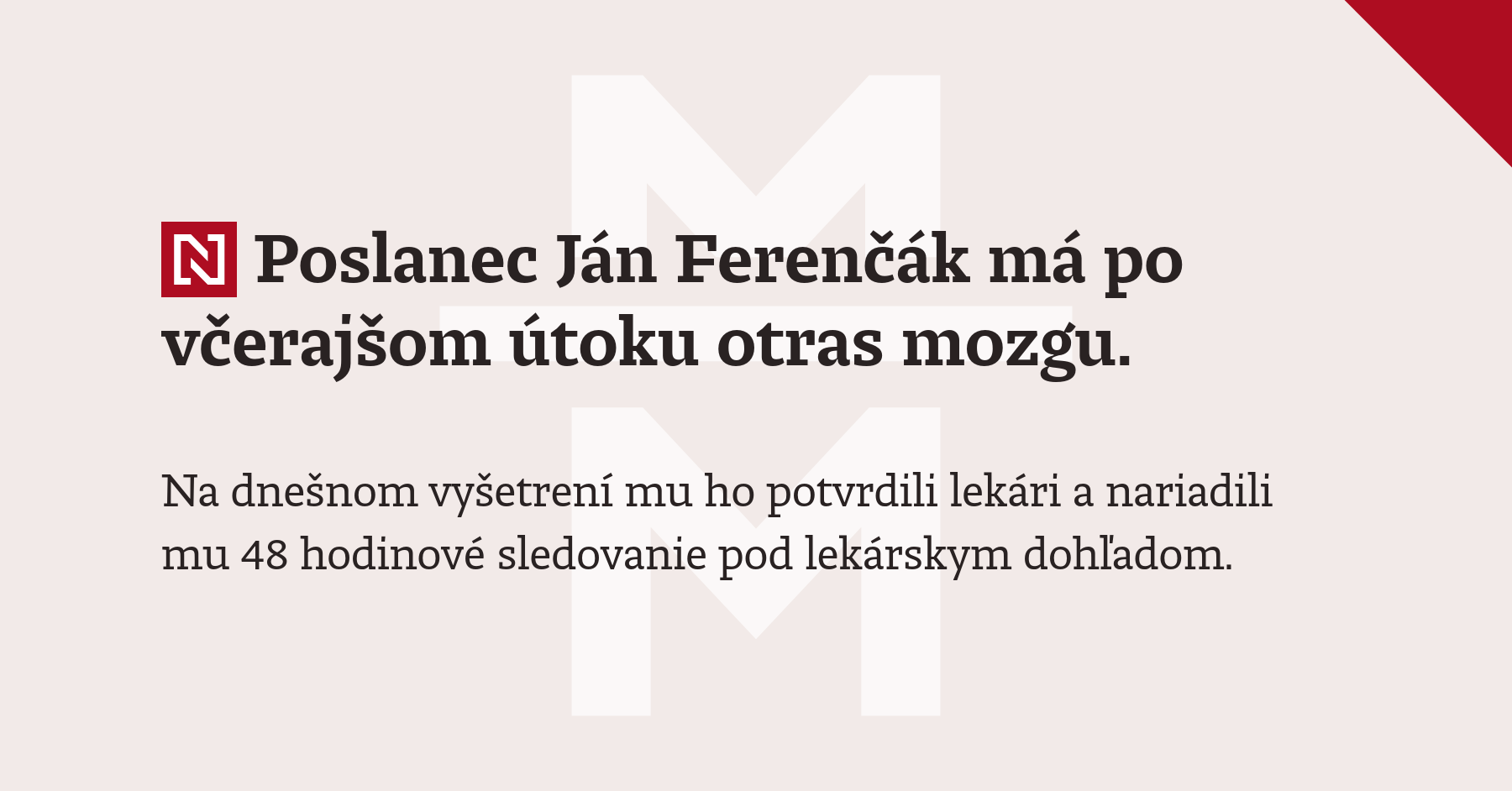
Slovak independent MP Ján Ferenčák has been diagnosed with a concussion following an alleged physical attack, according to his own statements and subsequent media reports. The incident occurred on April 25, 2026, when Ferenčák said he was assaulted by an unidentified man in a public setting. He claimed the attacker struck him in the face, causing him to fall to the ground, before fleeing the scene. Ferenčák stated he sought medical attention afterward, where medical professionals confirmed signs consistent with a traumatic brain injury, specifically a concussion.
The politician, known for his vocal criticism of political alliances and alleged behind-the-scenes coordination between state institutions and certain parliamentary groups, used the incident to reiterate his claims about ongoing political pressure. In interviews following the attack, Ferenčák linked the assault to his public statements accusing President Peter Pellegrini of maintaining informal ties with the Hlas-SD party, despite holding a supposedly nonpartisan presidential office. These allegations had previously been denied by the Presidential Palace, which labeled Ferenčák’s claims about a secret March meeting in Turčianske Teplice between the president and Hlas-SD representatives as entirely false.
The Presidential Palace’s communication office issued a firm rebuttal after Ferenčák’s televised appearance on JOJ 24’s Politika 24 program, where he suggested the president remained actively involved in directing his former party’s affairs. Officials stressed that no such meeting took place and that the president upholds constitutional neutrality. They characterized Ferenčák’s allegations as unfounded and damaging to public trust in institutional independence.
In the aftermath of the attack, Ferenčák likewise raised concerns about the conduct of law enforcement during a separate incident involving his elderly mother, claiming police actions constituted intimidation. He described the situation as a form of political lynching, though no official confirmation has been provided regarding the nature or justification of police involvement in that matter. Authorities have not released public statements detailing their interaction with Ferenčák’s family, leaving the claims unverified through official channels.
Representatives of the Hlas-SD party dismissed Ferenčák’s narrative as baseless, accusing him of spreading disinformation to garner sympathy and deflect from his own political isolation. Party officials emphasized that Ferenčák, who was expelled from Hlas-SD in prior years due to disciplinary violations, has no current affiliation with the group and continues to make unsubstantiated claims about internal party dynamics. They maintained that any suggestion of ongoing coordination between the presidency and their party lacks credible evidence.
Further complicating the situation, prominent Hlas-SD figure Miroslav Eštok publicly denied any involvement in or knowledge of the attack on Ferenčák, stating that attributing the incident to party members was both inaccurate and harmful to civil discourse. Eštok supported the decision to remove Ferenčák from the party ranks years earlier, citing repeated breaches of party ethics and conduct rules as justification.
As of now, no arrests have been made in connection with the alleged assault on Ferenčák, and police have not released surveillance footage, witness statements, or forensic details that could corroborate his account. Medical records confirming the concussion diagnosis have not been made public, in line with Slovak privacy laws protecting personal health information. Ferenčák has not filed a formal police complaint that has been acknowledged by law enforcement agencies in official bulletins or press releases.
The incident adds to a pattern of heightened tensions in Slovak politics, where accusations of backdoor dealings, institutional bias, and personal vendettas frequently surface amid fragmented parliamentary representation and declining public trust in traditional parties. Independent MPs like Ferenčák often occupy a polarizing space, amplifying allegations that struggle to gain traction in formal investigations due to lack of corroborating evidence.
Moving forward, observers will watch for any official updates from the Police Presidium regarding the investigation into the alleged attack, as well as whether Ferenčák pursues legal action or continues to raise the matter in parliamentary forums. No dates have been set for hearings, statements, or procedural reviews related to either the assault claims or the broader allegations of political interference he has raised.
For continued coverage of developments in Slovak politics and institutional accountability, readers are encouraged to follow official sources such as the National Council of the Slovak Republic’s website and verified communications from the Office of the President. Sharing verified updates helps promote informed public discourse.
Worth a look
- Philly City Council to Hold Hearing on Police Conduct and Use of Force During Pride Events
- Fantasilandia Closing Date in Parque O’Higgins: How to Get Tickets for $9,990
- How Vitamin D Deficiency Impacts Brain Health and Memory Centers (newsdirectory3.com)
- Russia Accused of War Crimes After Drone Hunts Ukrainian Civilian in ‘Safari’ Attack (world-today-news.com)