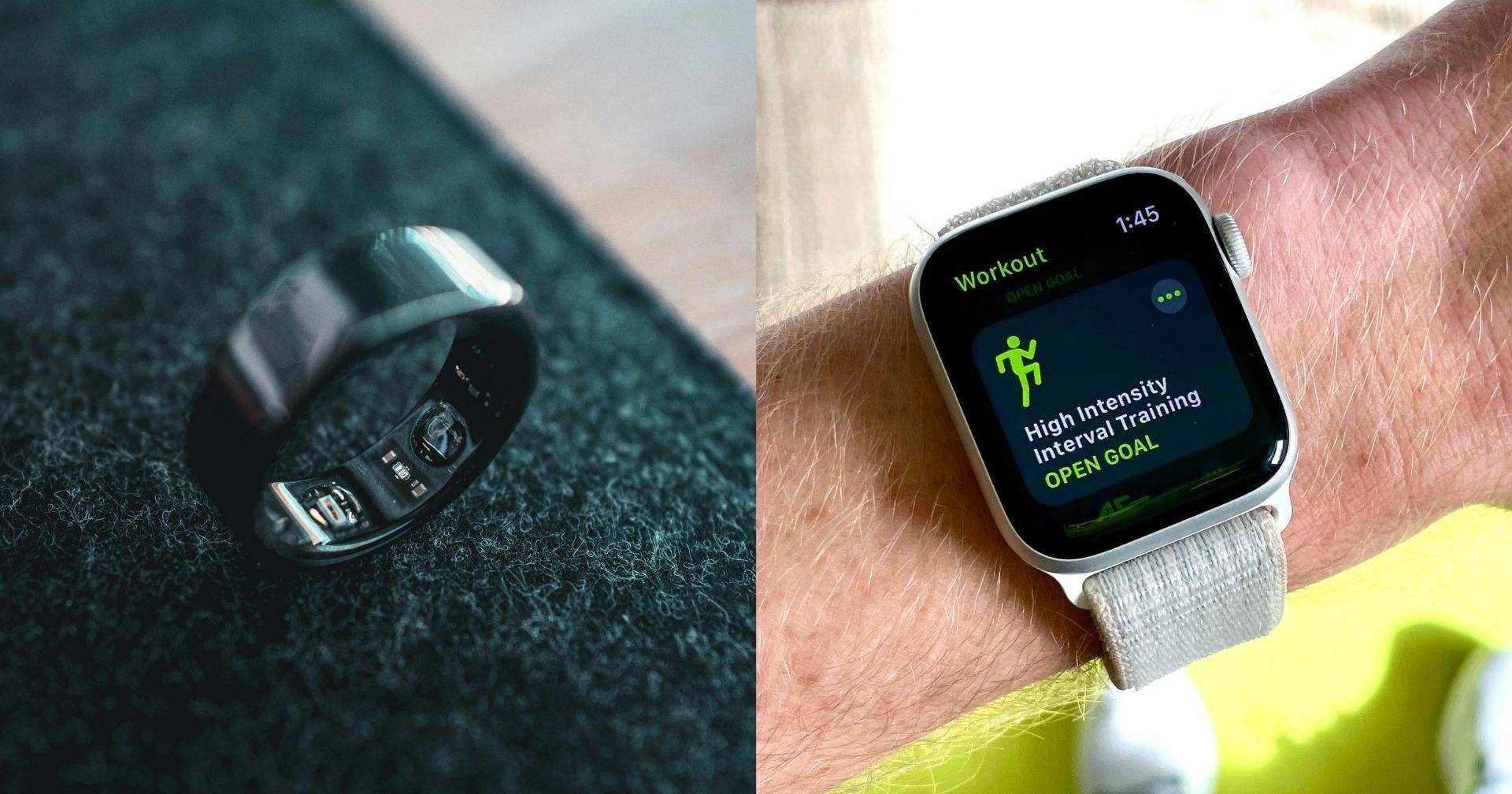
For years, the conversation around wearable technology was dominated by a single silhouette: the smartwatch. From the early iterations of the Pebble to the ubiquitous presence of the Apple Watch and Samsung Galaxy Watch, the goal was clear—shrink the smartphone and strap it to the wrist. But a subtle shift is occurring in the consumer electronics landscape. The “screen-centric” era of wearables is being challenged by a more discreet, minimalist alternative: the smart ring.
As a software engineer turned journalist, I have watched the evolution of biometric sensors with keen interest. We have moved rapidly from simple step-counting to sophisticated medical-grade monitoring. The central tension now facing consumers is no longer just about brand loyalty, but about the philosophy of interaction. Do you want a wrist-worn computer that demands your attention with haptic buzzes and glowing pixels, or a piece of jewelry that silently gathers data in the background?
The choice between smart rings vs smartwatches is not merely a matter of aesthetics; it is a trade-off between comprehensive utility and frictionless integration. While smartwatches offer a command center for your digital life, smart rings prioritize the “invisible” nature of health tracking, focusing on recovery, sleep, and long-term trends without the cognitive load of a screen. This guide breaks down the technical nuances, the biometric advantages, and the practical realities of both form factors to help you decide which fits your lifestyle.
Whether you are an athlete seeking precise performance metrics, a professional trying to manage notification fatigue, or someone simply looking to optimize their sleep hygiene, the decision comes down to where you want your technology to live. As the market expands with the entry of giants like Samsung into the ring space, the lines are blurring, but the fundamental strengths of each device remain distinct.
The Stealth Appeal: Understanding the Smart Ring
The smart ring represents a pivot toward “calm technology.” Unlike the smartwatch, which acts as a secondary screen for your phone, the smart ring is designed to be forgotten. Devices like the Oura Ring and the recently launched Samsung Galaxy Ring focus on passive data collection, leveraging the finger’s unique anatomy for more accurate biometric readings.
From a technical perspective, the finger is often a superior location for certain types of sensing. The skin on the fingers is thinner than on the wrist, and the blood vessels are closer to the surface. This allows Photoplethysmography (PPG) sensors—the lights used to measure heart rate and blood oxygen (SpO2)—to obtain a cleaner signal with less interference from bone or muscle movement. Here’s particularly evident in sleep tracking, where the bulk of a watch can be intrusive or uncomfortable, whereas a ring remains virtually imperceptible.
The primary value proposition of the smart ring is its ability to monitor “readiness.” By tracking Heart Rate Variability (HRV), skin temperature, and sleep stages, rings provide a holistic view of how the body is recovering. For many users, the absence of a screen is the greatest feature. It eliminates the temptation to check emails at 3 a.m. Or the distraction of a notification during a dinner conversation, turning the wearable into a tool for health rather than a tether to the digital world.
However, this minimalism comes with significant trade-offs. You cannot respond to a text, set a timer via voice, or see your pace in real-time during a run. The smart ring is a data collector, not an interactive device. The “fit” is far more critical; while a watch strap is adjustable, a ring must be sized perfectly to ensure the sensors maintain constant contact with the skin, often requiring a separate sizing kit before purchase.
The Wrist Command Center: The Power of the Smartwatch
If the smart ring is a silent observer, the smartwatch is an active assistant. The dominance of the Apple Watch and Garmin’s ecosystem is built on the foundation of immediate feedback. The screen is the smartwatch’s superpower, transforming a health tracker into a communication hub and a navigation tool.
For those engaged in active sports, the smartwatch remains the undisputed champion. The ability to see real-time metrics—such as current heart rate zones, lap times, or GPS-mapped routes—is essential for performance training. Garmin devices, in particular, offer deep analytical tools for endurance athletes that a ring simply cannot replicate due to the lack of a visual interface and the limitations of internal GPS antennas in such a small form factor.
Beyond fitness, the smartwatch integrates deeply into the modern digital ecosystem. The ability to handle contactless payments, control smart home devices, and manage calendar alerts from the wrist provides a level of convenience that justifies the bulk. Smartwatches have pushed the boundaries of medical utility. For instance, the FDA has cleared certain Apple Watch features for detecting atrial fibrillation (AFib), moving the device from a “wellness gadget” to a legitimate health screening tool.
The Achilles’ heel of the smartwatch is, invariably, the battery. Because they power high-resolution OLED screens and maintain constant wireless connections, many high-end watches require charging every one to two days. Even “ultra” models with larger batteries struggle to match the longevity of a smart ring, which can often last a full week or more on a single charge because it doesn’t have to light up a display every time you move your arm.
Head-to-Head: Biometrics, Battery, and Behavior
To truly understand which device is “better,” we must look at how they perform across the core pillars of wearable tech: accuracy, longevity, and user experience.
Biometric Accuracy and Health Tracking
Both devices use PPG sensors, but their strengths differ. Smartwatches are generally better at tracking high-intensity movement. Because they have more surface area and can be tightened against the wrist, they handle the “noise” of a vigorous workout more effectively. Smart rings, conversely, excel in resting metrics. Their ability to track basal body temperature and HRV during sleep is often more consistent, making them the gold standard for recovery tracking and menstrual cycle insights.
Battery Life and Charging Habits
There is a stark contrast in maintenance. A smart ring is a “set it and forget it” device. Most rings charge via a proprietary cradle and can go several days without needing power. Smartwatches, depending on the model, range from “daily chargers” (Apple Watch, Pixel Watch) to “weekly chargers” (Garmin, Huawei). For users who find the act of charging another device a chore, the ring is the clear winner.
The “Cognitive Load” Factor
This is the most subjective but perhaps most important distinction. A smartwatch is an invitation to be interrupted. Every vibration is a potential demand on your time. A smart ring removes this friction. It collects the data, syncs it to an app in the background, and presents a summary when you choose to look at your phone. For those struggling with screen addiction or digital burnout, the ring offers a way to stay health-conscious without staying “connected.”
| Feature | Smart Ring | Smartwatch |
|---|---|---|
| Primary Use | Recovery, Sleep, Stealth Health | Fitness, Notifications, Utility |
| Battery Life | Long (4–7+ Days) | Short to Medium (1–14 Days) |
| Interactivity | None (App-based) | High (Touchscreen/Voice) |
| Sleep Comfort | High (Minimalist) | Moderate (Bulky) |
| Workout Tracking | Passive/General | Active/Real-time |
Who Should Choose Which?
The “best” option depends entirely on your primary goal. I often categorize users into three profiles to simplify the decision.
The Optimizer: If your main goal is to improve your sleep, manage stress, and understand your body’s recovery patterns without adding more screens to your life, the smart ring is the superior choice. It is for the person who wants the data but doesn’t want the distraction.
The Athlete: If you are training for a marathon, hitting the gym daily, or need precise GPS tracking for hiking and cycling, the smartwatch is non-negotiable. The real-time feedback loop is critical for adjusting intensity and monitoring performance on the fly.
The Connected Professional: If you use your wearable to triage emails, manage a calendar, or handle payments while on the move, the smartwatch is your best tool. It functions as a productivity enhancer that reduces the number of times you need to pull your phone out of your pocket.
The Emerging Trend: The Hybrid Ecosystem
Interestingly, we are seeing a rise in “hybrid” usage. Many tech enthusiasts are now wearing both. By pairing a smart ring for 24/7 health and sleep monitoring with a smartwatch used specifically for workouts and productivity, users get the best of both worlds. Samsung is leaning into this strategy, designing the Galaxy Ring to integrate seamlessly with the Galaxy Watch, allowing the devices to share data and optimize battery life.
This ecosystem approach solves the “battery anxiety” of the watch and the “utility gap” of the ring. For example, the ring can handle the heavy lifting of overnight biometric tracking, while the watch takes over during a morning run. This synergy suggests that the future of wearables isn’t a winner-take-all battle between the ring and the watch, but rather a coordinated network of sensors distributed across the body.
As we look forward, the integration of more advanced sensors—such as non-invasive glucose monitoring or blood pressure tracking—will likely determine the next leap in adoption. Whether these sensors find a home in a ring or a watch will depend on the physics of the sensor and the comfort of the user.
The next major milestone for the industry will be the further refinement of AI-driven health coaching. We are moving away from “raw data” (e.g., “Your HRV is 45ms”) and toward “actionable insights” (e.g., “Your recovery is low; we suggest a light walk instead of a heavy lift today”). Both rings and watches are evolving to become proactive health companions rather than reactive data logs.
Which approach resonates more with you: the silent intelligence of a ring or the active utility of a watch? Share your experience with wearables in the comments below and let us know which metrics you find most valuable for your daily routine.
Keep reading