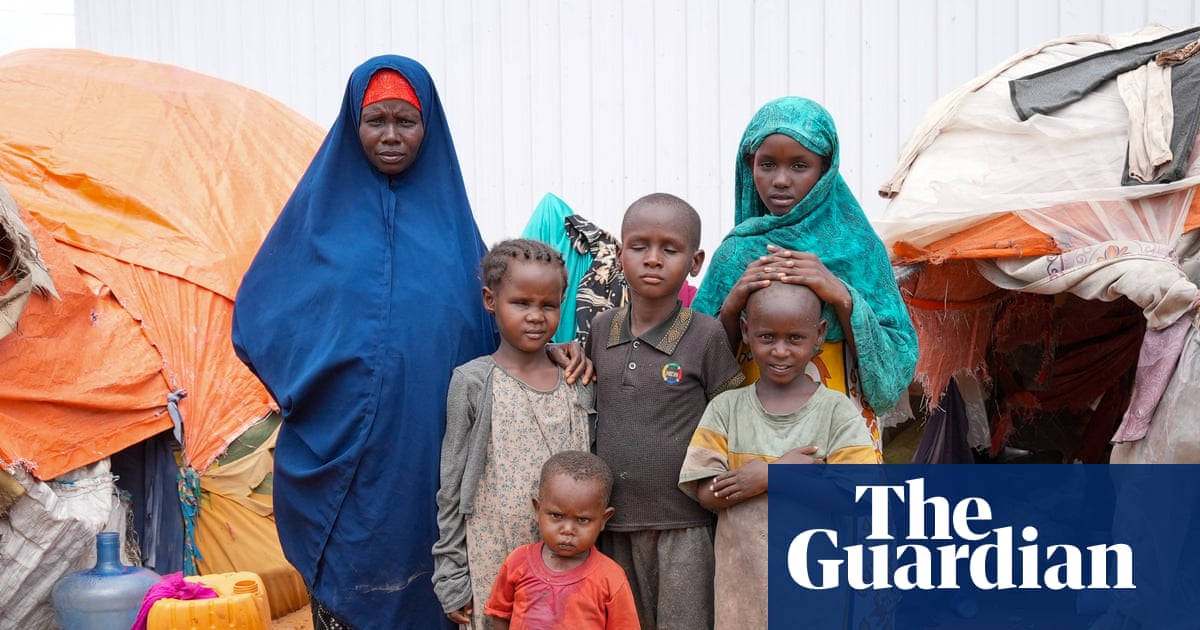
Nearly 6.5 million people in Somalia are facing crisis-level hunger as a devastating drought and critical funding shortages drive widespread displacement toward the capital, Mogadishu. According to a recent report from the Somali government and United Nations agencies, approximately one-third of the nation’s population is expected to experience hunger at levels classified as crisis or worse.
The humanitarian emergency is intensifying, with the number of people facing food insecurity increasing by 1.7 million since January. This surge is largely driven by a deepening drought that has decimated agricultural yields and killed off livestock, the backbone of many Somali livelihoods. As rural communities lose their ability to sustain themselves, thousands are fleeing to internally displaced person (IDP) camps on the outskirts of Mogadishu, seeking survival in an environment where resources are already stretched to their limits.
How climate-driven drought is fueling the Somalia hunger crisis
The current crisis is not a sudden anomaly but the result of a worsening environmental cycle. The Integrated Food Security Phase Classification (IPC) report indicates that the hunger levels in Somalia have reached a critical threshold. The classification system, which monitors food security globally, identifies 6.5 million people as facing IPC 3 (Crisis) or IPC 4 (Emergency) levels of hunger.
Of that total, two million individuals are currently experiencing “severe hunger,” categorized as IPC 4. This level of food insecurity implies that people are facing high risks of acute malnutrition and are likely to experience increased mortality rates if immediate assistance is not provided. The drought has fundamentally disrupted the traditional pastoralist and farming lifestyles that have sustained the region for generations.
The impact on the agricultural sector has been catastrophic. Widespread crop failures and massive livestock losses have stripped families of their assets and their primary sources of nutrition. When livestock die, pastoralist families lose not just their food, but their entire economic foundation, leaving them with little choice but to migrate toward urban centers in search of aid.
The impact on children: Acute malnutrition reaches critical levels
Perhaps the most alarming aspect of the current humanitarian situation is the vulnerability of Somalia’s youngest population. UN agencies have warned that more than 1.8 million children under the age of five are facing acute malnutrition in 2026. This figure represents a massive segment of the child population that is at risk of long-term developmental damage or death.
The scale of the nutritional crisis is particularly stark when looking at the most severe cases. Experts estimate that nearly half a million of these children are likely to be severely malnourished. For children in this age bracket, acute malnutrition can lead to rapid physical wasting and a weakened immune system, making common illnesses significantly more lethal.
The intersection of drought and malnutrition creates a vicious cycle. As water becomes scarcer, the quality of available water often declines, leading to increased rates of waterborne diseases. For a child already suffering from nutritional deficiencies, these illnesses can be fatal, further complicating the efforts of humanitarian workers to stabilize the population.
From farms to camps: The cycle of displacement in Mogadishu
As the drought hollows out rural villages, the pressure on Mogadishu’s infrastructure is mounting. The capital has become a primary destination for those fleeing the “dust and despair” of the countryside. Families who once relied on fertile land or healthy herds are now arriving at IDP camps in districts like Kahda, often with nothing left but the clothes on their backs.
The transition from a self-sufficient rural life to a state of total dependency in an urban camp is a profound shock. In these camps, the challenges of hunger and poverty are compounded by a lack of basic services. Displaced populations often face soaring water prices and limited access to food supplies, making the struggle for daily survival even more intense than it was in their home villages.
This displacement is not merely a movement of people; it is a collapse of livelihoods. Once a family has sold their remaining assets or watched their livestock perish, they enter a cycle of poverty that is extremely difficult to break. The loss of agricultural and pastoral capabilities means that even if the rains return, the immediate economic capacity of these families remains broken.
Why humanitarian funding gaps are stalling relief efforts
Despite the growing scale of the emergency, the international response is struggling to keep pace with the need. Humanitarian agencies are currently operating under significant funding shortfalls, which has forced difficult decisions regarding the distribution of aid. To manage limited resources, some agencies have had to reduce food rations and limit the number of people they can support.
“The drought emergency in Somalia has deepened alarmingly, with soaring water prices, limited food supplies, dying livestock, and very little humanitarian funding,” said George Conway, the Humanitarian Coordinator for Somalia. He emphasized that urgent, life-saving assistance is required to prevent a total collapse of both pastoral and farming livelihoods.
The current assistance is often restricted to meeting only the most basic survival requirements. Without a significant influx of capital to support nutrition, health, water, and sanitation programs, aid agencies warn that the humanitarian situation could deteriorate much further. The gap between the required funding and the actual resources available remains one of the most significant hurdles to preventing a larger-scale catastrophe.
The coming months are considered a critical window for intervention. Humanitarian organizations are closely monitoring weather patterns, as the survival of many communities depends on the upcoming Gu rains, which are expected between April and June. If the rains fail to materialize or are insufficient, the current hunger crisis could escalate into a much larger famine scenario.
Official updates regarding the IPC food security reports and humanitarian funding requirements are expected to be released by UN agencies and the Somali government as the Gu rain season progresses.
How do you think the international community should prioritize aid in regions facing climate-driven displacement? Share your thoughts in the comments below and share this report to raise awareness.
Keep reading