South Korea is facing a critical atmospheric challenge as carbon dioxide (CO₂) concentrations in the region have surged to a historic high, significantly outpacing the global average. This trend persists despite reported declines in some domestic emission sectors, highlighting a complex interplay between local industrial output and the broader movement of greenhouse gases across the East Asian peninsula.
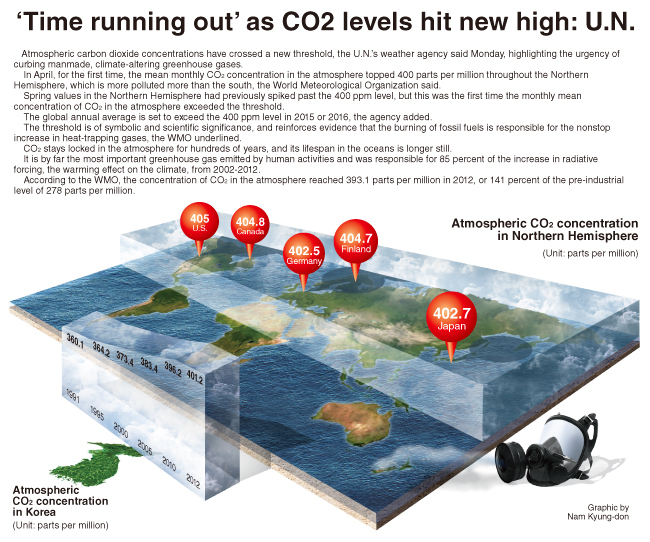
According to recent environmental data, the atmospheric carbon dioxide concentration over South Korea reached a record peak of 432.7 ppm (parts per million) in 2024 per reporting by the International Business Times. This figure represents a stark increase that exceeds the worldwide average, raising urgent concerns among climate scientists and policymakers about the country’s ability to meet its international climate commitments.
The disparity between domestic emission trends and atmospheric concentrations is particularly striking. While some data suggests that South Korea’s domestic greenhouse gas emissions fell by 0.4% in 2024 compared to the previous year, the air above the peninsula has grown more carbon-dense than ever before according to analysis citing Worldometers data. This suggests that atmospheric levels are not solely a product of immediate local emissions but are influenced by regional transport of pollutants and the cumulative nature of greenhouse gases.
The Gap Between Emissions and Atmospheric Concentration
For many, the news that domestic emissions are falling should be a sign of progress. However, the record-breaking 432.7 ppm concentration reveals a more stubborn reality. Atmospheric concentration refers to the amount of a gas present in the air at a specific location, whereas emissions refer to the rate at which that gas is being pumped into the atmosphere. The fact that concentration is rising while emissions slightly dip indicates that the “sink” capacity of the region—the ability of forests and oceans to absorb CO₂—is being overwhelmed, or that CO₂ from neighboring industrial hubs is drifting into Korean airspace.
This phenomenon is not limited to carbon dioxide. Reports indicate that all four major greenhouse gases monitored in South Korea reached historic highs in 2024, suggesting a systemic increase in the region’s atmospheric burden as noted in recent environmental summaries. The power sector remains a primary driver of these levels, with significant contributions from coal and gas-fired plants that continue to fuel the nation’s industrial engine.
Why South Korea’s Levels Exceed the Global Average
Several factors contribute to why South Korea’s CO₂ levels are higher than the global mean. Geographically, the peninsula is situated in one of the most industrially dense regions of the world. The proximity to other major emitters in East Asia means that South Korea often “imports” carbon-dense air via prevailing wind patterns.
the structural reliance on fossil fuels for electricity generation creates a localized “dome” of higher concentration. Despite the government’s shift toward renewable energy, the transition has been slower than the rate of atmospheric accumulation. The result is a regional concentration that serves as a warning sign for the effectiveness of current mitigation strategies.
Implications for Climate Commitments and Policy
South Korea has repeatedly pledged to reduce its carbon footprint to align with the Paris Agreement. However, the gap between these pledges and the atmospheric reality suggests that current policies may be insufficient. If the concentration of CO₂ continues to climb despite marginal decreases in emissions, the country may find it increasingly difficult to reach its “Net Zero” targets.
Environmental advocates argue that the focus on “emission reductions” alone is too narrow. They suggest that without a more aggressive transition away from coal and a massive investment in carbon sequestration (the process of capturing and storing atmospheric carbon), the atmospheric levels will continue to rise regardless of tiny percentage drops in annual emissions.
The situation also carries economic risks. As global markets shift toward carbon border adjustment mechanisms—where imports are taxed based on their carbon intensity—South Korea’s high atmospheric and industrial carbon profile could make its exports less competitive in markets like the European Union.
Key Takeaways on South Korea’s CO₂ Surge
- Record High: Atmospheric CO₂ reached 432.7 ppm in 2024, the highest level on record for the region.
- Global Disparity: Concentration levels in South Korea are now significantly higher than the global average.
- Emission Paradox: Domestic emissions saw a slight decrease of 0.4% in 2024, yet atmospheric density continued to rise.
- Broad Impact: All four major monitored greenhouse gases hit historic highs in the same period.
- Regional Influence: Factors include both domestic power sector emissions and the transboundary movement of pollutants in East Asia.
What Happens Next: The Path to Mitigation
The Korea Meteorological Administration (KMA) and other monitoring bodies continue to track these levels in real-time. The focus is now shifting toward understanding the “flux” of carbon—how much is being emitted versus how much is being absorbed by the surrounding environment. This data is critical for refining the nation’s Nationally Determined Contributions (NDCs) under the UN framework.

Looking ahead, the international community will be watching South Korea’s progress toward its 2030 goals. The next critical checkpoint will be the upcoming annual climate review and the submission of updated emissions inventories to the United Nations Framework Convention on Climate Change (UNFCCC), where the disparity between domestic cuts and atmospheric rises will likely be a point of intense scrutiny.
As we navigate this climate crisis, the data from the Korean peninsula serves as a reminder that reducing emissions is only half the battle; managing the actual composition of our atmosphere is the ultimate goal. We invite our readers to share their thoughts on how industrial nations can better balance economic growth with atmospheric health in the comments below.