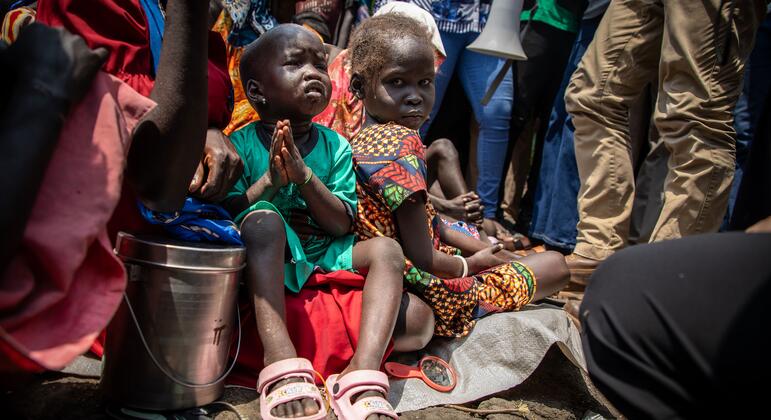
The United Nations High Commissioner for Refugees (UNHCR) has identified a severe escalation in conflict-related displacement within South Sudan’s Jonglei State, where months of ongoing violence have forced hundreds of thousands of people to flee their homes. The agency formally characterized the situation on Friday as “one of the most severe conflict-related displacement emergencies in recent years.”
This humanitarian crisis arrives against a backdrop of complex global challenges, including shifting patterns in international food security and regional instability that continue to stretch the capacity of aid organizations. For communities in eastern South Sudan, the immediate reality is a struggle for basic survival as displacement continues to disrupt lives and local infrastructure.
Understanding the Displacement Emergency in Jonglei State
The term “displacement emergency” in the context of Jonglei State refers to the rapid, forced movement of civilian populations due to persistent fighting and insecurity. According to the UNHCR, the current situation represents a significant departure from previous years, marking a period of intense instability that has left hundreds of thousands of individuals without shelter, food, or access to essential services. The agency’s assessment, released Friday, underscores the critical nature of the humanitarian needs on the ground.
The region has long faced challenges related to sub-national conflict, but the recent surge in fighting has created a new, acute phase of the crisis. Humanitarian access remains a primary concern for international observers, as the insecurity hampers the ability of aid groups to deliver life-saving supplies to those who have been uprooted. The UN agency continues to monitor the situation closely as the population remains in a state of flux.
Global Food Security and Regional Hunger
While the crisis in South Sudan remains localized in its immediate impact, it coincides with broader concerns regarding global food security. Disruptions in agricultural production and supply chains—often exacerbated by regional conflicts—have led to increased volatility in the availability of food staples. Economists often track these trends by analyzing the correlation between regional instability and the resulting spikes in local and international food prices.
The Middle East, currently navigating its own period of heightened crisis, remains a significant focal point for international humanitarian agencies. The convergence of conflict in multiple regions is creating a cumulative pressure on global food systems, where the displacement of farmers and the destruction of infrastructure can have ripple effects far beyond the borders of the affected nations. For international policymakers, the challenge lies in balancing emergency relief with the long-term stabilization of food markets.
The Evolving Landscape of Global Meat Supply
In addition to the immediate displacement crises, the global market is observing shifts in protein production and consumption. Recent data indicates that the global meat supply has seen significant fluctuations, with some sectors experiencing production levels that have quadrupled in specific regions over the last decade. This expansion, while indicative of growing demand in emerging markets, also brings challenges related to environmental sustainability and resource management.
The integration of advanced agricultural technology has allowed for higher yield efficiencies in the meat industry. However, these gains are frequently offset by the rising costs of animal feed and the logistical complexities of global distribution. As a business editor, I observe that these shifts are not merely agricultural; they are central to the global economic discourse on how to feed a growing population while managing the volatile pricing structures that currently characterize the international commodities market.
Future Outlook and Official Updates
The situation in South Sudan is fluid, and the international community awaits further assessments from the UNHCR regarding the scale of the displacement and the resource requirements for the coming months. Official updates on humanitarian funding and aid deployment are typically released through the agency’s regional portals. Stakeholders looking for verified data on the displacement figures in Jonglei State should consult the official UNHCR website for ongoing reports and emergency appeals.

As these crises unfold, the intersection of local conflict and global economic stability will remain a primary focus for international observers. We will continue to track these developments as they impact global markets and human security. Please share your thoughts in the comments section below, and join our newsletter for further updates on these evolving stories.
Related reading
- US Tensions Trigger $465M Bitcoin ETF Outflows, Led by BlackRock’s IBIT
- Bradley Blackburn Reviews the Viral Custom Movie Popcorn Buckets Driving Fans Crazy
- South Africa’s Public Investment Corporation Faces Governance Crisis Amid CEO Suspension (time.news)
- Houston Concert Sold Out: Thousands React to Gracias’ Message (newsdirectory3.com)