
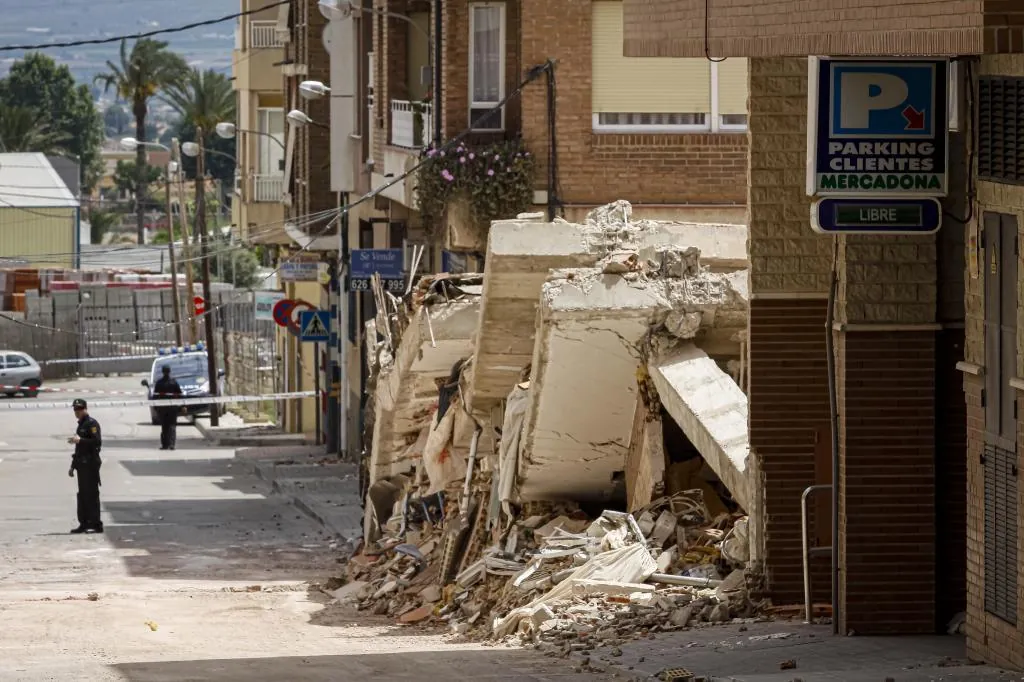
Spanish civil engineers warn that seismic activity in high-risk regions like Granada and Murcia could result in catastrophic infrastructure failure if Spain does not fully adopt mandatory European seismic design standards. The Asociación de Ingenieros de Caminos, Canales y Puertos (AICCP) has called for immediate compliance with Eurocode 8 to mitigate risks to public safety and economic stability across the country.
The warning comes as professional engineering bodies highlight a growing gap between current national construction regulations and the more rigorous seismic requirements established by the European Union. Engineers have specifically pointed to the potential for large-scale destruction, comparing the possible impact of a major tremor in southeastern Spain to the magnitude of catastrophic events seen in South American seismic zones, such as Venezuela, to illustrate the severity of the risk.
Why are Spanish engineers calling for new seismic building standards?
The Asociación de Ingenieros de Caminos, Canales y Puertos (AICCP) has maintained a long-standing demand for Spain to align its national building codes with Eurocode 8. This European standard dictates the design of structures for earthquake resistance. While Spain operates under its own regulatory framework, the AICCP argues that the current national norms do not provide the same level of protection or technical rigor required by the EU’s unified safety protocols.

Current Spanish seismic regulations, primarily governed by the Norma de Construcción Sismorresistente (NCSE), are viewed by some experts as lagging behind the advanced modeling and safety margins found in the Eurocode. The engineers’ primary concern is that existing infrastructure—and new constructions following older or less stringent guidelines—may not withstand the peak ground acceleration (PGA) levels that a significant tectonic event could produce in the Mediterranean corridor.
The push for reform is not merely a technical preference but a matter of legal and safety compliance. As a member of the European Union, Spain is subject to standardized technical regulations designed to ensure a high level of safety across all member states. The AICCP contends that failing to implement these mandatory standards leaves the country’s physical assets and civilian populations unnecessarily vulnerable.
How do Granada and Murcia compare in seismic risk?
Geological data identifies the southeastern regions of Spain, particularly Granada and Murcia, as some of the most seismically active areas in the country. These regions sit near complex tectonic boundaries where the African and Eurasian plates interact, creating significant stress within the Earth’s crust.
Engineers have emphasized that the density of historical architecture and modern urban development in these provinces complicates the risk profile. In Granada, the presence of ancient, unreinforced masonry structures presents a specific challenge, as these buildings often lack the ductility required to survive lateral seismic forces. In Murcia, the high concentration of industrial infrastructure and modern residential hubs means that a major tremor could trigger a domino effect of structural failures, impacting both the economy and emergency response capabilities.
The comparison to the scale of destruction seen in Venezuelan seismic events serves as a benchmark for the “worst-case scenario.” Engineers argue that if a tremor of significant magnitude were to strike these provinces today, the lack of adherence to the most modern Eurocode 8 standards could turn a manageable geological event into a national catastrophe characterized by widespread building collapses and prolonged utility outages.
What are the technical differences between current codes and Eurocode 8?
The transition from national standards to Eurocode 8 involves more than just updating numbers; it requires a shift in how engineers model structural behavior during an earthquake. The Eurocode provides a more sophisticated approach to “performance-based design,” which focuses on how a building will actually behave under specific levels of shaking, rather than just meeting a minimum strength threshold.
Key technical distinctions include:
- Ductility Requirements: Eurocode 8 places higher emphasis on a structure’s ability to deform without collapsing, a critical factor in preventing sudden, fatal failures.
- Site-Specific Response: The European standards require more detailed analysis of soil types and how local ground conditions can amplify seismic waves.
- Seismic Zoning Accuracy: Eurocode 8 utilizes more recent and granular seismic hazard maps, which provide a more accurate representation of the actual risks in specific municipalities.
- Redundancy in Design: The standards encourage greater structural redundancy, ensuring that if one component fails, the entire building does not immediately succumb to gravity.
By adopting these rigorous methodologies, the AICCP argues that Spain could significantly reduce the “seismic gap”—the difference between the actual force an earthquake exerts and the force a building is designed to withstand.
What is the economic impact of ignoring seismic updates?
While critics of rapid regulatory shifts often cite the increased cost of construction, engineers argue that the long-term economic cost of inaction is far higher. The financial burden of a major earthquake includes not only the immediate cost of emergency services and medical response but also the massive capital required for reconstruction and the long-term loss of productivity.
A comparative look at the costs involved reveals a stark contrast between preventative investment and disaster recovery:
| Category | Investment in Eurocode 8 Compliance | Cost of Seismic Catastrophe |
|---|---|---|
| Construction Costs | Incremental increase in materials and engineering design. | Total loss of high-value assets and infrastructure. |
| Insurance | Predictable, manageable premiums based on verified safety. | Extreme volatility and potential collapse of local insurance markets. |
| Public Infrastructure | Planned, phased upgrades to bridges, dams, and roads. | Emergency repair costs and massive economic disruption. |
| Urban Recovery | Minimal; focus is on maintenance and scheduled modernization. | Decades of reconstruction and potential permanent displacement. |
According to the engineering community, the “safety premium” paid during the construction phase acts as a form of national insurance. Without this, the Spanish government and private sector remain exposed to unpredictable, high-magnitude financial shocks that could destabilize regional economies in the southeast.
Frequently Asked Questions regarding Spanish Seismic Safety
Is Spain currently at high risk for a major earthquake?
Geologically, the southeastern regions of Spain, including Murcia and Granada, are considered high-risk zones due to their proximity to active fault lines. While the frequency of large earthquakes is low, the potential magnitude is significant.
Are all new buildings in Spain earthquake-proof?
All new buildings must follow current Spanish seismic codes (NCSE). However, the AICCP argues that these codes are not as stringent as the mandatory European Eurocode 8 standards, meaning they may not offer the highest level of protection available in the EU.
Does Eurocode 8 apply to existing buildings?
Eurocode 8 primarily governs new construction and major renovations. However, the standards provide the technical framework that experts use to recommend retrofitting programs for older, vulnerable structures.
What can citizens do to prepare?
Public safety officials recommend that residents in seismic zones familiarize themselves with local emergency protocols, secure heavy furniture to walls, and maintain emergency kits. Official updates regarding regional seismic monitoring can be found through the Instituto Geográfico Nacional (IGN).
The Spanish government has not yet announced a specific timeline for the full integration of Eurocode 8 into national law, though the debate remains a central issue for the Ministry of Transport, Mobility, and Urban Agenda. Further updates are expected following upcoming technical reviews of national building regulations.
What are your thoughts on the urgency of updating these safety standards? Do you believe the economic cost of construction is a valid concern compared to seismic risk? Let us know in the comments below and share this article to spread awareness.