
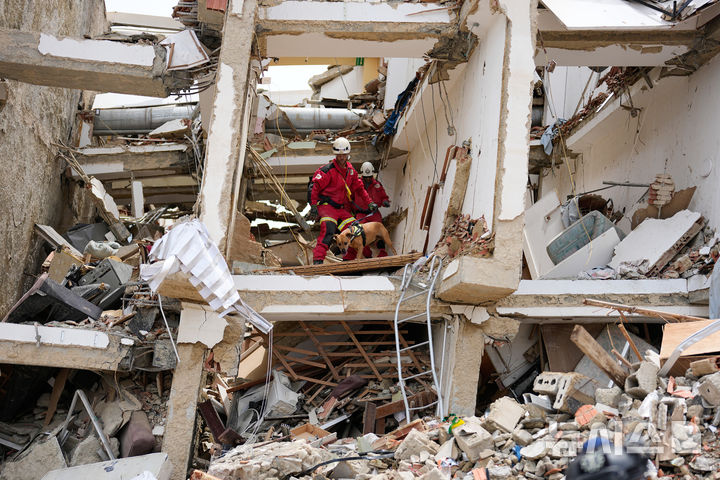
Spanish search and rescue teams, supported by specialized canine units, are actively conducting recovery operations in the wreckage of buildings in La Guaira, Venezuela, following seismic activity that has impacted the region. The deployment of these international teams comes as part of ongoing efforts to locate survivors and secure structures compromised by the recent tremors.
According to reports from the Spanish Ministry of the Interior, international assistance protocols were activated to bolster local emergency response capabilities in the affected coastal areas. These teams, which include experts from various specialized agencies, are working in coordination with local authorities to assess the structural integrity of residential and commercial buildings throughout the state of La Guaira.
Operational Coordination in La Guaira
The primary focus of the international rescue effort is the systematic clearance of debris to ensure public safety. Specialized canine teams are utilized to detect human presence beneath collapsed concrete and rubble, a standard procedure for urban search and rescue (USAR) missions. These dogs are trained to identify scents associated with survivors, allowing human rescuers to prioritize their efforts in the most critical zones.
The Venezuelan Civil Protection Agency is overseeing the integration of these foreign units into the broader disaster response framework. By aligning the technical expertise of the Spanish teams with local logistics, officials are working to streamline the deployment of heavy machinery and medical support in the aftermath of the seismic events. The operation remains focused on high-risk sites where structural collapse has been confirmed by local engineers.
The Role of Specialized Canine Units
Canine units serve as a force multiplier in disaster zones where traditional thermal imaging or acoustic sensors may be hindered by the density of building materials. The Spanish teams involved in the La Guaira mission are part of established civil protection modules that participate in international humanitarian aid missions under the European Union Civil Protection Mechanism. Their deployment involves rigorous training standards, ensuring that the animals can navigate uneven, sharp, and unstable environments without injury while maintaining their focus on search patterns.
When a canine identifies a potential site, teams utilize specialized cameras and listening equipment to verify the findings before commencing delicate excavation. This multi-layered approach is designed to prevent secondary collapses that could endanger both the rescue workers and any potential survivors. Safety protocols require that these efforts be conducted in coordination with structural engineers who monitor the stability of the remaining building frames.
Next Steps in the Recovery Process
Local authorities continue to manage the intake of aid and the distribution of emergency supplies to displaced residents. The recovery operation is expected to transition from active search and rescue to structural assessment and site stabilization as the immediate threat to life diminishes. Residents are advised to monitor official communications from the Government of Venezuela for updates on re-entry protocols and building safety inspections.

The mission is ongoing, with teams operating on a rotating schedule to maintain operational capacity. Future updates regarding the status of the search efforts will be provided by the regional emergency command center in La Guaira. Readers are encouraged to share this report and follow official channels for verified information as the situation evolves.