
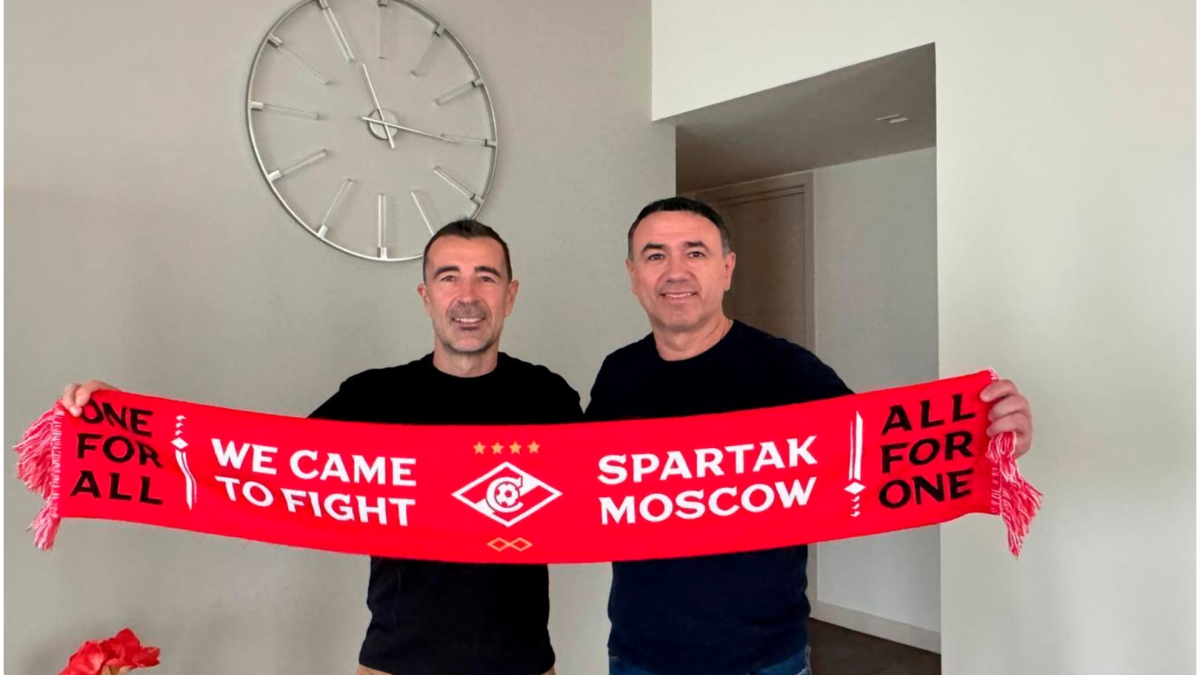
In the high-stakes arena of international football, where tactical precision meets the intense pressure of national identity, few stories are as compelling as the successful integration of foreign specialists into the heart of the Russian Premier League. While the global geopolitical landscape remains fraught with complexity, a different narrative is unfolding within the training grounds and urban centers of Moscow—one defined by professional triumph and an unexpected appreciation for life in the Russian capital.
At the center of this narrative are Spanish professionals whose contributions to Spartak Moscow have transcended mere athletic performance, touching upon the broader themes of cultural exchange and professional resilience. For individuals like Juan Carlos Carcedo and Francis Cagigao, the journey from the Iberian Peninsula to the intense atmosphere of one of Russia’s most storied football clubs has been marked by both strategic challenges and significant accolades.
The success of these Spanish nationals at Spartak Moscow serves as a fascinating case study in how specialized expertise can bridge cultural divides, even amidst significant international tension. As they navigate the complexities of working in a major global metropolis under unique circumstances, their experiences offer a nuanced perspective on the reality of expat life and professional achievement in contemporary Russia.
The Professional Ascent: Strategic Bets and Silverware
The success of Spanish influence within the Spartak Moscow structure was not a matter of chance, but rather the result of deliberate, strategic appointments. Within the technical hierarchy of the club, Juan Carlos Carcedo emerged as a key figure whose role was viewed as a calculated “bet” by the club’s sporting leadership. In the world of elite football, such terminology denotes a high-reward move—an attempt to inject specific tactical methodologies and scouting expertise into a system looking for a competitive edge.
Carcedo’s tenure has been characterized by the implementation of sophisticated training protocols that mirror the tactical rigor often associated with Spanish footballing schools. This professional infusion coincided with periods of competitive success for the club, most notably in cup competitions where the technical precision of the staff played a decisive role. The ability to translate complex tactical concepts across language barriers is a testament to the high level of professional integration achieved by the Spanish contingent at the club.
Complementing the technical leadership is the presence of players and staff like Francis Cagigao, whose involvement underscores the growing footprint of Spanish talent in the Russian football ecosystem. The synergy between the coaching staff’s tactical vision and the players’ execution has been a cornerstone of Spartak’s recent efforts to maintain its status as a dominant force in the Russian Premier League.
This success is not merely about winning trophies; it is about the successful export of a footballing philosophy. The “Spanish model”—emphasizing ball possession, positional intelligence, and high-intensity pressing—has long been a sought-after commodity in Eastern European football. The achievements of Carcedo and his colleagues suggest that this methodology has found fertile ground in the disciplined and highly competitive environment of Moscow’s elite clubs.
Life in the Capital: The Expat Perspective on Moscow
Beyond the pitch, the personal reflections of these Spanish professionals offer a striking counter-narrative to the often-one-dimensional reporting on life in Russia. The sentiment expressed by those within the Spartak circle—that Moscow is a “fabulous” place to both work and live—provides a window into the lived reality of the city’s international professional community.
For many expats, the initial perception of Moscow as a monolithic or purely political entity is quickly replaced by an appreciation for its sophisticated urban infrastructure and vibrant cultural life. The city, a sprawling metropolis of over 13 million people, offers a level of amenities, transport efficiency, and professional opportunity that rivals any major European capital. From the highly efficient Moscow Metro to the world-class culinary and cultural institutions, the city presents a high quality of life that facilitates professional focus.
Working in Moscow as a high-level professional requires a unique set of skills, including cultural adaptability and linguistic navigation. However, the Spanish professionals at Spartak have noted that the city’s dynamism provides a stimulating environment for those accustomed to the high-pressure worlds of professional sports. The ability to thrive in such a massive, fast-paced environment is often cited as a key factor in the successful retention of foreign talent in the region.
the professional ecosystem in Moscow is deeply interconnected with global markets. For specialists in football, the opportunity to work within a club of Spartak’s stature provides access to a unique set of challenges and rewards that are unavailable in smaller markets. This professional magnetism, combined with the city’s high standard of living, creates a compelling case for international specialists to remain and contribute to the local economy and sporting culture.
The Broader Context: Spanish Influence in Eastern European Football
The presence of Carcedo and Cagigao is part of a much larger historical trend. Over the last two decades, the influence of Spanish footballing expertise has expanded far beyond the borders of La Liga. From the technical benches of the Bundesliga to the coaching staffs of the Russian and Turkish leagues, the “Spanish touch” has become a recognized standard of excellence.
This trend is driven by several factors:
- Tactical Specialization: The highly developed coaching education systems in Spain produce professionals who are experts in specific tactical niches.
- Globalized Scouting: The modern game relies on data-driven and culturally diverse scouting networks, where Spanish specialists often play a leading role.
- Methodological Consistency: Spanish football emphasizes a cohesive philosophy that can be implemented across different age groups, from youth academies to senior squads.
In the context of Russian football, this influence has helped modernize training methodologies and move the domestic game toward a more possession-oriented and tactically fluid style. While the geopolitical environment has undoubtedly complicated the movement of people and capital, the professional exchange of ideas remains a resilient feature of the global sporting landscape.
Key Takeaways: The Spanish-Moscow Connection
| Focus Area | Key Observation | Impact |
|---|---|---|
| Leadership | Strategic appointment of Spanish technical staff. | Enhanced tactical rigor and coaching methodology. |
| Performance | Integration of Spanish tactical philosophy. | Success in domestic cup competitions and league play. |
| Expat Life | High appreciation for Moscow’s urban infrastructure. | Increased professional stability for foreign specialists. |
| Cultural Exchange | Cross-pollination of Spanish and Russian sporting cultures. | Modernization of local footballing standards. |
Navigating Challenges in a Complex Landscape
It would be remiss to overlook the complexities that accompany professional life in Russia today. The international sporting community has faced significant shifts due to sanctions and the suspension of certain international competitions involving Russian clubs. For professionals like Carcedo and Cagigao, Which means navigating a landscape that is increasingly isolated from the traditional European footballing circuits.
However, the professional focus remains on the domestic and regional competitions. The Russian Premier League continues to maintain a high level of competitiveness, driven by significant domestic investment and a deep-seated passion for the sport. For the Spanish professionals at Spartak, the challenge lies in maintaining global standards of excellence within a modified competitive framework.
This duality—the tension between the local professional reality and the global political situation—defines the modern expat experience in Moscow. While the headlines focus on macro-level conflicts, the micro-level reality for many is one of professional dedication, urban engagement, and the pursuit of excellence in their respective fields. The ability to separate professional purpose from geopolitical volatility is a hallmark of the successful international specialist.
As the season progresses, the focus for Spartak Moscow will remain on translating tactical preparation into consistent results on the pitch. For the Spanish contingent, the goal is clear: to continue building on the successes that have already established them as vital components of the club’s future ambitions.
Next Scheduled Update: The upcoming rounds of the Russian Premier League and subsequent domestic cup fixtures will provide the next measurable indicators of the technical staff’s impact on Spartak Moscow’s performance.
What are your thoughts on the increasing globalization of football coaching methodologies? Do you believe tactical expertise can overcome geopolitical barriers? Share your comments below and please share this article with your network.