
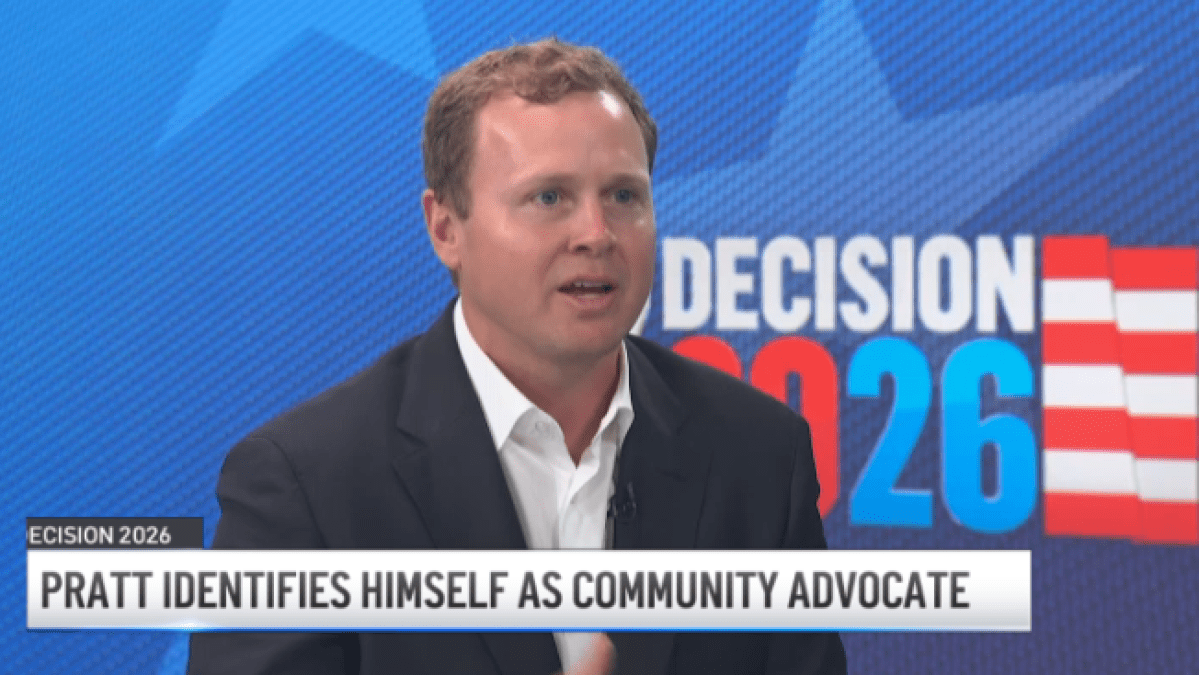
The political landscape of Los Angeles has long been a battleground for ideological clashes and high-stakes governance, but the entry of Spencer Pratt into the mayoral race has introduced a volatile new element to the conversation. Known primarily for his tenure in the reality television spotlight, Pratt has pivoted from tabloid headlines to the political stage, positioning himself as a disruptive force against the established order of City Hall.
Pratt recently captured significant public and media attention following a high-profile debate performance where he faced off against incumbent Mayor Karen Bass. Observers described the encounter as “fiery,” with Pratt adopting an aggressive, unrelenting interrogation style that sought to highlight perceived failures in the city’s current administration. This transition from a celebrity persona to a political challenger has sparked a wider debate about the role of visibility and populism in modern municipal elections.
The mayoral campaign of Spencer Pratt is not merely a curiosity of celebrity culture; it represents a calculated attempt to tap into a growing vein of voter frustration in Southern California. By focusing on the city’s most pressing crises—namely homelessness and public safety—Pratt is attempting to frame his lack of traditional political experience as an asset, presenting himself as an outsider unburdened by the compromises of the political machine.
As Los Angeles grapples with the complexities of urban decay and the struggle to implement sustainable housing solutions, the discourse surrounding the mayoral race has shifted. The focus is no longer solely on policy white papers, but on the performance of candidates in the public eye and their ability to challenge the status quo in real-time.
The Debate Performance: A Strategy of Relentlessness
During the recent mayoral debate, Spencer Pratt employed a rhetorical strategy characterized by relentless pressure. Rather than adhering to the standard decorum of municipal political discourse, Pratt focused on direct confrontations with Mayor Karen Bass, questioning the efficacy of current city initiatives and the speed of their implementation. This approach was noted by political commentators as a departure from typical challenger behavior, leaning more toward an investigative or prosecutorial style.
Central to Pratt’s critique was the city’s handling of the homelessness crisis. While Mayor Bass has championed programs such as “Inside Safe”—an initiative designed to move people from encampments into motels and permanent housing—Pratt argued that the results on the street do not reflect the official narratives provided by the Mayor’s office. His performance was designed to create a visual and auditory contrast between the administration’s polished reports and the lived experience of residents in the city’s most affected corridors.
The “relentless” nature of his questioning was not limited to policy. Pratt sought to dismantle the image of the incumbent as a steady hand, instead painting a picture of a city in stagnation. By forcing the Mayor into defensive positions on the debate stage, Pratt aimed to demonstrate that the current leadership is vulnerable to scrutiny and that the “establishment” approach to governance is failing the average Angeleno.
Defining a Political Identity: Beyond the ‘MAGA’ Label
One of the most complex aspects of Pratt’s campaign has been the attempt to define his political ideology in a polarized environment. In subsequent interviews, including a detailed discussion with NBC Los Angeles, Pratt has explicitly pushed back against being categorized as a “MAGA” candidate. Despite his alignment with some populist sentiments, he has sought to distance himself from the specific branding of the Make America Great Again movement, suggesting that his motivations are rooted in local governance rather than national partisan warfare.
In a surprising rhetorical pivot, Pratt has compared his political approach to that of former President Barack Obama. He argues that, like Obama in his early career, he represents a sense of “hope” and the possibility of change brought about by a newcomer. This comparison is an attempt to appeal to a broader, more centrist or independent electorate that may be disillusioned with both the traditional Democratic stronghold of Los Angeles and the hard-right populism of the national GOP.
This ideological ambiguity is a strategic choice. By refusing to be boxed into a specific partisan label, Pratt maintains a wider net for potential supporters. He positions himself as a “common sense” candidate whose primary loyalty is to the city’s recovery rather than a party platform. This strategy mirrors a trend seen in various municipal races across the United States, where “non-partisan” or “outsider” branding is used to attract voters who feel alienated by the binary nature of national politics.
From Tabloid Fame to the Mayoral Race
The journey of Spencer Pratt—and by extension, the public presence of his wife, Heidi Montag—from the heights of 2000s reality television to a bid for the mayoralty of the second-largest city in the U.S. Is a narrative of extreme brand evolution. For years, the couple was the epicenter of tabloid culture, known for a curated image of chaos, and luxury. However, Pratt’s current campaign represents an attempt to leverage that same notoriety for political capital.
In the modern attention economy, visibility is often the first hurdle for any political candidate. Pratt enters the race with a pre-existing global platform and a level of name recognition that traditional candidates spend millions of dollars to achieve. The challenge, however, is converting “infamy” or “celebrity” into “trust” and “credibility.”
Pratt’s campaign is betting that the electorate is more interested in a candidate who can command attention and disrupt the system than one who has spent decades climbing the bureaucratic ladder. This “celebrity-to-statesman” pipeline is not without precedent in California, most notably with Arnold Schwarzenegger, though the contexts differ. While Schwarzenegger entered the governorship with a background in global entertainment and a clear (albeit populist) platform, Pratt is operating in a more fragmented media environment where the line between entertainment and politics has almost entirely vanished.
The Stakes: Los Angeles in Crisis
To understand why a candidate like Spencer Pratt can gain traction, one must look at the systemic failures currently facing Los Angeles. The city is in the midst of a profound housing and humanitarian crisis. According to data from the City of Los Angeles, the struggle to balance zoning laws, funding for shelters, and the rights of the unhoused has led to a stalemate that leaves thousands living in tents on city sidewalks.
Public safety is another critical pillar of the current unrest. Residents in various districts have reported a rise in retail theft and open-air drug markets, leading to a perception that the city government has lost control of the streets. When a population feels that the “experts” and “career politicians” have failed them, the appeal of a disruptive outsider—regardless of their background—increases significantly.
Pratt’s campaign focuses heavily on these points of failure. By centering his platform on the visible decay of the city, he transforms his debate performances into a mirror reflecting the frustrations of the citizenry. Whether his proposed solutions are viable remains a point of contention, but his ability to articulate the anger of the marginalized or the frustrated middle class is a potent political tool.
Key Takeaways from the Pratt Campaign
- The Outsider Strategy: Pratt is utilizing his lack of political history to frame himself as “unbought” and “unbossed,” contrasting himself with the career trajectory of Mayor Karen Bass.
- Rhetorical Aggression: His debate style is designed to disrupt the “polished” nature of political discourse, prioritizing confrontation over traditional policy debate.
- Ideological Fluidity: By rejecting the “MAGA” label and invoking Obama, Pratt is attempting to carve out a populist, non-partisan space in a heavily Democratic city.
- Attention as Currency: The campaign demonstrates the power of celebrity name recognition in a media-saturated political environment.
Analysis: The Impact of the ‘Disruptor’ Candidate
The presence of Spencer Pratt in the mayoral race serves as a barometer for the current state of American municipal politics. It suggests a growing appetite for “performance politics,” where the ability to challenge an opponent on a stage or in a viral clip is viewed as a proxy for the ability to lead. For the incumbent, Mayor Bass, Pratt represents a different kind of challenge than a traditional political rival; he is a candidate who does not play by the established rules of engagement.
From a journalistic perspective, the Pratt campaign raises questions about the threshold for political viability. If a candidate can move from reality television to a serious mayoral debate through sheer force of personality and strategic aggression, it signals a shift in how voters perceive leadership. The “credentialing” of a candidate is becoming less important than their “authenticity”—even if that authenticity is rooted in a persona developed for television.
However, the transition from “debater” to “governor” is where the most significant hurdle lies. Governing a city as complex as Los Angeles requires a deep understanding of the city charter, budgetary constraints, and the ability to negotiate with diverse stakeholders, from labor unions to the Board of Police Commissioners. Pratt’s ability to dismantle an argument in a debate is a far different skill set than the ability to manage a multi-billion dollar municipal budget.
What Happens Next?
As the campaign progresses, the focus will shift from the spectacle of the debate to the substance of the platform. Voters will be looking for specific, actionable plans on how Pratt intends to solve the homelessness crisis and improve public safety beyond the rhetoric of “justice” and “accountability.”
The next critical checkpoint for the campaign will be the official filing deadlines and the subsequent certification of candidates by the Los Angeles County Registrar-Recorder/County Clerk. Once the field is finalized, the campaign will likely move into a phase of grassroots organizing and targeted outreach to see if the digital and media attention can be converted into actual votes at the ballot box.
Whether Spencer Pratt is a serious contender for the mayoralty or a high-profile disruptor, his campaign has already succeeded in forcing a more aggressive conversation about the failures of the current administration. In a city yearning for change, the “relentless” pursuit of answers—regardless of who is asking—has found a receptive audience.
We invite our readers to share their thoughts on the rise of celebrity candidates in municipal politics. Do you believe an outsider’s perspective is necessary for Los Angeles, or should the city prioritize experienced governance? Join the conversation in the comments below.