
Spotify is continuing its aggressive expansion in the global music streaming market, showing a strong trajectory in both user growth and financial stability. As the industry shifts toward more sustainable profitability, the Swedish tech giant is leveraging its massive scale to solidify its position as the world’s leading audio platform.
The company’s growth remains robust, with a significant increase in its paid subscriber base over the last year. As of the fourth quarter of 2025, Spotify reported 290 million premium subscribers worldwide, a substantial jump from the 263 million reported in the corresponding quarter of 2024.
This upward trend follows a period of strategic restructuring and a relentless focus on innovation. After navigating a challenging 2023 that included workforce reductions and a struggle for consistent profitability, the company has pivoted toward a more efficient operating model that prioritizes long-term value and user experience.
For those tracking the company’s trajectory, the focus has shifted from raw user acquisition to the quality of monetization and the ability to scale operations without a proportional increase in costs. This evolution is critical as Spotify competes with other global giants like Apple Music, YouTube Music, and regional powerhouses such as QQ Music and NetEase Cloud Music.
Financial Momentum and the Path to Profitability
Spotify’s financial health has seen a marked improvement, moving toward what CEO Daniel Ek describes as a steady path toward achieving long-term goals. In late 2024, the company reported a 19% year-on-year revenue increase, reaching €4 billion.
A key indicator of this success is the rise in operating income, which reached €454 million in a recent quarterly report. This performance put the company on track for its first full year of profitability since its founding in 2006. The company also recorded a record gross profit of €1 billion in April 2024, followed by further gains in the second quarter of that year.
This financial turnaround is particularly striking when compared to the volatility of previous years. By December 2023, despite controlling more than 30% of the global music streaming market, Spotify had managed only one quarter of profit in the preceding 24 months. To correct this, the company implemented a 17% cut to its workforce, resulting in approximately 1,500 job losses in its third round of redundancies during that period.
Scaling the User Base
The growth of the platform is not limited to paying members. The total global base of monthly active users reached 665 million by late 2024, after adding 25 million users in a single year. The conversion of these free users to premium accounts remains a core driver of the company’s revenue strategy.
Between January and August 2024, the company added 10 million premium accounts. Subsequent reports showed an additional growth of eight million paid subscribers in a later quarterly update, eventually pushing the total past the 250 million landmark in November 2024 before continuing its climb toward the 290 million mark by the end of 2025.
Market Competition and Global Positioning
Spotify operates in a highly competitive landscape where it must balance the cost of licensing music from multiple record labels with the need to provide a seamless user experience. Even as it remains a dominant force, it faces stiff competition from various directions.
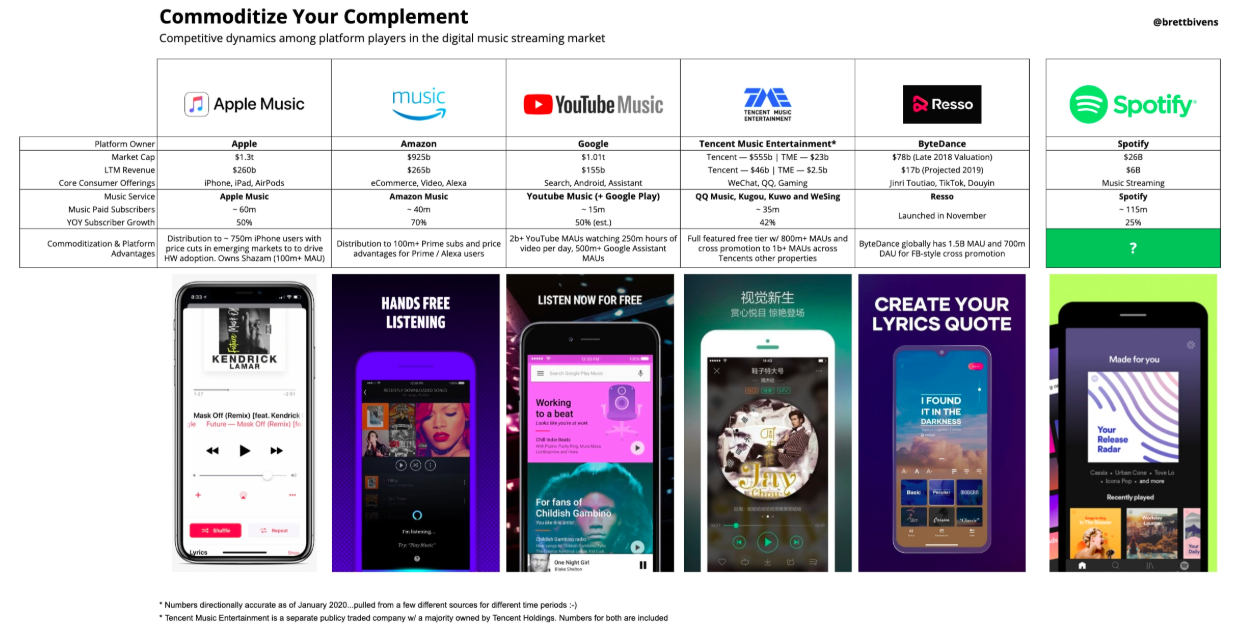
- Apple Music: Launched in 2015, it remains a primary competitor in the premium subscription space.
- Pandora: While still popular in the United States, it has been surpassed in revenue by newer global services.
- Global Challengers: Services such as YouTube Music, QQ Music, and NetEase Cloud Music are now generating higher monthly revenues than some of the older established players.
To maintain its edge, Spotify has integrated social features, such as allowing users to register via Facebook to connect with friends and explore shared playlists. This strategy helps the platform embed itself into the lifestyle and preferences of its consumers, making the service more “sticky” and reducing churn.
What This Means for the Industry
The ability of Spotify to scale its premium subscriber base while increasing operating income suggests that the “streaming wars” are entering a new phase. The focus is no longer just on who has the most songs, but on who can manage the economics of streaming most efficiently. By achieving economies of scale, Spotify can better absorb the costs of content acquisition while continuing to innovate in AI-driven discovery and personalization.
| Metric | Value/Status | Timeline |
|---|---|---|
| Premium Subscribers | 290 Million | Q4 2025 |
| Total Active Users | 665 Million | Late 2024 |
| Reported Revenue | €4 Billion | Nov 2024 |
| Operating Income | €454 Million | Late 2024 |
As the company continues to grow, the industry will be watching to see if it can maintain this momentum into 2026. The focus remains on whether the company can cross the 300 million paid subscriber threshold, a milestone that would further solidify its market leadership.
For investors and industry analysts, the next critical checkpoint will be the release of the 2026 first-quarter financial filings, which will reveal if the growth trend from the end of 2025 has sustained.
Do you consider Spotify can maintain its lead against Apple and YouTube? Share your thoughts in the comments below.
Worth a look