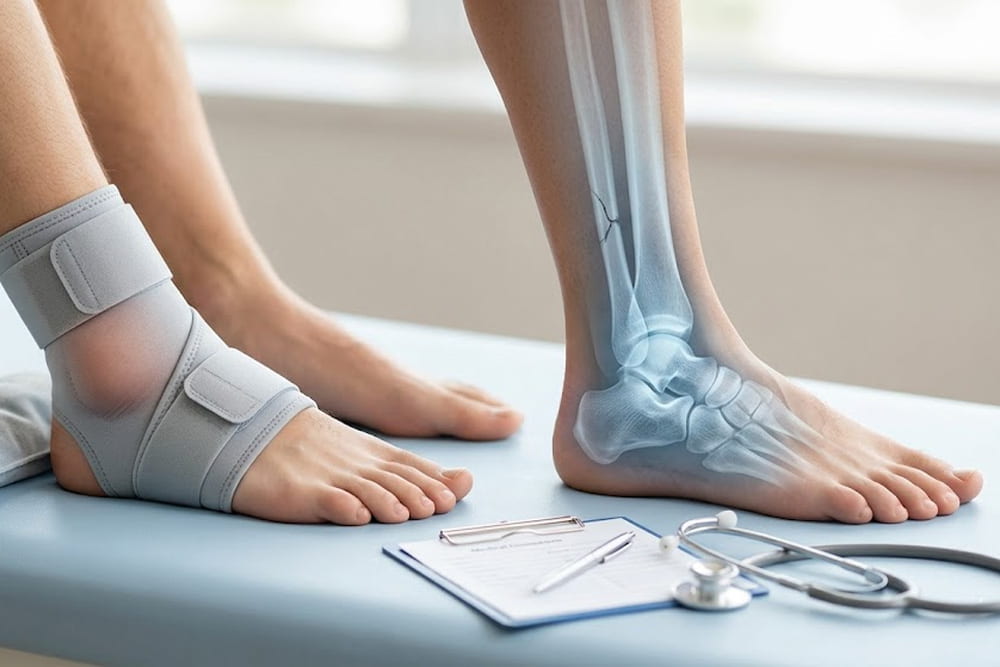
Sprained Ankle vs. Fracture: How to Tell the Difference and What to Do Next
By Dr. Helena Fischer, Editor, Health
May 25, 2026 • Berlin, Germany
A rolled ankle is one of the most common injuries worldwide—whether from a misstep on uneven pavement, a sudden twist during sports, or an awkward landing. Most of the time, it’s a sprain that improves with rest and basic care. But sometimes, what seems like a sprain is actually a fracture, and the two can be difficult to distinguish in the first critical hours after injury.
As a physician and health journalist, I’ve seen firsthand how misdiagnosing an ankle injury can lead to long-term complications, including chronic pain, instability, and repeated injuries. The good news? With the right knowledge, you can recognize the warning signs and take the appropriate steps—whether that means icing your ankle at home or seeking prompt medical evaluation.
Here’s what you need to know to differentiate between a sprain and a fracture, what treatments work best, and when to see a specialist.
What’s Actually Happening Inside the Ankle
Ankle injuries fall into two broad categories: sprains and fractures. Understanding the difference starts with the anatomy:
- Sprains involve damage to the ligaments—tough bands of tissue that connect bones and stabilize the ankle joint. Sprains range from mild (Grade 1: slight stretching) to severe (Grade 3: complete ligament tear).
- Fractures involve a break in one or more of the ankle’s bones, most commonly the fibula (the outer bone), but sometimes the tibia (inner shinbone) or talus (the bone that connects the leg to the foot).
Both injuries cause pain, swelling, and difficulty bearing weight. In the first 24–48 hours, they can look nearly identical to the untrained eye. That’s why it’s crucial to recognize the subtle differences in symptoms and know when to seek professional help.
Clues That Point Toward a Sprain
If you suspect a sprain, look for these key indicators:

- Pain localized to soft tissue: Most sprains cause discomfort around the ligaments, particularly below the lateral malleolus (the bony bump on the outside of the ankle).
- Partial weight-bearing ability: While painful, you can usually hobble or put some weight on the injured ankle, especially in milder cases (Grade 1 or 2).
- Improvement with rest and elevation: Pain tends to ease within 48 hours when the ankle is elevated and iced.
- No bony tenderness: When a doctor gently presses on the bones around the ankle, there’s no sharp, localized pain over the bone itself.
Mild sprains often resolve with RICE—rest, ice, compression, and elevation—within a few days to weeks. However, even seemingly minor sprains can lead to chronic instability if not properly rehabilitated.
Clues That Point Toward a Fracture
Fractures require prompt medical attention. Watch for these red flags:
- Inability to bear weight: If you can’t take even four steps immediately after the injury, this is a strong sign of a fracture. The Ottawa Ankle Rules (a clinical decision tool used by emergency physicians) highlight this as a key criterion for X-ray imaging.
- Pain directly over the bone: Unlike sprains, fractures often cause sharp pain when pressing on the medial or lateral malleolus (the bony protrusions on the inner and outer ankle).
- Audible “pop” or snapping sound: Some fractures produce a distinct sound at the moment of injury.
- Visible deformity or bruising: Swelling and bruising may develop rapidly, and the ankle might appear visibly out of alignment.
- Numbness or tingling: If you experience numbness in the foot, this could indicate nerve involvement and warrants immediate evaluation.
- Pain that worsens over time: Unlike sprains, which typically improve with rest, fracture pain often intensifies within the first 24 hours.
Warning: Ignoring these signs can lead to improper healing, arthritis, or long-term joint instability. If you’re unsure, err on the side of caution and seek medical advice.
The Ottawa Ankle Rules: A Quick Self-Check
Developed by Canadian researchers in the 1990s, the Ottawa Ankle Rules help determine whether an X-ray is necessary. You can use a simplified version at home:
If you can walk on the injured ankle without sharp pain over the bone, it’s likely a sprain.
If you can’t walk on it or the bone itself hurts when pressed, get it imaged.
Emergency departments use these rules to avoid unnecessary X-rays while ensuring fractures aren’t missed. For example, if you experience bony tenderness (pain when pressing on the back edge of the inner or outer ankle) or inability to bear weight, imaging is recommended.
What Treatment Looks Like
Treatment depends on the diagnosis and severity of the injury.

Sprain Treatment
Most sprains are managed with:
- RICE protocol: Rest, ice (15–20 minutes every 2–3 hours for the first 48 hours), compression (with an elastic bandage), and elevation (keep the ankle above heart level).
- Pain relief: Over-the-counter NSAIDs (ibuprofen, naproxen) can reduce swelling and pain.
- Gradual rehabilitation: As pain subsides, gentle exercises (e.g., ankle circles, calf stretches) help restore strength and prevent chronic instability.
- Bracing or taping: For moderate to severe sprains, a brace or ankle tape may provide support during healing.
According to a 2010 systematic review published in the Journal of Manual & Manipulative Therapy, functional support (such as early mobilization with a brace) and NSAIDs are evidence-based treatments for acute ankle sprains. The review also noted that manual therapy may offer short-term benefits, though electro-physical agents (like ultrasound) are not recommended.
Fracture Treatment
Fractures require professional evaluation to determine the best approach:
- Non-displaced fractures: These may be treated with a walking boot or cast to stabilize the bone while it heals.
- Displaced or unstable fractures: Surgery may be needed to realign bone fragments using plates, screws, or rods. For example, a talus fracture often requires surgical intervention to restore joint function.
- Rehabilitation: Physical therapy is critical to regain strength, balance, and range of motion after either sprains or fractures.
When to See a Specialist
Not all ankle injuries require emergency care, but certain situations demand professional attention:
- Suspected fracture: If you experience any of the fracture warning signs (inability to bear weight, bony tenderness, deformity), see a doctor or visit an urgent care center immediately.
- Sprains not improving after 2 weeks: Persistent pain, swelling, or instability may indicate a more serious injury or the need for physical therapy.
- Recurrent “rolling” of the ankle: Chronic instability often stems from improperly healed sprains or fractures. An ankle surgeon can assess joint stability and recommend targeted rehabilitation.
- Nerve or vascular symptoms: Numbness, tingling, or coldness in the foot could signal nerve or blood vessel damage, requiring urgent evaluation.
In Germany, you can seek care at your local Hausarzt (general practitioner) or an orthopedic specialist. For acute injuries, emergency departments (like those at Charité – Universitätsmedizin Berlin) are equipped to handle fractures and severe sprains.
Get the Diagnosis Right Once
The biggest mistake people make with ankle injuries is assuming it’s “just a sprain” and returning to activity too soon. This can lead to:
- Chronic pain and swelling
- Recurrent sprains or fractures
- Post-traumatic arthritis (wear-and-tear damage to the joint)
Investing in a proper diagnosis—whether through X-rays, MRI, or a physical exam—ensures you receive the right treatment. For example, a high-resolution MRI can detect ligament tears or bone bruises that X-rays might miss.
If you’re unsure whether your injury is a sprain or fracture, trust your instincts. As I often tell my patients: “When in doubt, get it checked out.” Early intervention prevents long-term complications and gets you back to your active life faster.
Key Takeaways
- Sprains hurt around soft tissue, allow partial weight-bearing, and improve with RICE. Fractures cause bone pain, deformity, or inability to walk.
- Use the Ottawa Ankle Rules as a quick self-check: If you can’t walk or the bone hurts when pressed, seek imaging.
- Mild sprains heal with rest; fractures may need surgery or a cast. Always follow up with a specialist if symptoms persist.
- Prevent long-term issues by avoiding early return to sports or high-impact activities.
FAQs
Q: How long until I can drive after an ankle injury?
:max_bytes(150000):strip_icc()/sprained-ankle-vs-broken-ankle-7089949-final-09dcd8c4bba64159a0ae627a03f477ad.png "Helena Fischer sprained ankle vs fracture infographic")
A: If you suspect a fracture, avoid driving until evaluated by a doctor. For sprains, you can drive if you can comfortably press the gas and brake without pain. If you’re taking painkillers, wait until they wear off to assess your ability to control the vehicle safely.
Q: Can I exercise with a sprained ankle?
A: Avoid high-impact activities (running, jumping) for at least 2–3 weeks. Start with gentle exercises like ankle circles and calf raises as pain allows. A physical therapist can design a safe rehabilitation plan.
Q: How do I know if my ankle is stable after healing?
A: A stable ankle allows full weight-bearing without pain or “giving way.” If you experience recurrent rolling or instability, consult an orthopedic specialist for stability testing.
Next Steps
If you’re recovering from an ankle injury, monitor your progress closely. For persistent symptoms, schedule a follow-up with your doctor or a physical therapist. In Germany, you can access low-cost rehabilitation through your health insurance (e.g., TK, AOK).
Have you had an ankle injury that turned out to be more serious than you thought? Share your experience in the comments—your story might help someone else recognize the warning signs.
About the Author
Dr. Helena Fischer is a physician and health journalist with an MD from Charité – Universitätsmedizin Berlin. Her work focuses on making complex medical topics accessible to a global audience. When she’s not writing, she’s hiking the Grunewald Forest or volunteering with Berlin’s refugee health clinics.