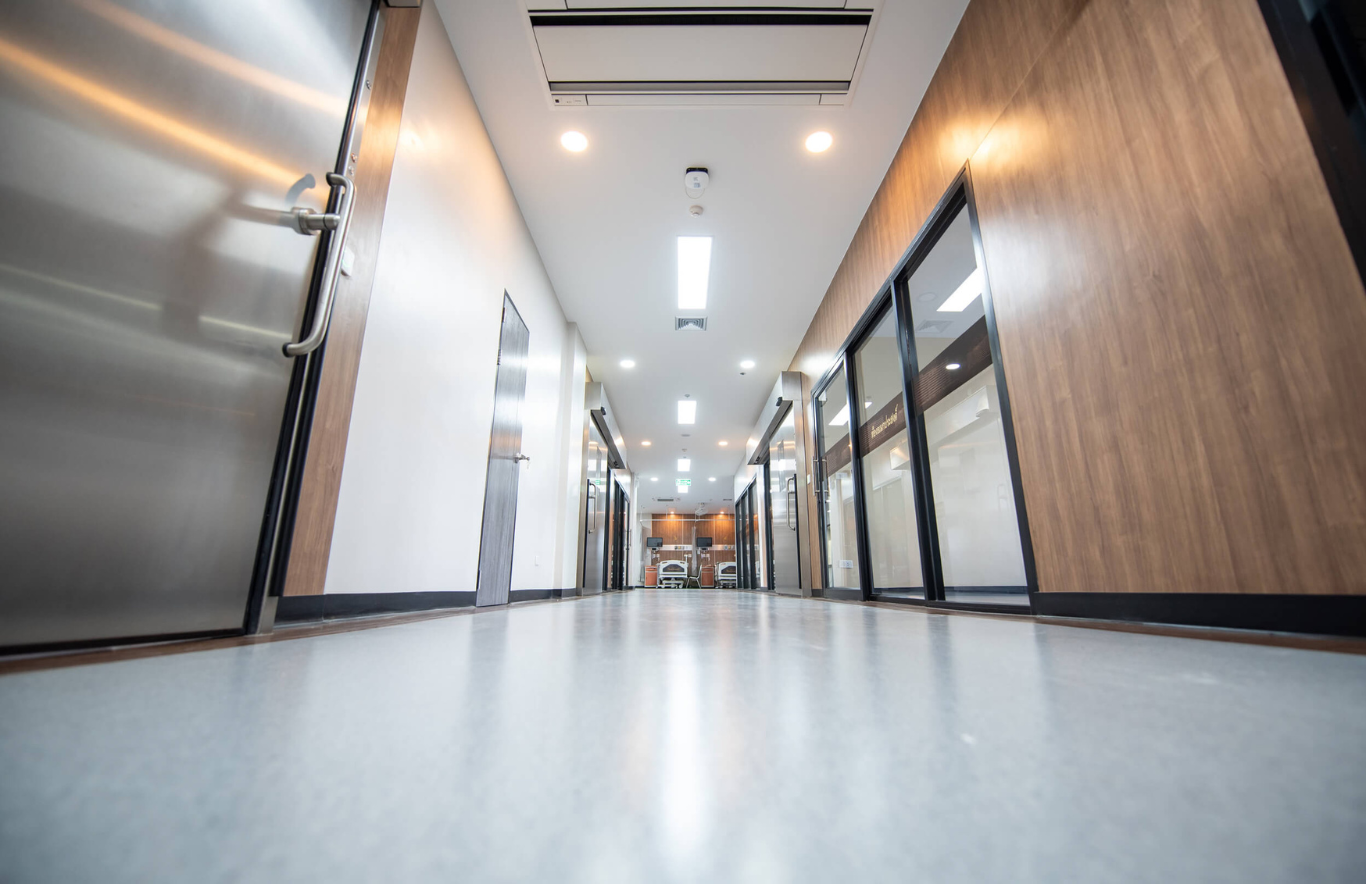
StaticWorx EclipseEC (Electrically Conductive) rubber flooring represents a significant advancement in electrostatic discharge (ESD) protection technology for sensitive environments. Introduced in 2010, this specialized flooring system has earned recognition as the industry’s only fault-tolerant, low-charging ESD floor suitable for Class-0 applications, the most stringent classification for electrostatic sensitivity.
The product’s development addresses critical needs in industries where even minor static discharges can damage sensitive electronic components, compromise data integrity, or pose safety risks in flammable environments. Healthcare facilities, electronics manufacturing plants, laboratories and data centers increasingly rely on such flooring solutions to maintain operational integrity and protect both equipment, and personnel.
What distinguishes EclipseEC from conventional antistatic flooring is its unique construction methodology. Carbon and colored chips are uniformly mixed into the rubber matrix during manufacturing, creating continuous conductive pathways throughout the material. When installed with conductive adhesive, these pathways establish a reliable ground connection that safely dissipates static charges before they can accumulate to dangerous levels.
The flooring’s fault-tolerant design ensures consistent performance even if localized damage occurs—a crucial feature in high-traffic environments where wear and tear are inevitable. Independent laboratory testing has verified that EclipseEC inhibits static generation regardless of footwear type, eliminating a common variable that compromises the effectiveness of other ESD control measures.
Technical Specifications and Performance Characteristics
EclipseEC meets multiple industry standards that validate its suitability for demanding applications. The flooring complies with Americans with Disabilities Act (ADA) slip-resistance requirements, ensuring workplace safety alongside electronic protection. Its sound-dampening properties contribute to improved acoustic environments in busy facilities, while anti-fatigue characteristics provide ergonomic benefits for personnel who stand for extended periods.
Maintenance requirements remain straightforward—regular cleaning with soap and water suffices to preserve both the flooring’s appearance and its conductive properties. This simplicity reduces long-term operational costs compared to more complex ESD flooring systems that may require specialized cleaning agents or periodic conductivity testing.
The product’s PVC-free composition aligns with growing environmental and health consciousness in facility management. By avoiding polyvinyl chloride, EclipseEC eliminates concerns related to phthalate plasticizers and dioxin emissions associated with PVC production and disposal, contributing to better indoor air quality.
Installation Flexibility and Application Scenarios
EclipseEC’s availability in both sheet and tile formats provides installation flexibility to accommodate diverse architectural requirements. Sheets offer seamless coverage for large open areas, minimizing seams where contaminants might accumulate or where installation complexity increases. Tiles facilitate easier replacement of damaged sections and allow for creative patterning in spaces where aesthetics matter alongside functionality.

The flooring can be deployed as full-room coverage or configured as mats, runners, or islands—targeted protection zones for specific equipment clusters or workstations. This modular approach enables facilities to implement ESD controls precisely where needed without unnecessary expenditure on low-risk areas.
Healthcare applications particularly benefit from this flexibility. Operating rooms, imaging suites containing sensitive diagnostic equipment, and pharmaceutical compounding areas all require varying levels of electrostatic protection. EclipseEC’s adaptability allows healthcare facilities to tailor their ESD strategy to specific zone requirements while maintaining a cohesive flooring aesthetic throughout the facility.
Industry Recognition and Validation
The ESD Journal’s Seal of Approval represents a significant milestone in EclipseEC’s market acceptance. This independent validation from a respected authority in electrostatic discharge control confirms the product’s suitability for Class-0 environments—those containing the most sensitive electronic components where even minimal static discharges can cause irreversible damage.

Such recognition carries weight in procurement decisions, particularly for facilities governed by stringent industry standards like ANSI/ESD S20.20 or IEC 61340-5-1. When specifying flooring for cleanrooms, semiconductor manufacturing areas, or medical device production lines, engineers and facility managers often prioritize products with third-party certifications that objectively verify performance claims.
Independent laboratory testing referenced in multiple sources confirms EclipseEC’s consistent performance across variables that typically affect ESD flooring efficacy. Unlike some systems whose effectiveness varies with shoe sole material or humidity levels, EclipseEC maintains reliable static dissipation regardless of these environmental factors—a critical advantage in real-world applications where conditions fluctuate.
Comparative Advantages in ESD Flooring Solutions
When evaluated against alternative ESD control methods, EclipseEC offers several distinct benefits. Compared to conductive epoxy coatings, which require specialized application expertise and periodic reapplication, the rubber flooring provides more consistent long-term performance with simpler maintenance. Unlike vinyl-based ESD flooring, EclipseEC avoids the plasticizer migration issues that can degrade conductivity over time in PVC products.
The flooring’s durability in high-traffic settings surpasses many alternatives. While some ESD mats or coatings may show wear patterns or delamination in areas of frequent use, EclipseEC’s homogeneous rubber construction maintains its conductive properties throughout the material’s thickness, ensuring protection remains effective even as the surface experiences normal wear.
Cost considerations reveal a nuanced picture. While initial installation costs may exceed those of basic vinyl flooring, EclipseEC often proves economical over its lifecycle due to reduced maintenance requirements, longer service life, and the avoidance of costs associated with electrostatic damage to sensitive equipment—a potentially significant factor in facilities housing expensive diagnostic or manufacturing equipment.
Environmental and Safety Considerations
The absence of PVC in EclipseEC’s formulation addresses growing concerns about halogenated polymers in building materials. PVC production and disposal can release harmful substances, and some facility managers now specify PVC-free options to meet corporate sustainability goals or comply with green building standards like LEED or WELL.
Fire safety characteristics represent another important consideration. While specific fire rating data requires consultation with current product documentation, rubber-based flooring generally offers favorable performance compared to some synthetic alternatives. The material’s inherent slip resistance contributes to workplace safety, particularly in areas where liquids might be present.
Indoor air quality benefits stem from both the PVC-free composition and the low-emission manufacturing processes employed by StaticWorx. The flooring does not off-gas volatile organic compounds (VOCs) at levels that would compromise air quality in sensitive environments—a critical factor in healthcare settings where patients may have respiratory sensitivities.
Maintenance Protocols and Longevity
Proper maintenance preserves both the functional and aesthetic qualities of EclipseEC flooring. The manufacturer’s recommendation of soap-and-water cleaning avoids the require for harsh chemicals that could potentially degrade the rubber matrix or leave conductive-residue interfering films. Regular cleaning removes contaminants that might otherwise insulate the surface and impede static dissipation.

Periodic conductivity testing, while not required as frequently as with some ESD flooring types, remains a best practice for critical applications. Facilities in industries with zero-tolerance policies for electrostatic events often implement quarterly or semi-annual verification programs to ensure ongoing compliance with internal or client-mandated ESD control standards.
The flooring’s resistance to common chemicals found in healthcare and industrial settings contributes to its longevity. EclipseEC withstands exposure to mild disinfectants, cleaning agents, and occasional spills without degradation of its conductive properties—a significant advantage over flooring materials that may swell, crack, or lose functionality when exposed to certain substances.
Future Developments and Industry Trends
As electronic components continue to decrease in size while increasing in sensitivity, demands for effective ESD control measures intensify. The trend toward miniaturization in medical devices, telecommunications equipment, and aerospace electronics drives ongoing innovation in flooring technologies like EclipseEC, with manufacturers focusing on even lower charging rates and enhanced fault tolerance.
Sustainability considerations are shaping product development across the flooring industry. Future iterations may incorporate increased recycled content or bio-based materials while maintaining the conductive properties essential for ESD protection. End-of-life recyclability represents another area of focus, with manufacturers exploring take-back programs or designs that facilitate material separation for recycling.
Integration with smart building systems presents emerging opportunities. While EclipseEC itself remains a passive flooring solution, data from conductivity monitoring could potentially feed into facility management systems to provide real-time verification of ESD protection status—particularly valuable in facilities where continuous compliance verification is required by regulatory bodies or client contracts.
For healthcare facilities considering ESD flooring upgrades, consultation with infection control teams alongside biomedical engineering departments ensures that flooring selections address both electronic protection needs and hygiene requirements. The seamless installation possible with EclipseEC sheets minimizes crevices where pathogens might accumulate, supporting infection prevention goals alongside electrostatic control.
As technology advances and electronic sensitivity increases, the role of specialized flooring in comprehensive ESD control programs will likely grow. Products like EclipseEC that combine verified performance with practical installation and maintenance characteristics will remain valuable tools for facilities seeking to protect their technological investments while maintaining safe, functional environments for their occupants.