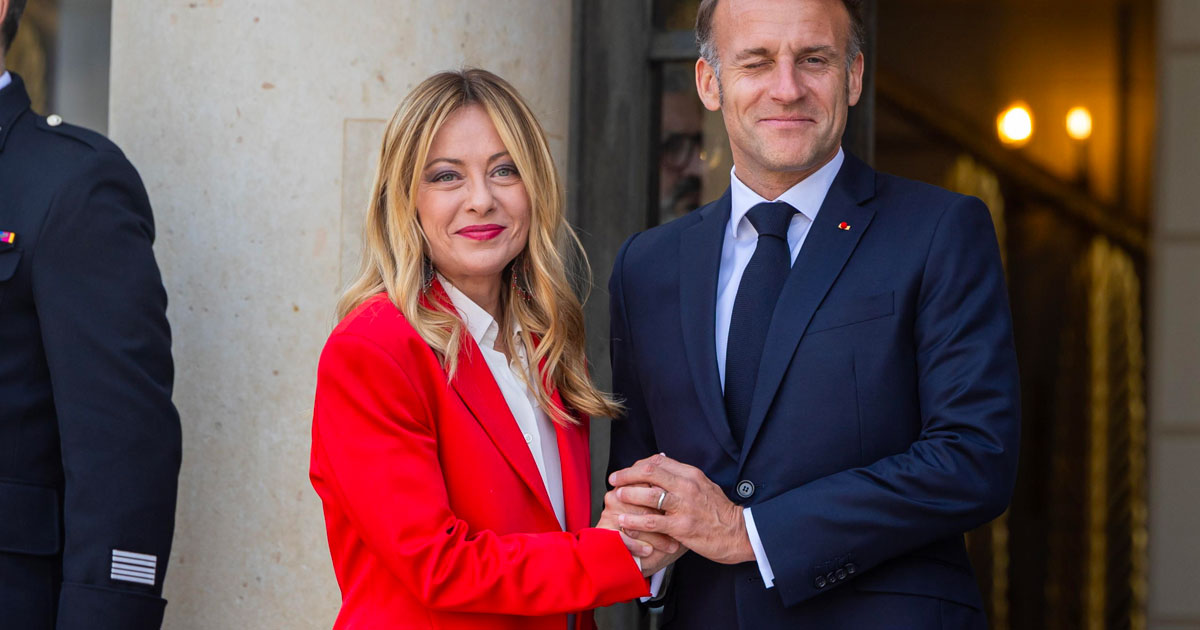
On Friday, April 17, 2026, French President Emmanuel Macron, British Prime Minister Keir Starmer, Italian Prime Minister Giorgia Meloni, and German Chancellor Friedrich Merz held a press conference in Paris following a multinational summit focused on reopening the Strait of Hormuz. The meeting took place at the Élysée Palace, where the leaders emphasized the strategic importance of the waterway for global energy markets and international trade.
The Strait of Hormuz, located between Oman and Iran, serves as a critical chokepoint for approximately one-fifth of the world’s petroleum trade, including liquefied natural gas. Disruptions to shipping through the strait have historically led to volatility in global oil prices and supply chain concerns, particularly for Europe and Asia.
According to verified reports from the summit, the leaders welcomed recent progress toward restoring safe navigation in the strait and called for a permanent framework to ensure maritime security. The discussions centered on coordinating European naval assets, including minesweepers and frigates, to escort commercial vessels through the region amid ongoing tensions linked to the broader Iran-Israel conflict.
Italian Prime Minister Giorgia Meloni confirmed Italy’s readiness to contribute naval vessels to the effort, stating that any deployment would require prior authorization from the Italian Parliament. Her remarks underscored Rome’s commitment to multilateral cooperation while adhering to constitutional procedures governing military operations abroad.
The summit explicitly excluded the United States from participation, a decision noted by analysts as reflective of evolving transatlantic dynamics in security initiatives. Instead, the initiative brought together key European nations — France, the United Kingdom, Italy, and Germany — along with interest from other countries beyond the continent, though specific additional participants were not named in the available statements.
German Chancellor Friedrich Merz highlighted the legal and operational complexities of mine clearance operations in the strait, noting that European navies possess specialized capabilities in hydrographic surveying and explosive ordnance disposal. He emphasized that any sustained security presence would require clear rules of engagement and international coordination to avoid escalation.
British Prime Minister Keir Starmer framed the initiative as a necessary step to uphold freedom of navigation under international law, particularly the United Nations Convention on the Law of the Sea (UNCLOS). He warned that prolonged disruption to Hormuz traffic could exacerbate global inflation and energy insecurity, especially for nations dependent on Middle Eastern energy exports.
French President Emmanuel Macron, as host of the summit, described the effort as part of a broader European strategy to strengthen strategic autonomy in defense and foreign policy. He reiterated that the goal was not to provoke regional actors but to ensure that civilian shipping could proceed without fear of interception or mining.
The joint statement issued after the meeting called for increased surveillance, information sharing among allied navies, and the potential establishment of a voluntary escort system for merchant vessels. Officials noted that details of any operational mechanism would be finalized in follow-up technical meetings among defense chiefs.
While the leaders expressed optimism about near-term progress, they acknowledged that lasting stability in the strait would depend on broader diplomatic de-escalation involving Iran and other regional stakeholders. No specific timeline for full operational deployment was announced during the press conference.
As of the date of the summit, no formal naval escort mission had been launched, but participating countries confirmed ongoing preparatory work, including intelligence coordination and vessel readiness assessments. The next steps are expected to involve technical consultations among NATO and EU naval planners, though no public date for such a meeting has been confirmed.
This initiative reflects growing European concern over the vulnerability of global energy infrastructure to geopolitical flashpoints. Analysts note that any disruption to Hormuz shipping would directly impact economies in Europe, India, Japan, and South Korea, all of which rely heavily on hydrocarbon transports through the waterway.
The Élysée Palace has not released a full transcript of the press conference, but video footage and still images from the event were distributed by Associated Press and Pool Photo, showing the leaders arriving together and addressing reporters in the palace courtyard.
For ongoing updates on diplomatic and military developments related to the Strait of Hormuz, readers are encouraged to monitor official statements from the French Ministry for Europe and Foreign Affairs, the UK Foreign, Commonwealth & Development Office, and the Italian Ministry of Defence.
What are your thoughts on Europe’s role in securing global maritime trade routes? Share your perspective in the comments below, and help spread informed discussion by sharing this article with your network.