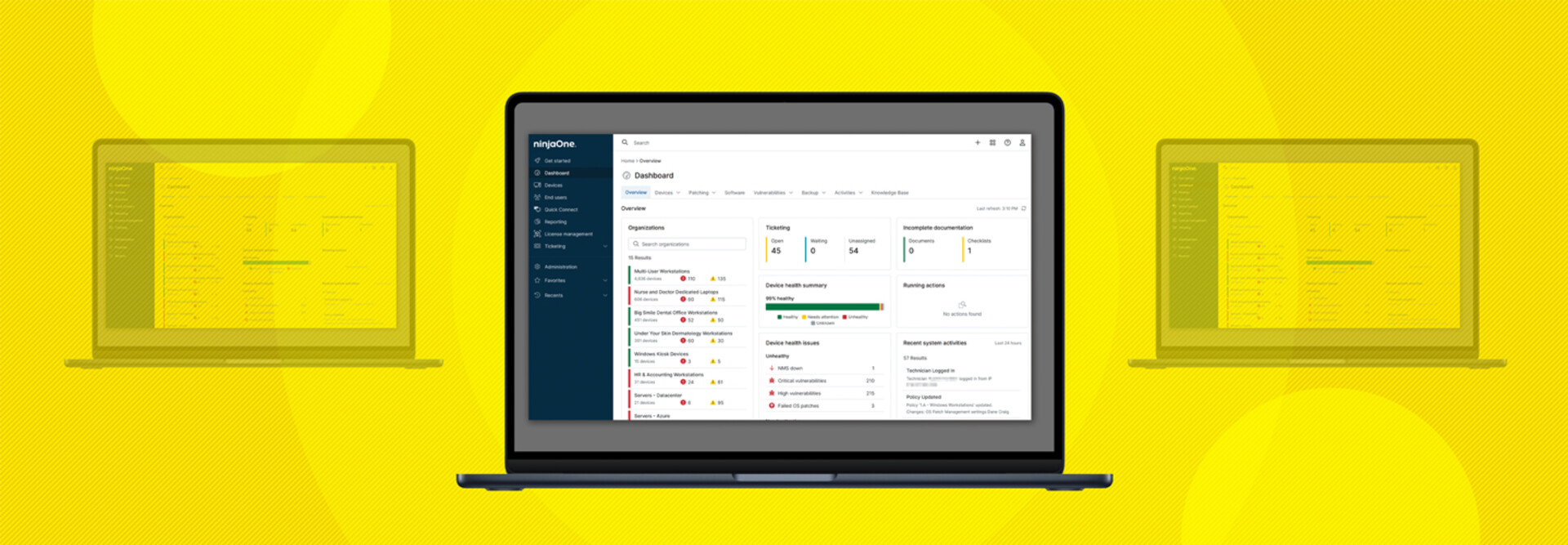
Healthcare organizations face a continuous balancing act: maintaining strict cybersecurity and dependable endpoint infrastructure while supporting clinicians who operate across distributed facilities, remote clinics, and mobile units. For IT teams working with limited staff, managing hundreds or thousands of devices often involves juggling disconnected tools for automated patching, remote troubleshooting, and real-time monitoring.
To address these operational challenges, platforms like NinjaOne Endpoint Management have emerged as unified, cloud-based solutions designed to consolidate endpoint monitoring, automated patching, and remote management into a single interface. By replacing disparate legacy systems with centralized management capabilities, healthcare IT departments can automate routine maintenance tasks, reduce device downtime, and ensure consistent security policies across all workstations and mobile endpoints.
Operating a secure medical environment requires constant vigilance over every connected device, from stationary desktop terminals in nursing stations to portable tablets used by physicians on rounds. Unified endpoint management tools aim to streamline these processes by providing automated patch management, software deployment, and remote ticketing within an integrated dashboard.
Furthermore, centralized visibility allows administrators to track hardware inventory, monitor system health, and generate compliance reports without disrupting daily hospital operations. These efficiencies help resource-constrained technology departments accomplish more administrative and security work with fewer manual interventions.
Simplifying Device Oversight Across Distributed Healthcare Networks
Enhancing Remote Troubleshooting for Clinical Staff
Cloud-based remote management solutions empower IT technicians to securely access endpoints from anywhere, diagnose system performance issues, and deploy fixes instantaneously.