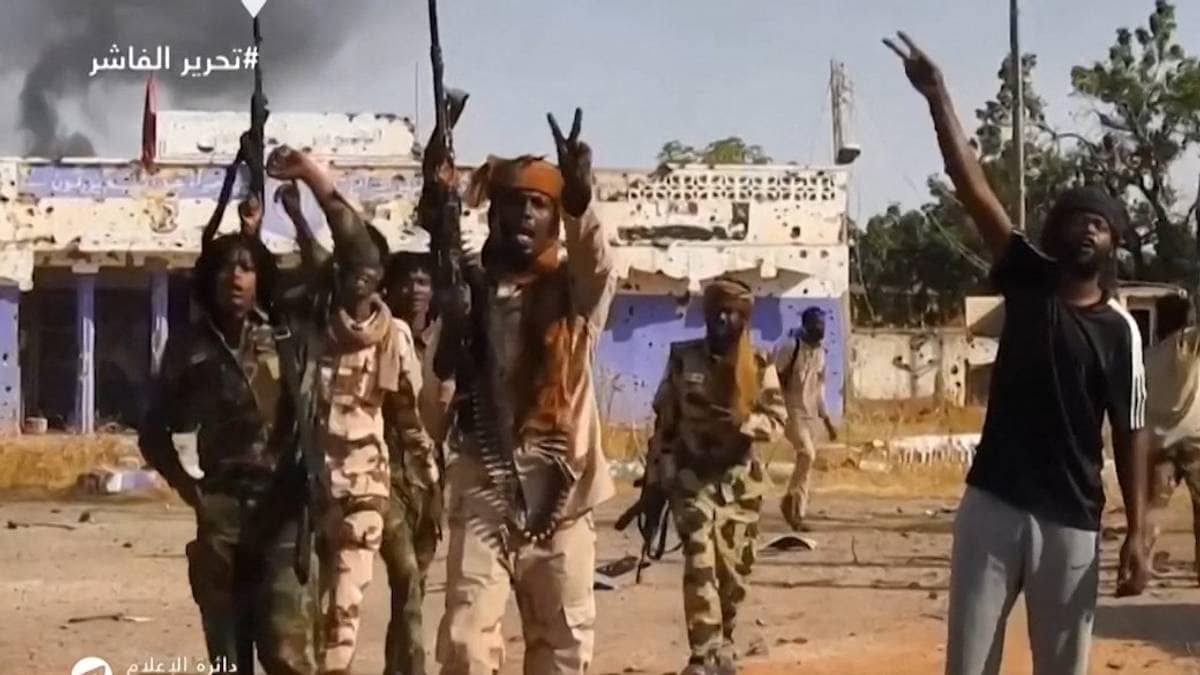
The humanitarian crisis in Sudan has reached a critical tipping point as the conflict between the Sudanese army and the paramilitary Rapid Support Forces (RSF) enters its fourth year. International observers and aid agencies are sounding the alarm over a catastrophic collapse of the country’s social and economic fabric, leaving millions of civilians caught in the crossfire of a brutal power struggle.
Central to the current desperation is a staggering rise in deprivation. The United Nations has warned that 34 million people in Sudan are now facing extreme poverty, a figure that underscores the systemic destruction caused by years of uninterrupted warfare. This economic devastation is compounded by restricted humanitarian access and a dwindling global attention span for what many now describe as a forgotten crisis.
In an attempt to revitalize diplomatic efforts, the International Sudan Conference took place in Berlin on April 15, 2026. The summit sought to secure urgent aid, improve humanitarian access and establish a civilian-led path forward for the nation via UNRIC. However, the initiative has been met with immediate and sharp resistance from the Sudanese government.
The government of Sudan has condemned the Berlin donor conference, labeling the event as “surprising and unacceptable.” Officials in Khartoum argue that the conference meddles in the country’s internal affairs and constitutes an interference in national sovereignty via France 24. This diplomatic friction highlights the deep divide between international efforts to mitigate the suffering of civilians and the political stances of the warring factions.
The Human Cost of a Prolonged Conflict
As the war enters its fourth year, the impact on the civilian population has shifted from acute displacement to a chronic state of survival. The conflict is no longer just a military struggle for territory but has evolved into a comprehensive humanitarian disaster. The scale of the poverty—affecting 34 million people—indicates that the basic infrastructure for food security, healthcare, and employment has virtually vanished in many regions.

The violence has also taken a specific and devastating toll on women. Reports emerging from the conflict zones describe a systematic pattern of violence, leading some advocates to characterize the current state of affairs as a war against women. These accounts include harrowing stories of gender-based violence and the targeted displacement of families, further destabilizing the social core of Sudanese communities.
The desperation has pushed thousands to seek refuge far beyond the borders of East Africa. According to UN data, nearly 14,000 war refugees from Sudan have attempted the perilous journey to Europe via sea routes, reflecting a total loss of hope for safety or stability within their own region.
Diplomatic Deadlock and the Berlin Conference
The Berlin conference on April 15, 2026, was designed to put the war in Sudan back at the top of the global diplomatic agenda via UNRIC. The primary objectives were to coordinate international donor funding and pressure the warring parties to allow humanitarian convoys into besieged areas. The urgency of the meeting was underscored by the three-year anniversary of the outbreak of the conflict.
Despite these goals, the reaction from the Sudanese government has been one of condemnation. By calling the conference “unacceptable” and an “interference,” the government signals a reluctance to engage with international frameworks that might prioritize civilian governance or external humanitarian oversight over military objectives via RFI.
This deadlock creates a perilous situation for the millions of Sudanese currently in extreme poverty. Without a coordinated international response that is accepted by the local authorities, the delivery of life-saving food and medicine remains sporadic and often blocked by the combatants.
Key Humanitarian Challenges
- Extreme Poverty: 34 million people are struggling for survival as the economy collapses.
- Humanitarian Access: Continued restrictions on aid delivery to the most affected regions.
- Gender-Based Violence: Escalating reports of targeted violence against women.
- Mass Displacement: Thousands of refugees fleeing via dangerous sea routes toward Europe.
- Diplomatic Friction: Conflict between international donor initiatives and the Sudanese government’s claims of sovereignty.
What This Means for the Future of Sudan
The current trajectory suggests that without a fundamental shift in the diplomatic approach or a ceasefire, the humanitarian situation will continue to deteriorate. The fact that the war has persisted into a fourth year indicates that neither the army nor the RSF is currently positioned to achieve a decisive military victory, yet neither is willing to concede to a civilian-led peace process.
The “forgotten” nature of the crisis is a significant hurdle. While conflicts in other parts of the world dominate headlines, the Sudanese crisis often struggles for visibility. The Berlin conference was an attempt to break this silence, but the government’s backlash suggests that the path to a civilian-led transition remains fraught with obstacles.
For the 34 million people in extreme poverty, the diplomatic maneuvering in Europe is a distant concern compared to the immediate need for food and safety. The gap between high-level diplomatic summits and the reality on the ground in Sudan continues to widen, leaving the most vulnerable populations in a state of permanent crisis.
The international community now faces the challenge of balancing the need to respect national sovereignty with the moral imperative to prevent a total humanitarian collapse. As the war continues, the focus remains on whether the commitments made in Berlin can be translated into actual aid reaching the people of Sudan.
The next critical checkpoint will be the follow-up actions resulting from the Berlin donor conference and whether any diplomatic breakthroughs can be achieved to secure humanitarian corridors. We encourage our readers to share this story and abandon their comments on how the international community can better support the civilians of Sudan.
Keep reading