Drone Attacks on Civilians Escalate in Sudan, Raising Fears of War Crimes
The conflict in Sudan continues to inflict a devastating toll on civilians, with a recent surge in drone attacks across multiple states resulting in dozens of deaths and injuries. Reports emerging from the region, and confirmed by the United Nations, detail a disturbing pattern of strikes targeting markets, displacement camps, schools, and even a hospital. The escalating violence, primarily between the Sudanese Armed Forces (SAF) and the Rapid Support Forces (RSF), has prompted urgent calls for accountability and increased humanitarian access as the country teeters on the brink of further catastrophe. The situation is particularly dire in areas cut off from aid for extended periods, exacerbating an already critical humanitarian crisis.
According to the UN Human Rights Office, at least 57 people were killed in drone attacks between February 15th and 16th alone. The attacks, allegedly carried out by both the SAF and the RSF, underscore a dangerous trend of escalating drone warfare within Sudan, a conflict that began in April 2023. The UN High Commissioner for Human Rights, Volker Türk, expressed alarm at the reports, stating that these killings are “another reminder of the devastating consequences on civilians of the escalating use of drone warfare in Sudan.” The scale of the recent attacks, and the reported targeting of civilian infrastructure, raises serious concerns about potential war crimes and the urgent demand for independent investigations.
Targeting of Civilian Infrastructure
The attacks were geographically widespread, impacting communities across North Kordofan, West Kordofan, South Kordofan, and Sennar states. On February 15th, an alleged SAF drone strike hit the Al Safiya market in Sudari locality, North Kordofan, reportedly killing 28 civilians and injuring 13 others. The following day, in West Kordofan, another alleged SAF drone struck a shelter for internally displaced persons (IDPs) in Al Sunut, resulting in the deaths of 26 civilians, including 15 children, and leaving 15 more injured. These attacks on vulnerable populations highlight the disregard for civilian life demonstrated by the warring parties.
Further compounding the crisis, alleged RSF drones reportedly struck two primary schools in Dilling, South Kordofan, on February 16th. While the extent of casualties remains unconfirmed, the targeting of educational facilities is a grave violation of international humanitarian law. Elsewhere, an alleged RSF drone struck the Al-Mazmoun Hospital in Sennar state on the same day, reportedly killing at least three civilians and injuring at least seven others. The deliberate targeting of healthcare facilities severely undermines the ability to provide essential medical care to those in need. An additional strike, allegedly carried out by the SAF, hit a fuel store within a local market in Adikong, West Darfur, with casualties reported but not yet verified.
Türk emphasized the imperative to protect civilians, stating, “The continued attacks by all parties on civilian objects must stop.” He urged all parties to take “urgent measures to protect civilians, including by refraining from the military use of civilian objects.” The UN’s call for restraint comes as the conflict continues to displace millions and push Sudan towards a humanitarian catastrophe.
Humanitarian Aid Reaches Cut-Off Communities in South Kordofan
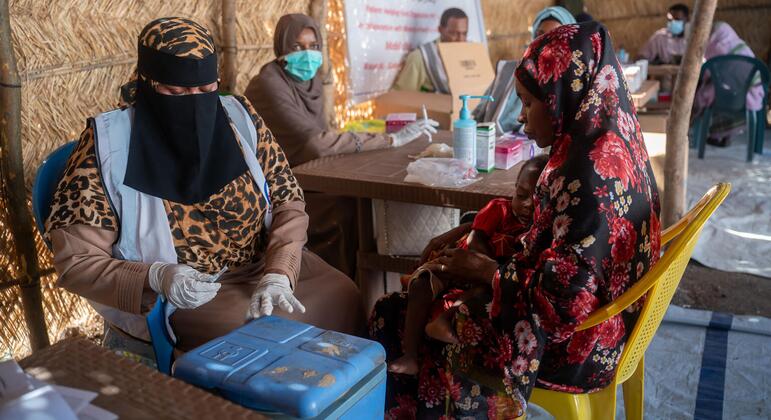
Amidst the escalating violence, a multi-agency UN convoy delivered vital humanitarian supplies to the cities of Dilling and Kadugli in South Kordofan, areas that have been largely inaccessible to aid for over two years. The convoy, comprised of 26 trucks, transported essential medical supplies, food, nutrition support, water and sanitation (WASH) resources, and educational materials for over 130,000 people. The supplies included food commodities to support nearly 70,000 individuals, with specialized nutritious food allocated for approximately 21,000 mothers and children to prevent malnutrition. The shipment also contained a five-month supply of medication for HIV, tuberculosis, and malaria, as well as other life-saving medicines.
The convoy was jointly led by the World Food Programme (WFP), the UN Children’s Fund (UNICEF), and the UN Development Programme (UNDP). Sheldon Yett, UNICEF Representative in Sudan, described the arrival of the convoy as “a critical lifeline for children who have been cut off from assistance for far too long.” The journey was fraught with challenges, as the convoy was forced to halt for over 40 days due to intensified hostilities and insecurity along the main route from Al Obeid. The trucks reached Dilling by navigating a longer and more difficult off-road route, demonstrating the commitment of humanitarian organizations to reach those in need despite the perilous conditions.
Makena Walker, acting WFP Country Director for Sudan, emphasized the importance of maintaining open and predictable routes for humanitarian assistance, stating, “Routes must stay open and predictable so vital assistance can reach people without interruption, including communities that have been cut off for far too long.” The UN agencies underscored the urgent need for sustained, predictable, and safe access to prevent further deterioration of the humanitarian situation across South Kordofan.
Luca Renda, UNDP Sudan Resident Representative, highlighted the critical need for continued support, stating, “The arrival of lifesaving medicine in South Kordofan is a huge relief for patients who have watched stocks dwindle during the war. But now the clock starts ticking again.” He added, “To keep patients alive, we have to ramp up support for national systems that can maintain regular deliveries all across Sudan, even while war continues.”
The Broader Context of the Sudanese Conflict
The current conflict in Sudan stems from a power struggle between the Sudanese Armed Forces (SAF), led by General Abdel Fattah al-Burhan, and the Rapid Support Forces (RSF), commanded by General Mohamed Hamdan Dagalo, also known as Hemedti. The conflict erupted in April 2023 following months of escalating tensions over the integration of the RSF into the SAF, a key component of a planned transition to civilian rule. The UN provides detailed background on the conflict here. The fighting has primarily concentrated in Khartoum, the capital, and the Darfur region, but has increasingly spread to other parts of the country, including Kordofan and North Darfur.
The conflict has triggered a massive humanitarian crisis, with millions of Sudanese displaced both internally and as refugees in neighboring countries. According to the UN, over 8.2 million people have been displaced as of February 2024, making it one of the largest displacement crises in the world. The UNHCR provides updated figures on displacement. The fighting has also disrupted essential services, including healthcare, education, and water and sanitation, leaving millions in desperate need of assistance. The economic impact of the conflict has been severe, with the Sudanese pound plummeting in value and food prices soaring, pushing millions into poverty and food insecurity.
The international community has condemned the violence and called for a ceasefire and a return to negotiations. However, despite numerous mediation efforts, the warring parties have failed to reach a lasting agreement. The United States, the African Union, and the Intergovernmental Authority on Development (IGAD) have been actively involved in mediation efforts, but progress has been limited. The ongoing conflict poses a significant threat to regional stability and could have long-lasting consequences for Sudan and its neighbors.
The recent escalation in drone attacks underscores the urgent need for a renewed commitment to protecting civilians and ensuring humanitarian access. The international community must increase pressure on the warring parties to cease hostilities and engage in meaningful negotiations. Without a concerted effort to address the root causes of the conflict and provide adequate humanitarian assistance, Sudan risks descending further into chaos and instability.
The next key development to watch will be the outcome of the upcoming African Union-led mediation talks scheduled for late February. These talks represent a critical opportunity to de-escalate the conflict and pave the way for a sustainable peace. Readers are encouraged to share their thoughts and perspectives on the situation in Sudan in the comments below.
Related reading