
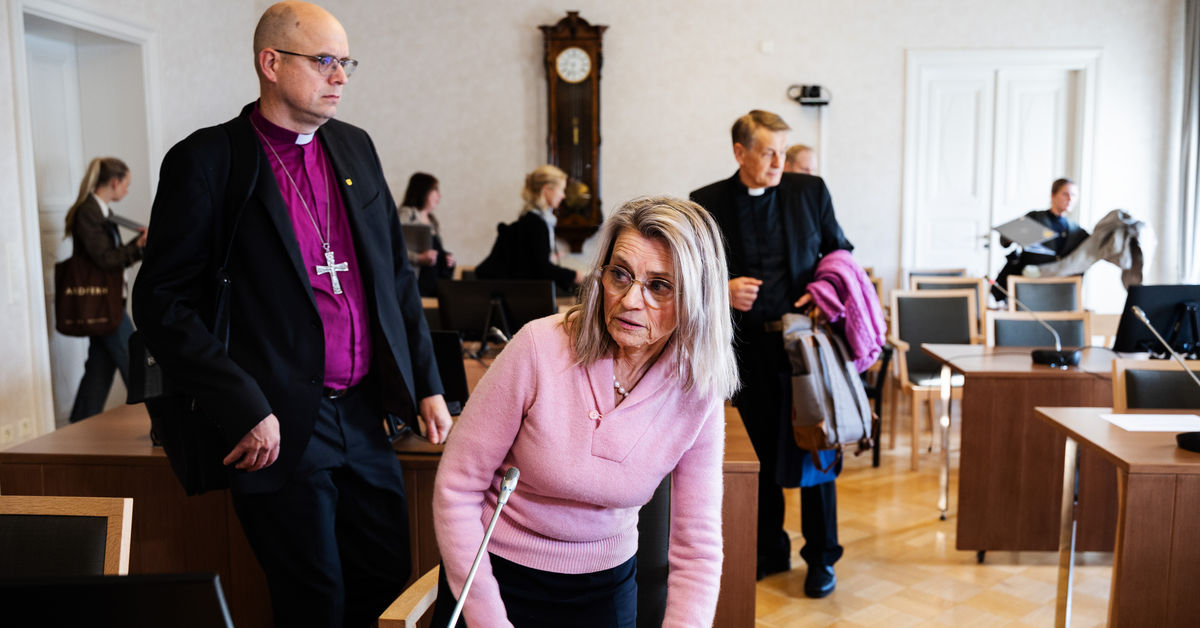
Finnish Member of Parliament Päivi Räsänen has announced plans to appeal her recent conviction by Finland’s Supreme Court for incitement against a population group, escalating a legal battle that has drawn international attention to the intersection of free speech, religious expression and hate speech laws. The case, which stems from a 2004 church pamphlet outlining conservative Christian views on sexuality, marks a pivotal moment in Finland’s ongoing debates over hate speech legislation and its application to political and religious discourse.
The Supreme Court’s ruling in March 2026—confirmed by a 3-2 majority—found Räsänen guilty of violating Finland’s hate speech laws through her pamphlet, which argued that homosexual relationships conflict with Christian teachings on human dignity. While the court acquitted her of charges related to a separate social media post citing biblical verses, the conviction carries significant political weight, particularly as Finland grapples with balancing religious freedom against anti-discrimination protections for LGBTQ+ communities.
Räsänen, a prominent figure in Finland’s conservative Christian circles and a member of the Finns Party, has framed the appeal as a defense of freedom of expression and religious liberty. Her legal team has indicated that the case will now proceed to the European Court of Human Rights (ECtHR), where advocates argue that Finland’s interpretation of hate speech laws may violate Article 10 of the European Convention on Human Rights, which protects freedom of expression. The ECtHR’s eventual ruling could set a precedent for similar cases across Europe, where tensions between anti-discrimination policies and religious or political speech remain contentious.
The Legal Battle: What Led to the Conviction?
The origins of the case trace back to 2004, when Räsänen, then a theologian and later elected to Parliament, distributed a pamphlet titled ”Homosexuality and the Christian View of Human Dignity”. The document, published by her church, argued that homosexual relationships were incompatible with Christian doctrine and that Finland’s legal recognition of same-sex partnerships undermined traditional family structures. While the pamphlet did not explicitly call for violence or discrimination, prosecutors contended that its language—particularly the assertion that homosexual acts were “unnatural”—could incite hatred or prejudice against LGBTQ+ individuals.
Räsänen’s legal troubles began in 2017, when Finnish authorities launched an investigation into the pamphlet under Section 11 of the Penal Code, which criminalizes public incitement to hatred or violence against a group based on factors such as sexual orientation. The case dragged on for nearly a decade, with lower courts delivering mixed verdicts before the Supreme Court’s final ruling in March 2026. The prosecution argued that the pamphlet’s distribution constituted a public incitement to hatred, while Räsänen’s defense team countered that her statements were protected as religious and political expression.
Key legal questions in the case include:
- Whether religious or political speech can be reasonably interpreted as inciting hatred, even if it does not explicitly advocate violence.
- How narrowly or broadly Finland’s hate speech laws should be applied to indirect or implied language.
- The balance between protecting minority rights and safeguarding freedom of expression in pluralistic societies.
The Supreme Court’s decision to convict Räsänen—while acquitting her on the social media charges—suggests a nuanced approach, acknowledging that context matters in determining whether speech crosses the line into illegal incitement.
Why the Appeal to the European Court of Human Rights?
Räsänen’s decision to take her case to the ECtHR reflects a strategic move to challenge what she and her supporters view as an overreach of Finland’s hate speech laws. The ECtHR, based in Strasbourg, has previously ruled on similar cases involving blasphemy laws, hate speech restrictions, and religious expression, often siding with protections for free speech unless governments can demonstrate a pressing social need for restrictions.
Critics of the Supreme Court’s ruling argue that the conviction sets a dangerous precedent for political and religious leaders who express conservative views on social issues. Supporters of the decision, including LGBTQ+ advocacy groups and legal scholars, contend that Finland’s laws are necessary to combat rising homophobia and transphobia in public discourse. The case has already sparked debates in Finland’s Parliament, with some lawmakers calling for reforms to the hate speech legislation to better align with European human rights standards.
If the ECtHR takes up the case—which is not guaranteed, as the court reviews only a fraction of appeals—it could take years before a final ruling. In the meantime, Räsänen’s legal team is expected to gather additional evidence, including international legal opinions and comparative case law from other European countries facing similar challenges. The appeal process may also involve amicus curiae briefs from human rights organizations, religious groups, and academic institutions weighing in on the broader implications of the case.
Broader Implications: Free Speech vs. Anti-Discrimination
The Räsänen case is part of a larger trend across Europe, where hate speech laws and free expression rights are increasingly colliding. Countries like Germany, France, and the Netherlands have faced similar legal battles over anti-LGBTQ+ rhetoric, Islamophobic speech, and conspiracy theories. The ECtHR’s past rulings—such as its 2018 decision in Eweida v. The United Kingdom, which balanced religious rights against workplace discrimination—highlight the complexities of navigating these tensions.

In Finland, the case has reignited discussions about the scope of hate speech laws. Some legal experts argue that the current legislation is too broad, risking chilling effects on legitimate debate. Others warn that weakening protections could embolden extremists and undermine efforts to combat discrimination. The political fallout has also been significant: Räsänen’s conviction has energized her base within the Finns Party, while opposition parties have used the case to critique the government’s handling of human rights issues.
For businesses and organizations operating in Finland—or with European operations—the case serves as a reminder of the legal and reputational risks associated with public statements on sensitive social issues. Companies with ESG (Environmental, Social, and Governance) policies may face scrutiny over their stance on LGBTQ+ rights or religious freedom, particularly in countries where hate speech laws are strictly enforced. The Räsänen case could also influence future corporate social responsibility (CSR) guidelines, as firms navigate the fine line between free expression and anti-discrimination compliance.
What Happens Next?
Räsänen’s legal team has not yet filed formal appeal documents with the ECtHR, but the process is expected to begin in the coming months. If the court accepts the case—which it does in roughly 40% of appeals—oral hearings could take place within 2–3 years, with a final ruling potentially arriving in 2028 or later. In the interim, Räsänen remains free to continue her political career, though the conviction may limit her ability to discuss certain topics without legal repercussions.
For readers following the case, key milestones to watch include:
- The formal submission of Räsänen’s appeal to the ECtHR (expected in late 2026).
- Finland’s potential response to the appeal, which may involve additional legal arguments or policy reviews.
- Any amicus briefs filed by international organizations, such as Amnesty International or the Council of Europe.
- Developments in Finland’s Parliament regarding proposed amendments to hate speech laws.
Updates on the case will be closely monitored by human rights advocates, legal scholars, and political analysts across Europe.
Key Takeaways
Here’s what the Räsänen case reveals about the current state of free speech and hate speech laws in Europe:
- Legal ambiguity: Courts struggle to define where religious or political speech ends and incitement to hatred begins.
- Political polarization: The case has deepened divisions between conservative religious groups and LGBTQ+ advocacy organizations.
- ECtHR’s influence: A ruling in this case could reshape how European countries interpret Article 10 (free expression) versus Article 14 (anti-discrimination).
- Corporate caution: Businesses must tread carefully when addressing controversial social issues in regions with strict hate speech laws.
- Long legal timelines: Cases like this often take years to resolve, requiring patience from all stakeholders.
The Räsänen case is more than a legal dispute—it’s a cultural and political flashpoint that reflects broader societal tensions over identity, morality, and the role of government in regulating speech. As the appeal process unfolds, the world will be watching to see how Europe’s highest human rights court balances these competing priorities.
What are your thoughts on the intersection of free speech and hate speech laws? Share your perspective in the comments below, and follow World Today Journal for updates on this developing story.